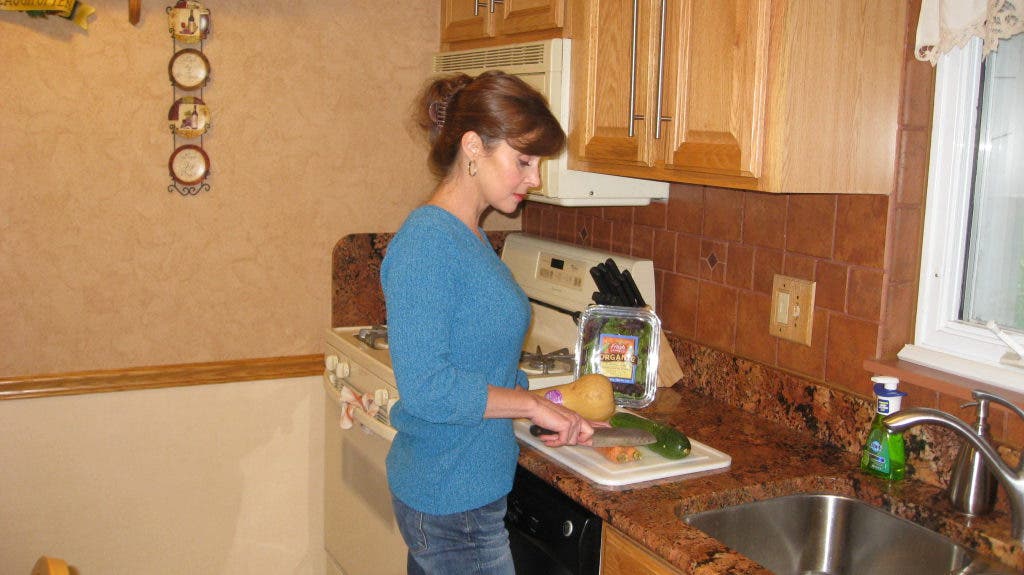
Check out these easy-to-follow tips on a healthy diet from Lisa Achille, one of the owners of in Castle Shanon!
By Lisa Achille
I am not a nutritionist, but throughout my life, food has been of great interest to me. Of course, as an Italian girl, I learned to cook before the age of 2. (OK, maybe that's a little exaggeration, but just a little!)
Find out what's happening in Baldwin-Whitehallfor free with the latest updates from Patch.
S,o I have been learning the effects of food on the people that I have cooked for throughout my entire life. Food makes people happy, but why? Is there more to it than just the taste, the togetherness and the love you put into it?
I think that the answer is a resounding, “Yes!”
Find out what's happening in Baldwin-Whitehallfor free with the latest updates from Patch.
Our brains are hardwired to react to the chemical properties of what we eat. Unfortunately, these responses have become somewhat archaic at this point in civilization. We no longer have to eat the fattiest meats and dairy products to store energy for an impending famine. The easiest and most plentiful foods, plant-based products, were the cornerstone for our diets for eons. They were always obtainable, and they did not run from us.
So, on the one hand, our brains are wired to enjoy the foods that would provide the “biggest bang for the buck” and sustain us in times of need—high-calorie foods. But, on the other hand, our bodies are wired on the assumption that those fatty and high-calorie foods won’t be available all of the time and that basic fruits and vegetables will be the base of our diets.
Unfortunately, in our modern society, things have been turned upside down. The fattiest foods are the most readily available, and modern man has gone full-force with preparing for a famine that is not going to occur. We need to get back to the plant-based diet that evolution has designed our bodies to thrive on. After all, we no longer have to run down buffalo for our meals; we just have to run to the drive-thru.
When we need to eat, we don’t stroll into the forest and pick berries, but we still need to make fruits and vegetables that easy to access. Simple enough to say, but how to do it?
My first tip is to get your fruit out of the refrigerator drawer and put it on the table. When you are hungry, the first thing that you see looks good. Promise yourself to have one whole piece of fruit every day and stick to it. Believe me, you will begin to crave it.
Second, if you don’t have the courage to throw your junk food away, at least make it hard to get to—in a high closet or in the basement.
Next, make vegetables taste good. Boiling them in water makes them taste like rubbery dirt for the most part. Those same products can be sautéed or roasted in the oven with very little effort, and they taste amazing. Just take veggies like green beans, carrots, zucchini, celery, onions and red peppers in whatever combination that you have on hand (frozen is fine—I know that this is Pittsburgh), and toss them with some salt and a little olive oil to coat them. Spread them onto a baking sheet—cover it with foil if you hate to clean pans—and roast at 400 degrees until they begin to turn slightly golden. That’s it! You can also spread them out into a skillet and cook on medium-high heat until slightly golden.
Eat them as they are, or top a salad with the warm veggies and some feta or other low-fat cheese. I also like to take a whole wheat pizza crust, top it with these veggies, some low-fat vinegar-based salad dressing, low-fat mozzarella and feta, and then bake it until the crust is crunchy and the cheese is lightly brown and bubbling.
Give these tips a try, and let us know if you have some ideas of your own!