Health & Fitness
Writing How-To's: Essay Writing Process
In this installment, I discuss my own writing process and how I use it to draft essays, reports, and blog posts.
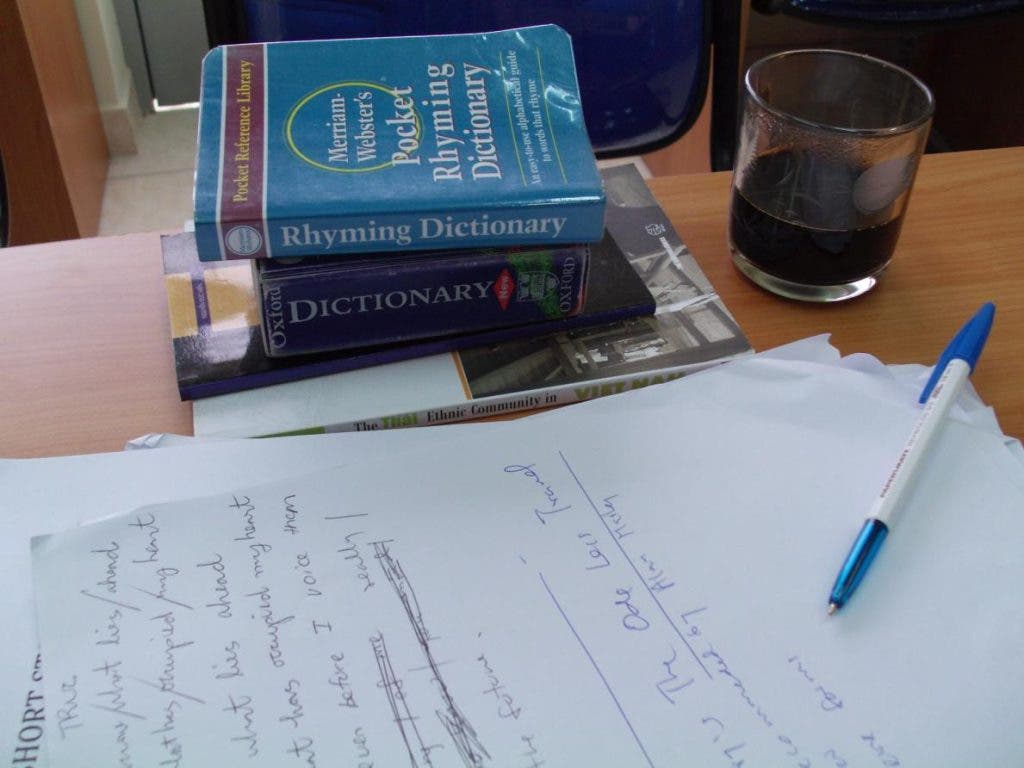
The typical writing process can be divided into nine simple steps that the writer follows in order to produce a work of satisfactory or greater-than-satisfactory quality. It is important to follow the steps in order and not skip around. Most of the steps, much like the scientific method, can be done almost on instinct. Basically, my writing process typically goes:
-
Choose a topic
-
Develop ideas
Find out what's happening in Bensalemfor free with the latest updates from Patch.
Begin initial research
Create a thesis
Find out what's happening in Bensalemfor free with the latest updates from Patch.
Draft an outline
Research some more
Draft rough copy
Revise
Publish final copy
The first, and most obvious, step is choosing what to write about. In certain circumstances, the choice is not left up to the writer but rather given to the individual by an instructor, professor, or supervisor. In other instances, the writer chooses what topic to select. Another important step is to narrow the selection, or focus, of the work. Having a too-broad work that does not contribute anything specialized to a certain field can be as detrimental or worthless as not submitting anything at all, even more so because people will have to read the work and have their valuable time being taken up.
Secondly, be sure to develop your ideas. You can do that through research, investigation, or simply by asking around. Think about who your audience is, what you can contribute to the field, and what you want the work to say about you, whether your research background, your educational level, or your beliefs/viewpoints as in individual. Once you have your idea, you'll want to do some broad investigating into your topic.
Research. This is where the largest amount of your work will come from and it is an important step in the writing process. Be sure to check out the internet, take full advantage of your local or school library, and look for peer-reviewed articles in journals or databases. Try to get in touch with renown authors in the field you're studying and be sure to cite all of your soures.
Although some may disagree with me, I choose to come up with a thesis after I do a bit of research. That way, I know what's been done to death and what could use a bit more scholarship. Getting the thesis is the fourth step in the writing process.
The outline is the fifth part of the writing process. Basically, an outline is a sketch of what your essay will look like. You'll want to be sure that you have a strong opening and ending planned out and nothing extraneous within the body of your outline. Personally, I didn't much use outlines during my undergraduate years simply because I was more of a “write with the flow” kind of student, but some of my colleagues swore by outlines. I do use outlines when I contribute news articles or blogs to Patch, just because it helps to motivate me. I put the outline way down in the middle of the process because there's no point in making an outline if you're unsure of what you're going to be writing about.
After that, I do some more research. This is the more focused and obscure research that step three leads you to (thanks to your new thesis and outline). Expect to spend a lot of time surrounded by archaic knowledge and getting a grasp on all of it can be a bit overwhelming. Here is the point in the writing process where you'll want to keep your audience in mind. There's no point in getting overly esoteric if you are writing for the layman. Otherwise, be prepared to define a lot of unfamiliar terms and explain abstract concepts.
Part seven requires you to actually write the rough draft. You'll want to be sure to get as close to the finished product as possible, but don't become attached to your writing. You'll naturally have a lot of mistakes and a lot of revision will be needed, but it is an important process nonetheless.
Next, you'll revise and edit. Correct grammar, spelling, and punctuation. For that, I'd recommend, of course, Strunk and White's Elements of Style. Be sure, however, to do a great deal of fact-checking and ask your instructor for assistance with your writing. Get as much feedback as possible and consider all opinions. Remember your audience.
Finally, you'll create your final, polished draft and have it submitted to the editor, professor, or publisher. This is the draft that everyone will see, so make sure that it is perfect.