Politics & Government
City Council Votes for Anti-Discrimination Law
But amendments spark concern among civil rights advocates, outrage from Councilwoman Dolan.


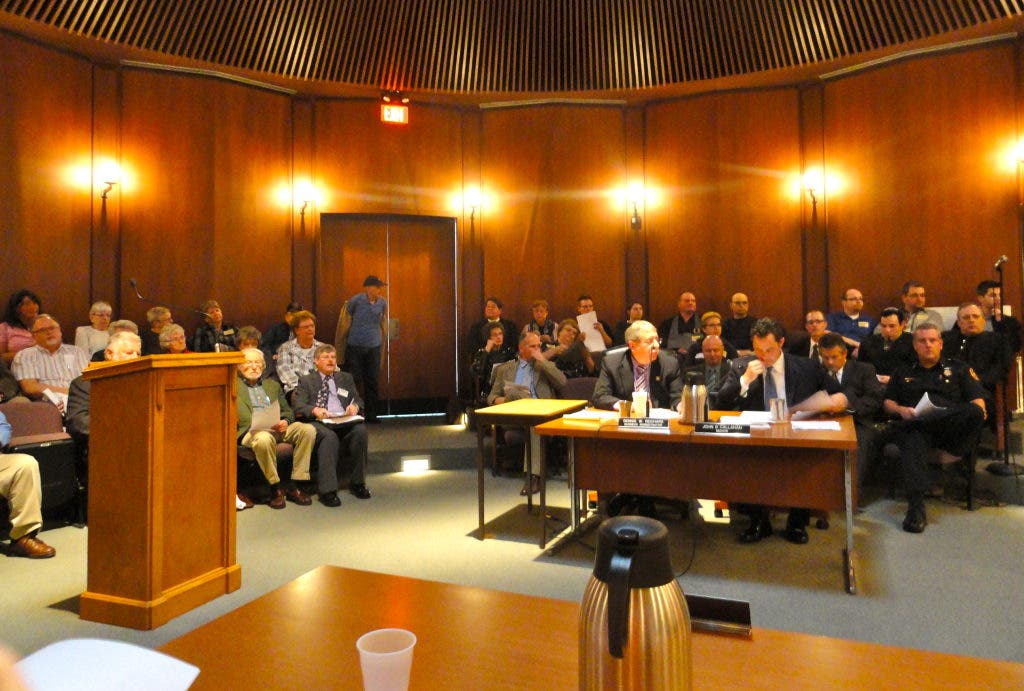
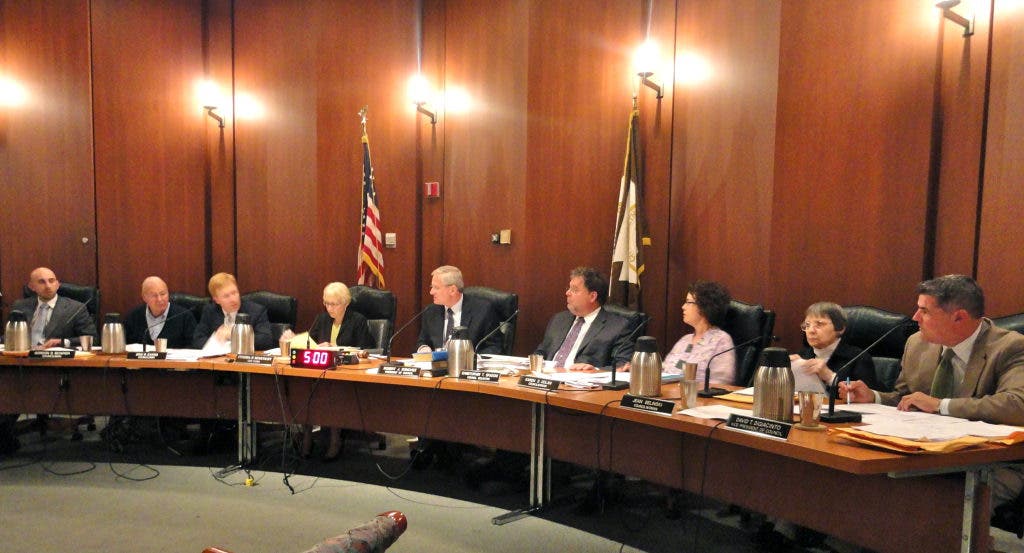
Bethlehem City Council voted for adoption an anti-discrimination law on Wednesday night, but the final bill contained two provisions civil rights proponents argued could render the legislation nearly impotent.
Councilwoman Karen Dolan, who had been an outspoken supporter of the bill, found the new provisions so distasteful, she voted against adoption.
“I’m just astounded,” she told fellow council members. “I’m personally offended. Is this really how you feel?
Find out what's happening in Bethlehemfor free with the latest updates from Patch.
“In two weeks, I hope I will be able to help you see how hurtful this is to a large segment of the city.”
Final adoption of the law is scheduled for council’s next meeting on June 7. Wednesday was a first reading adoption and more amendments are not only possible, but likely. Three of 18 proposed amendments discussed during the four-hour council meeting were tabled for further research and review.
Find out what's happening in Bethlehemfor free with the latest updates from Patch.
Like the Pennsylvania Human Relations Law, the city law would ostensibly prohibit discrimination in the workplace, housing and public facilities, while establishing a new Human Relations Commission to enforce it at the local level.
Bethlehem’s law would go further than the state does in that it expresses the intent to extend those protections to gays, lesbians and transgender people in addition to those currently covered under the state law, which prohibits discrimination on the basis of race, color, sex, religion, ancestry, national origin, handicap or the need to use a guide or support animal.
However, one of the adopted amendments would essentially strip the new commission of enforcement powers, limiting its scope to education, study and promotion of human relations issues, while acting as a “referral group for complaints of alleged discrimination.”
It would make this commission far different than the one that exists in neighboring Allentown, which has the power to conduct investigations of alleged discrimination, issue subpoenas and mete out punishment for non-compliance.
The provision would essentially short-circuit one of the stated aims of the legislation as laid out in an April meeting of council’s , which would be to provide Bethlehem residents with a local outlet to settle discrimination grievances as opposed to traveling to Harrisburg to appear before the state commission.
Liz Bradbury, who serves as an investigator for the Allentown Human Relations Commission, told council that she has never had to issue a subpoena – nor has the commission, in her memory issued punishments – precisely because it has that power. It serves to convince alleged offenders to cooperate with the commission, and if need be, negotiate a solution.
Equally troubling to civil rights advocates – and closer to the heart of Dolan’s outburst – was the adopted religious exemption, which purports to provide religious institutions with an out from law compliance if doing so violates religious tenets.
By a pair of 4-3 votes, council rejected court-tested language recommended by the state Human Relations Commission – and a part of laws in 20 other Commonwealth municipalities – in favor of language advanced by former Councilman Jay Leeson, who works as an attorney for the Catholic Diocese of Allentown.
Civil rights advocates argued that the Catholic Church exemptions are far too broad, essentially allowing any individual who claims to be church-affiliated to legally discriminate.
The state commission-recommended language is tighter in that it allows religious organizations to give preference to people when selecting individuals to carry out its stated goals or aims.
But it is also broader in the sense that it extends those exemptions to fraternal and educational organizations that have a purpose of serving its members. It also offers exemptions to landlords operating owner-occupied rooming houses, which the church language does not.
Leeson apparently argued to former council colleagues that Catholics make up 50 percent of the city’s population and should therefore have a say in how the law is crafted, according to Councilman Gordon Mowrer.
An outraged Dolan said the proposal shows preferential treatment for the church and is oppositional to the spirit and intent of the law. Furthermore, it discriminates against those who are not Catholic, including herself, she said.
Council voted 4-3 in favor of the church language, with Council President Robert Donchez, Eric Evans, Jean Belinski and Mowrer voting for and Dolan, David DiGiacinto and J. William Reynolds voting against.
The state recommended language was rejected by a 4-3 vote, but oddly in a different split, with Dolan, Reynolds and Belinski voting in favor and Donchez, DiGiacinto, Evans and Mowrer voting against.
The vote on final first reading adoption was 5-2 in favor with Dolan and Mowrer voting against. Reynolds said he is supporting the legislation because of its stated aims, but would seriously think about voting against it if the contested amendments are not altered.
Adrian Shanker, vice president of the Pennsylvania Diversity Network, said he would still favor the law getting adopted as-is rather than no law at all, but would prefer to see the two amendments altered.
As in the April committee meeting, Town Hall was packed with close to 100 people and nearly 30 of them spoke. Most of those who spoke were in favor of the new law, though, this time, three people either opposed or expressed reservations about the proposal.
Bethlehem is currently the largest city in Pennsylvania without a Human Relations Ordinance or a Human Relations Commission to address discrimination complaints.
Allentown has had a law since 1964 and amended it in 2002 to prohibit discrimination on the basis of sexual orientation and gender identity. Easton adopted its law in 2007. Two counties and 16 other cities in Pennsylvania also have anti-discrimination laws.
Get more local news delivered straight to your inbox. Sign up for free Patch newsletters and alerts.