Politics & Government
Bethlehem Woman Was Casualty of Military's Ban on Gays
In wake of repeal of Don't Ask, Don't Tell, former servicewoman tells her story
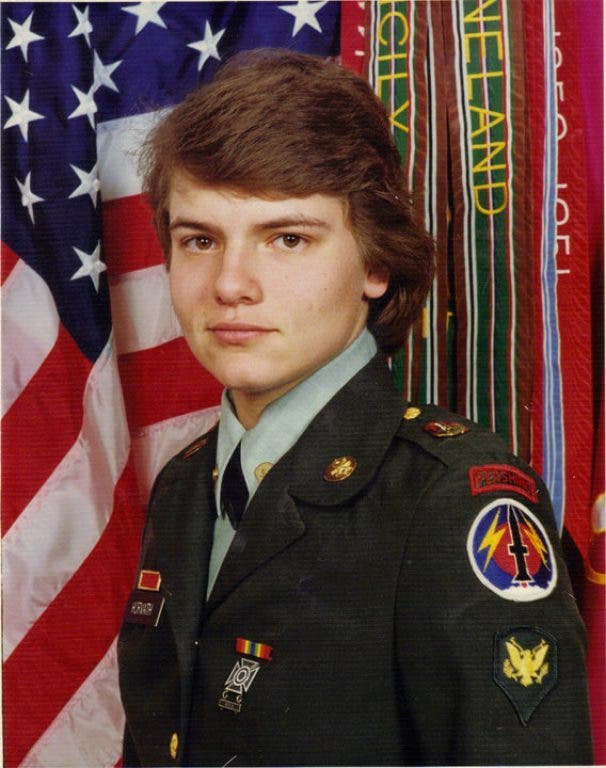
Before there was Don't Ask, Don't Tell, there was an out right ban on gays
serving in the military. In 1984, Leslie Horvath of Bethlehem became one of
its casualties.
When Horvath talked about her experience Monday – the day after the U.S.
Senate's historic vote to repeal Don't Ask Don't Tell – she related the
events of 26 years ago with a marked lack of bitterness. Now a drivers'
helper at UPS, she said there was a time when she considered making the
Army her career.
Horvath had enlisted in the Army in 1981 after graduating from Liberty High
School and was trained as a radio operator in Fort Gordon, Georgia and then
stationed in Fort Hood, Texas. After about 1½ years, she was transferred to
Schwabisch Gmund, an American base in what was then West Germany.
Find out what's happening in Bethlehemfor free with the latest updates from Patch.
She remembers it fondly. "It was great," she said. "I went places I
probably would have never seen. For the most part people were really
great."
But during a barracks inspection in 1984, inspectors found photos Horvath
had hidden of her with her arms around another woman. She and her companion
were both fully clothed but the brass decided the pictures were
incriminating enough to question Horvath, who was then 21.
Find out what's happening in Bethlehemfor free with the latest updates from Patch.
Higher-ups asked her if her interest in other women was just a phase she
was going through. "I said no, I'm not going to outgrow it. This is who I
am," she recalls.
She said she was told that she could make a deal if she were willing to
give names of other gay service members. "I said…I'm going down alone, I'm
not taking anybody else with me," Horvath said. "You don't turn on your
brothers and sisters in the military no matter how bad it might get."
Horvath, then a specialist 4th class, was granted a "general discharge
under honorable conditions" which stated "admission of homosexuality" as
the reason. Then she was given 72 hours to leave Germany.
"I was devastated," Horvath said. "It was an honor to serve my country…. To
be treated like dirt takes a toll, especially on a person that young."
She returned to Bethlehem and put her life back together and didn't tell
many people about what had happened. When the Clinton Administration
announced in 1993 that it would be changing the policy on gays serving to
Don't Ask Don't Tell, Horvath initially thought that might be an
improvement. But the result has been a continuation of gays "being treated
like second class citizens" she said. "You're getting rid of people who
have proven they can do a job and do it well."
As estimated 65,000 gay men and lesbians serve in the military, though more
than 13,000 have been discharged under Don't Ask Don't Tell, according to
published reports.
Momentum for the polcy's repeal has been building since Chairman of the Joint Chiefs of Staff Adm. Mike Mullen came out in favor of lifting the ban earlier this year. A survey released in November of more than 115,000 service members found that about 70 percent thought allowing gays to service openly would have a positive or little effect or a mixed impact.
Asked why she enlisted at all when there was a ban on homosexuals and
lesbians, Horvath, now 47, said she was unsure about sexual orientation
when she signed up. "I knew I was different, but at that point I really
couldn't put a name to it," she said.
Concerns that allowing gays to serve openly will damage military unit
cohesion are overblown, she said. "We're all in the military to do a job,"
she said. "I know I don't care who people sleep with."
Despite the painful memories for her discharge, Horvath said she actually
thought about trying to re-enlist after the terrorist attacks of Sept. 11
out of a sense of duty.
Late Saturday night when the Senate voted to repeal Don't Ask Don't Tell,
she breathed a sigh of relief for all the gay servicemen and women who come
after. "Even though it came too late for me," she said. "It came just in
time for a lot of people."