Schools
School District Falls Short of 'AYP' Goals
Test scores held steady, but No Child Left Behind requirements escalate yearly, officials said.
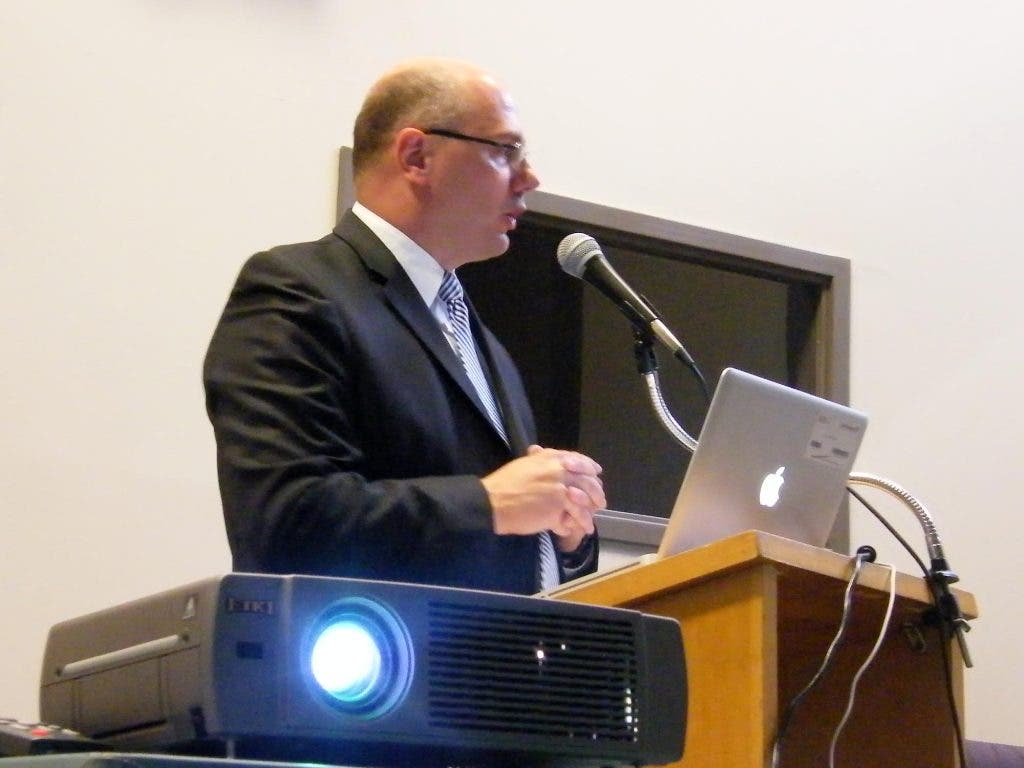

A variety of factors contributed to the Bethlehem Area School District's falling short of making it's 2010-11 Annual Yearly Progress (AYP) target for the first time in three years, but it's not because students are less proficient or district educational standards have slipped, Assistant Superintendent Jack Silva said.
“This year, the bar went up,” he said, explaining that the No Child Left Behind (NCLB) Act requires an ever-larger percentage of students to test at or above proficiency at their grade level, until 100 percent of all students are required to reach the goal, slated in NCLB law for 2014.
If any subgroup fails to meet the target, the entire district is failed. Urban school districts typically have more subgroup categories due to greater ethnic and economic diversity.
Find out what's happening in Bethlehemfor free with the latest updates from Patch.
“Every time we have a subgroup, we have a new target,” Silva said.
In addition, "No Child Left Behind" does not make allowances for the possible limitations experienced by special education students, requiring of them the same level of proficiency as their non-disabled peers.
Find out what's happening in Bethlehemfor free with the latest updates from Patch.
Silva said the district narrowly missed meeting it's required target scores in both reading and math for special education students in both the elementary and middle school levels, and missed the targets by a slightly wider margin for the same subgroup of students at the high school level.
“I don't want the message of this presentation to be blaming our IEP students,” Silva said. “It seems the district (historically) has trouble making it's targets when the standards go up. But then we tend to redouble our efforts and catch up.”
School Board Vice President William Burkhardt, who is also a former educator and retired district principal, said NCLB is not only unrealistic in its demands on school districts, but puts unfair pressure and stress on students with substantial learning disabilities.
“The only group I worried about was our special ed kids,” Burkhardt said, recalling the law's passage before his retirement, adding that obstacles to educational success other test subgroups face, such as economic disadvantage, are easily overcome with a little attention.
“But what can you do for the kid whose God-given ability means they will always struggle?” Burkhardt asked, adding, “Our ... politicians should be ashamed, and they should move to change (No Child Left Behind) real quick.”
Silva said there is currently no plan to renew the federal law, up before Congress for reauthorization this year.
But for now, it remains, he said, and the district must do what it can to make sure it makes next year's Annual Yearly Progress.
“I want to see a 22-school approach towards AYP,” Silva told the board.
“All of our teachers and administrators need to believe that IEP kids can be successful,” added the district's Director of Special Education, Richard Agretto. “We're working hard, but we must work smarter and work better.”
Targeting Individualized Education Program students that fall behind for more help earlier for more frequent sessions, and also offering assistance to more students, also should be district strategies, Agretto said.
“We have to (also) increase the number of interventions ... to help (students) grow,” he added.
“What do we do, make them come in on Saturdays?” said Burkhardt. “I wasn't kidding when I said ... they are going to make these kids sick (with stress) from this.”