Neighbor News
Violations Pile Up in Maine Essay Contest Investigation
Secret Judges, Anonymity Breaches, and...Eight Missing Acres?
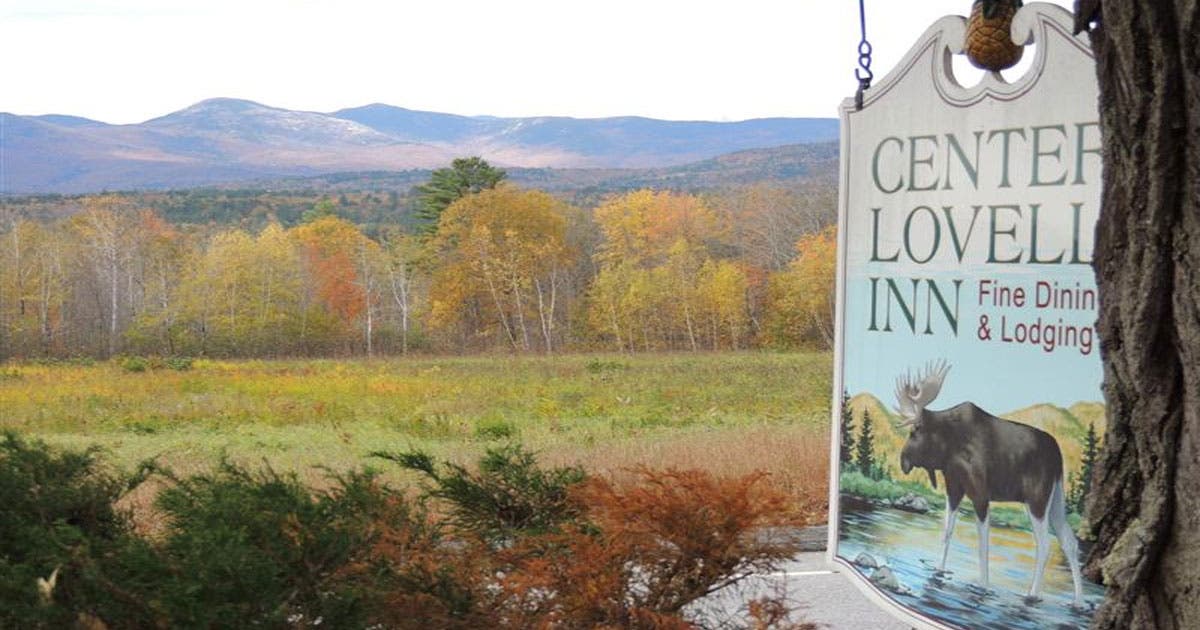
Maine State Police are 10 days into their investigation of the Center Lovell Inn Essay Contest
sponsored by owner and proprietor Janice Sage. Police opened the case several days after the announcement of the contest winner caused countless entrants to report suspected wrongdoing.
A little backstory...
It had all the makings of a heartfelt underdog tale: successful owner of enchanting country inn on 12 green acres (who won the business in a similar contest 22 years earlier) seeks to pass the landmark business on for just $125 and a perfect essay. The plan was for Sage to read all the submissions and send her 20 favorites to two independent judges who would determine a winner. Programs such as Good Morning America (ABC) and NBC Nightly News advertised the contest as a dream-come-true in the making. Reputable newpapers published these statements from Janice Sage herself:
“I would like to pass it on to somebody who can’t afford to go out and buy an inn or restaurant.”
Find out what's happening in Bethlehemfor free with the latest updates from Patch.
“There’s a lot of very talented people in the restaurant business who would like to have their own place but can’t afford it. This is a way for them to have the opportunity to try.”
“There are a lot of talented people that can’t, just can’t, go out and buy an inn like this. Now all they need to do is write and convince me.”
Find out what's happening in Bethlehemfor free with the latest updates from Patch.
When it was announced on June 6 in a post on the contest’s Facebook page that, “THE WINNER HAS BEEN CALLED,” the response was bittersweet. People wished they had won, of course, but no one sounded upset or surprised that they hadn’t. The hundreds of comments were genuinely positive and expressed well wishes and congratulations for the mystery-winner who had yet to be named.
It wasn’t until June 12 that the winner was finally revealed to be Prince Adams, owner of an inn and restaurant on a resort island in the Caribbean, who had now apparently won a second inn and restaurant business, with a grammatically incorrect essay that failed to address the required writing prompt. As the news of this confusing aftermath spread, the contest’s Facebook page became inundated with accusations of deceptive advertising and selection practices. People demanded to know who the mystery judges had been, and what qualifications could have led them to award an essay so wrought with literary fumbles.
This backlash led to the creation of the Center Lovell Contest Fair Practices Commission Facebook group, whose members lodged the many complaints that caused the Maine State Police -along with the rest of the public- to take a critical look into the way the contest was run.
According to police,
the issue at hand is whether the contest should be considered a game of skill or a game of chance, as each is associated with different regulations. To be determined a game of skill, the winner needed to be chosen by qualified judgment of the essay and no other factor(s). Cue Thelma and Shaggy to unmask the mystery judges who must show they had the necessary expertise to properly judge a formal essay. Games of skill are only permitted in Maine if they fall in the “non-profit” category. Unloading a property with an assessed value in the $400-$450k range while raking in at least $900k in contest fees doesn’t sound too non-profit. Especially when Sage wasn’t shy about announcing to the press that she was hoping to earn money to retire in comfort. If the contest is determined to have been a game of chance, despite being advertised as a game of skill, then Sage needed to have a license from the Maine State Police to conduct the contest. Police confirm that Sage had no such approval -or any approval, for that matter- from any authority in Maine to conduct this contest. Running an unlicensed game of chance is a crime that carries a penalty of jail time and/or fines up to $2000. No big deal after coming away with almost a million bucks though...unless everyone who entered the contest decides they didn’t get what they paid for - a fair shot - and wants a refund. It was stated by a representative of Sage that “the State of Maine approved” the contest. Police have now confirmed enough information to show that claim to be false.
The Maine State Police isn’t the only organization currently investigating the Center Lovell Inn Essay Contest. The group of concerned citizens from around the world that gathered to form the Center Lovell Contest Fair Practices Commission (CLCFPC) has done their -internet- research regarding everything from consumer law, to public land records, to the winner’s other business ventures. Not only has winner Prince ‘Roger’ Adams written about marketing schemes such as this essay contest, he also runs awebsite that allows people to fund his other prospective -meaning they don’t yet exist-projects. The city of Lovell’s Property Card for the Inn’s address shows that the property owned by Sage is only 4.7 acres, despite the 12 +/- acres promised in the contest rules. Land maps and county records confirm that no adjoining lots were owned by Sage at the time such records were last updated. If there was a neighbor planning on donating or selling land to Sage or the contest winner, then such land-owner needed to be identified in the official contest rules. Mystery judges AND mystery sponsors would account for two huge FTC violations.
Experiences of the individual members of the CLCFPC reveal more damning evidence. One member says that Janice Sage herself called him to solve an issue with his Western Union money transfer. This shocked the other contestants, who had all been warned that contact with Sage during the contest could disqualify their entry. One technical requirement for the essay entries was that they could not contain identifying information such as names or addresses, to ensure anonymity in the selection process. Retreiving a phone number from an entrant’s application, calling them, and engaging in small talk consitutes gratuitous contact and gives new strength to the suspicion that the the contest rules were completely disregarded by the contest sponsor.
Cortney Potts, an administrator for the CLCFPC, asked members of the group to specify whether they received entry confirmations/reciepts or not, and whether or not their $125 check or money order had been cashed. A whopping 7.5% of people in theCLCFPC who entered the contest said they did not receive any confirmation that their entry was received, despite their money being taken. Hopefully, that percentage isn’t proportionate to the entire entry pool. It’s estimated that around 7400 entries were received. If 7.5% of 7400 entries went unaccounted for, that would equal about $70,000 in ‘missing’ funds. Oops.
Due to the limited scope of the State’s investigation, people have been advised by the Maine State Police to report their experiences and concerns to federal agencies. Heeding this advice, the hundreds of members of the Center Lovel Inn Fair Practices Commission have filed reports with both the FTC and the FBI, and they urge others to do the same, saying they’re
“hoping to spread an awareness of the need for all contests to be regulated and overseen by impartial and qualified authorities.”
If this group gets the federal investigation they’re asking for, this could just turn out to be an inspiring underdog story after all.
To file a report with the FTC, click here.
To file a report with the FBI, click here.
To contact the Center Lovell Contest Fair Practices Commission (CLCFPC), click here.