Schools
Bryn Mawr College Receives $250,000 Grant for Technological Innovation
The money will go toward developing classes that utilize online modules, hiring an instructional support technologist, and informing other institutions of their progress.
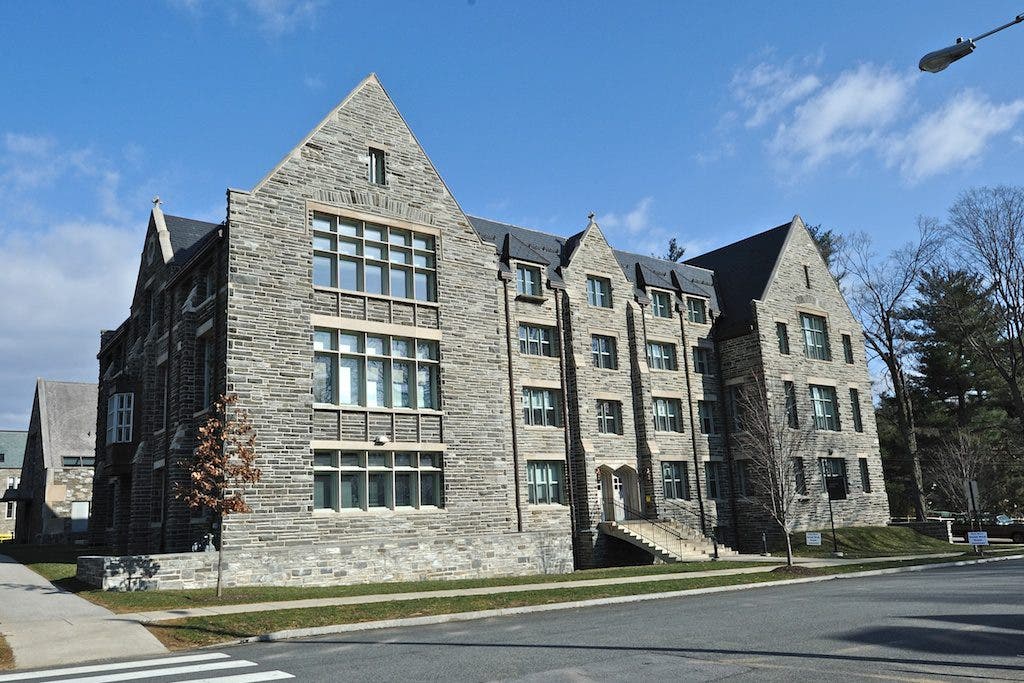
Bryn Mawr College recently received a $250,000 grant to use for the promotion of technology throughout the liberal arts sector, which will be used to integrate more technologically-based instruction into classrooms, beginning next school year.
Next Generation Learning Challenges, which provided Bryn Mawr with the grant, is an initiative that works to identify and accelerate the growth of educational technologies in higher education that have a record of being effective, Bryn Mawr College Provost Kim Cassidy said.
“The program is designed to pick up and support early stage innovation with the idea of giving those innovations a boost and getting them up to speed quickly,” Cassidy said. “They are looking for early emerging technologies to support so they can reach more students.”
The initiative allocated a total of $10.6 million in grants to 29 organizations earlier this month, including Bryn Mawr College.
Grant recipients demonstrated at least one of four designated approaches to technological innovation: blended learning models that use face-to-face instruction in conjunction with online learning, deeper learning and engagement applications through technological innovation like social media or digital games, high-quality open core courseware, and learner analytics to monitor student process and aid in student support, Next Generation Learning Challenges (NGLC) consultant Marge Gammon said.
Bryn Mawr received a NGLC grant for the college’s “Applying Blended Learning to Developmental and Gatekeeper STEM Courses in a Liberal Arts Environment” program.
What that means, Cassidy explained, is that Bryn Mawr will begin integrating open-source courseware offered through Carnegie Mellon into its quantitative social sciences and natural sciences as a supplement to classroom instruction. Data from large universities suggests that this technology is extremely helpful in classroom learning, but Bryn Mawr will begin investigating whether this material works on a small scale.
“Our project is seeing if we can make use of some of these tools in a small liberal arts college environment, where student and faculty interaction is critical, and that’s kind of who we are,” Cassidy said.
“We want to see if we can use this to supplement and even enhance that interaction--to see if those things that are less valuable to spend time on in classroom can be done online so professors can focus on even more valuable things in the classroom.”
The learning modules that will be used also provide feedback on student learning, which enables faculty to target areas that need more attention, Cassidy said. Through the modules, faculty members see how students understood the module--what areas they understood quickly and which areas were more difficult, so classroom time can be spent explaining the items students have difficulty with.
In part, the $249,938 granted earlier this month from Next Generation Learning Challenges will go toward developing classes that utilize the online modules and hiring an instructional support technologist that can help train and support faculty, Cassidy said.
The funds will also be used for workshops that will educate 35 partnering higher education institutions on the program’s progress.
“Part of the point of this grant is to have a lot of impact, so one of the reasons we got the grant is because there was such an interest in these 35 other institutions,” Cassidy said. “The bulk of the resources will be used here, but a really important component of the project is sharing.”
Despite the technological innovations, Bryn Mawr will continue to keep its focus on face-to-face learning, Cassidy said.
“It’s really important to make clear that we’re not moving toward replacing our product with online instruction,” Cassidy said. “But… can we? I think it’s an open question. Can it be used to enhance the small liberal arts college learning environment?”