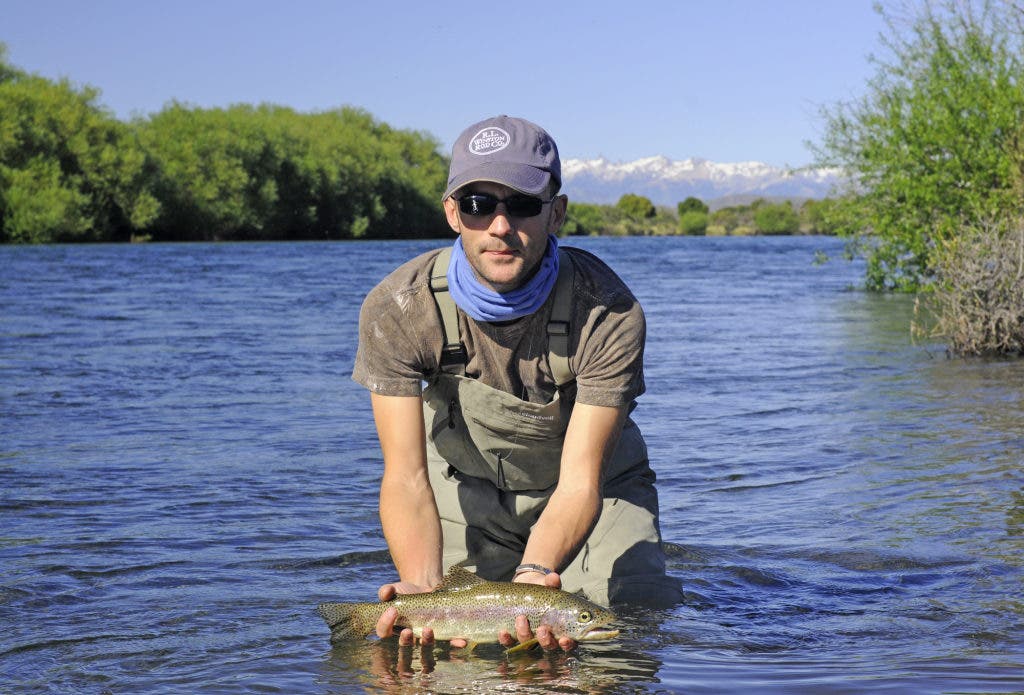


This weekend marks a special time of the year for a small yet strong loyal contingent. No, it has nothing to do with baseball season beginning, nor college basketball season ending. It’s a little challenging, requiring patience, skill and diligence and on Saturday, April 2, many will be donning their equipment and heading to Ridley Creek, Brandywine Creek and Pickering Creek, all for the start of fishing season.
Within those flocks that will be out there lies a niche within a niche, fly-fishermen, whose challenge to snag trout is even more daunting than what regular anglers face. Fly-fishing is a unique part of fishing that got its start in Western Pennsylvania that’s growing, especially saltwater fly-fishing.
“The challenge of the fish is to eat the fly and in saltwater, that’s only part of the challenge to get the fish to take the fly,” said Chris Frangiosa, 32, the retail manager and buyer for the in Bryn Mawr. “The fight of the fish that’s even 50 pounds is substantial. You can catch a fish as large as a 200-pound tarpon in the Florida Keys, and they catch 150-pound tarpons regularly. You’re dealing with a larger, stronger pole, and it’s no small feat. It’s not the relaxing, quiet solitude people might associate with fishing. It’s why so many more younger people are gravitating towards that—it’s a much more exciting thing to do. It’s what’s representing fly-fishing now.”
Find out what's happening in Bryn Mawr-Gladwynefor free with the latest updates from Patch.
Frangiosa said he’s getting a 50-50 split between saltwater fly-fishing and freshwater fly-fishing customers. A rod and reel, waders and boots for freshwater fly-fishing could typically run around $1,000, according to Frangiosa, whose shop sells high-end equipment that’s durable and can be passed down to relatives and friends who might consider pursuing it. Saltwater rods and reels cost about the same price.
Fly-fishing originated in Britain and reached the United States in the 1950s, traced to Western Pennsylvania, by the Letort Spring Run in the Carlisle area, where legendary fly-fishermen like Charlie Fox and Vince Marinaro began popularizing the sport. It was a steeper dare for traditional fisherman.
Find out what's happening in Bryn Mawr-Gladwynefor free with the latest updates from Patch.
“It’s really an art,” said Frangiosa, whose shop also runs trips to exotic locales like Belize, in Central America, and Argentina and Venezuela. “Part of the reason people like fly-fishing is they can make their own flies. They can create something that looks like a natural bug that fish can eat. It’s a sport of challenge. The point of the sport is to catch a fish the way you want to catch them on your own terms. It’s not easy. If it were, more people would do it."
On Opening Day, 95 percent of his clients, Frangiosa estimates, will never keep the fish they catch. It’s catch and release.
“I haven’t kept a fish since I was 10 years old--that’s something that’s ingrained in the sport,” Frangiosa said. “Either you’re fishing for fish that aren’t good to eat, or the other thing is that it’s fishing for sport. That’s the main reason. Say you catch a beautiful trout at Valley Forge, you let it go and you come back later. Hopefully, you catch the same fish again and it’s more beautiful. It's the sport and challenge that makes it fun.”
Editor's note: A previous version of this article spelled incorrectly the name of the retail manager and buyer for TCO Fly Shop. His name is spelled Chris Frangiosa.