Politics & Government
Highmark vs. UPMC: A Tough Pill To Swallow
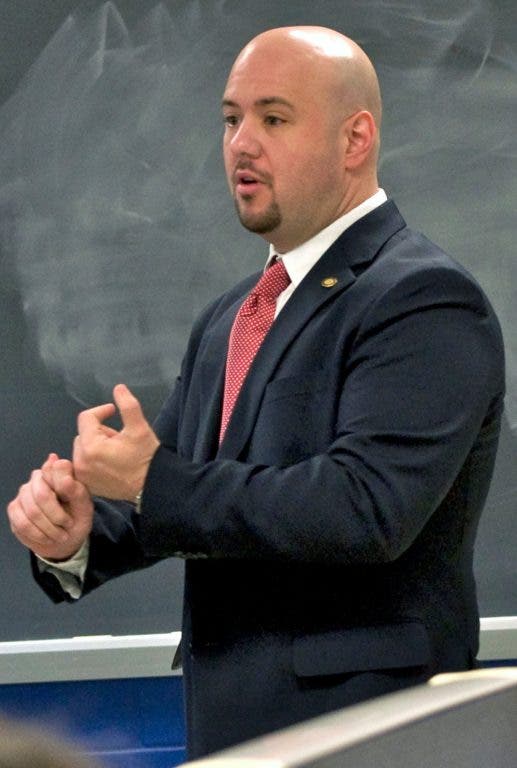
State Rep. Jesse White asks those who oppose any level of government-led health care reform: Is this current system of exploding costs and tax-exempt thuggery a status quo worth fighting to maintain?


Over the past few months, news has continually popped up dealing with the conflict between Highmark and UPMC—these stories continue to increase in both frequency and urgency. Most people aren’t really sure what any of this means, or if the conflict will actually impact them in any tangible way.
Here’s what you need to know:
Highmark and UPMC are currently in contractual deadlock because of the potential purchase of the West Penn Allegheny Health System by Highmark. The current contract between the region's largest health insurer (Highmark) and the largest hospital system (UPMC) expires on June 30.
Find out what's happening in Canon-Mcmillanfor free with the latest updates from Patch.
Although no paperwork has been filed with the Insurance Department officially requesting the affiliation, it has been generally acknowledged for months that Highmark will likely acquire West Penn Allegheny (UPMC's largest local competitor) with the goal of saving and revitalizing the struggling health system.
By securing WPAHS and becoming a health-care provider, Highmark would put itself in direct competition with UPMC. As a result, UPMC has adamantly refused to even negotiate terms with Highmark, stating that there will be no contract. UPMC has had a health insurance plan for nearly 10 years; yet Highmark has never hesitated to work with UPMC, and have encouraged it to continue to be part of its provider network.
Find out what's happening in Canon-Mcmillanfor free with the latest updates from Patch.
Realizing that an integrated health network must provide specific services, there are concerns that the Highmark network, in its infancy, may not be adequate or ready to handle three million subscribers.
Lack of a new reimbursement agreement would also make treatment at UPMC facilities "out of network" for Highmark customers. That situation likely would result in treatment charges doubling or tripling or even greater.
With contract expiration, Highmark insurance cardholders will no longer have access to the UPMC facilities at their current rates come the contract end in June 2012 and the subsequent run-off period.
It is Highmark’s belief that UPMC would have to provide access to all its affiliated hospitals and physicians at in-network rates for an additional year (“run-off period”), through June 30, 2013.
The expiration of the agreement between Highmark and UPMC would affect only people with private insurance, which is the primary source of coverage for most Americans. It is believed that people presently enrolled in CHIP, Medicare and Medicaid would continue to have full access to UPMC facilities and doctors.
In addition to the potential adequacy of network issues, and the probable rate increases, there is also the question of how medical records will be transferred to new physicians and hospitals for Highmark customers who choose to keep their existing insurance.
A recent survey conducted by the Allegheny County Medical Society indicates that 80 percent of responding physicians said they believe that patients’ access to care will be negatively impacted if Highmark and UPMC don’t reach a contract agreement.
The Insurance Department is investigating whether to employ its power to suspend any expiration of the UPMC hospital contracts that could extend the operative period up to an additional nine months (from June 30, 2012).
So far, two pieces of legislation have been introduced to address the stalemate: HB 1901 and HB 32. I am a co-sponsor of each bill, but there is uncertainty as to whether the Legislature has the authority to get the two back to the negotiating table.
No one really knows what will happen if an agreement isn’t reached, but the consensus is that the result will be bad for everyone…except UPMC.
It should be noted that both Highmark and UPMC are technically non-profit organizations, which give them ridiculous tax advantages. To put the numbers in perspective, Highmark made $14.6 billion last year and is sitting on a $3.7 billion surplus, but somehow could not find the $150 million to keep the highly effective and much needed AdultBasic program going.
UPMC made $8 billion last year.
Withmore than $20 billion per year in revenues to be had, how can these two not find a way to co-exist, especially since they are by law supposed to be operating not for profit, but for the public good?
At the end of the day, the lion’s share of the blame falls on UPMC for refusing to negotiate a new contract with Highmark just because Highmark is unwilling to hand UPMC an undisputed monopoly if the allow West Penn Allegheny Health System to fall.
This heavyweight battle runs counter to the free market talking point that the private sector always works itself out for the best. People are going to suffer because a $20 billion pie inexplicably cannot be cut into more than one piece. There aren’t adequate words to describe this level of despicable greed.
To those who oppose any level of government-led healthcare reform, I have to ask: Is this current system of exploding costs and tax-exempt thuggery a status quo worth fighting to maintain?
People will suffer. Businesses will not be able to afford benefits for employees. People will die because they will not be able to afford medical care. This isn’t hyperbole; our families and friends and neighbors will continue to suffer because two health care conglomerate robber barons can’t figure out how to share obscene amounts of money.
I would say anyone who defends this system needs to have their head examined, but I don’t know if head examinations will be covered by insurance anymore.
Get more local news delivered straight to your inbox. Sign up for free Patch newsletters and alerts.