Politics & Government
PennDOT, PA Turnpike Unveil New Tow Plow
The organizations also stress motorist safety.


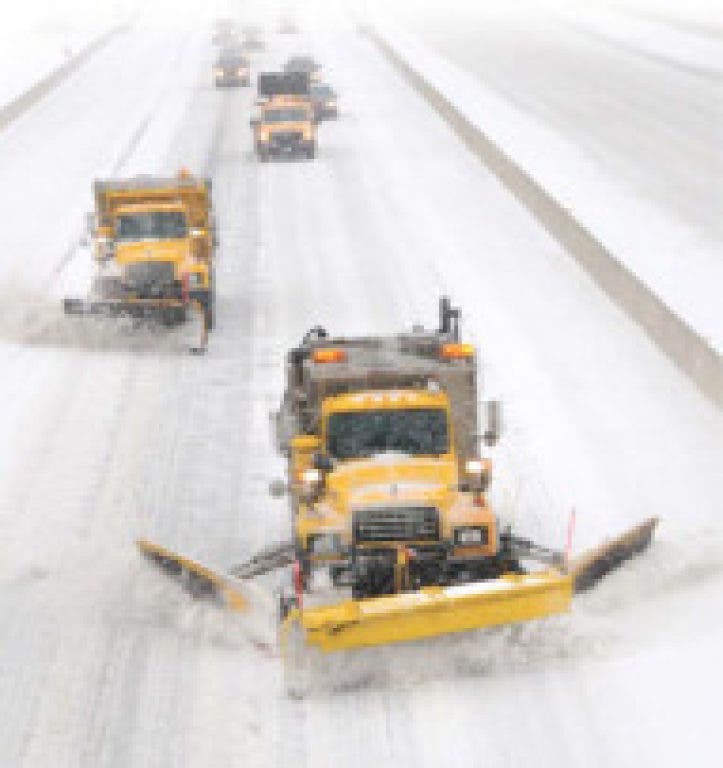
Weather in the Canon-McMillan area may still be mild, but the state Department of Transportation and the Pennsylvania Turnpike Commission this week unveiled the state's latest weapon in its battle against winter weather: a 30-foot-long, tow-behind snowplow.
The groups will use the new tow plows on major roadways this winter. Because of their size, tow plows are only used on limited-access roadways such as the Pennsylvania Turnpike, interstates or other multi-lane roads.
PennDOT tested a tow plow two winters ago on Interstate 99 in Centre County and last year added tow plows in Allegheny, Berks and Lackawanna counties. PennDOT plans to have at least one tow plow operating in each of its 11 engineering districts by next winter. The Pennsylvania Turnpike expects to have four tow plows in service this winter.
Find out what's happening in Canon-Mcmillanfor free with the latest updates from Patch.
PennDOT and Turnpike plow trucks are normally equipped with a 10- or 12-foot wide front plow. In addition, PennDOT trucks and some Turnpike trucks are equipped with a wing plow (a plow attached to the side of the truck) that increases total plowing width to about 16 to 18 feet. A tow plow increases the plowing width to 24 feet, allowing for two, 12-foot-wide lanes to be cleared at once.
As the name implies, tow plows are towed behind a conventional plow truck equipped with a front plow. When plowing snow, the tow plow truck is driven on the left lane and when the operator deploys the tow plow it “steers” out into the right lane, allowing the truck to clear both lanes simultaneously.
Find out what's happening in Canon-Mcmillanfor free with the latest updates from Patch.
The tow plow costs between $99,000 and $106,000 based on equipment. A typical, tandem-axle PennDOT truck costs nearly $175,000.
Officials also strongly urged motorists to give plow truck drivers extra room and to never try to pass a plow truck or group of trucks.
So, get ready now. Know what to do when encountering a plow truck:
- Stay Back: Stay at least six car lengths behind an operating plow and remember that the main plow is wider than the truck. Wing plows, which are located on the sides of the truck, are generally 10 feet wide.
- Remain Alert: Snowplows generally travel much more slowly than other traffic and may at times be completely obscured due to blowing snow or heavy snowfall rates. This is especially true in open areas where high winds can create zero visibility without warning.
- Move Over: Move as far away from the centerline of the road as is safely possible when approaching a snowplow head-on, and remember that snow spray can obscure the actual snowplow width.
- Never Pass: Never try to pass or get between several trucks plowing side by side in a “plow train.” The weight of the snow thrown from the plow can quickly cause smaller vehicles to lose control, creating a hazard for all nearby vehicles.
- Don’t Drive in the Snow Plow “No Zone”: Never travel next to a snowplow since there are blind spots where the operator can’t see. Also, plow trucks can occasionally be moved sideways when hitting drifts or cutting through heavy snowpack.
- Headlights On: Keep your lights on when driving near snowplows to help the operator better see your vehicle. Also remember that under Pennsylvania state law, vehicle lights must be on every time a vehicle’s wipers are on due to inclement weather.
Editor's Note: Follow PennDOT on Twitter at www.twitter.com/PennDOTNews.
Get more local news delivered straight to your inbox. Sign up for free Patch newsletters and alerts.