Politics & Government
Solobay: Pittsburgh Region Still Saddled with Hidden Gas Tax
State Sen. Tim Solobay supported a measure that would have ended the state regulation requiring a special 'boutique' blend of gasoline to be sold in the seven-county Pittsburgh region.


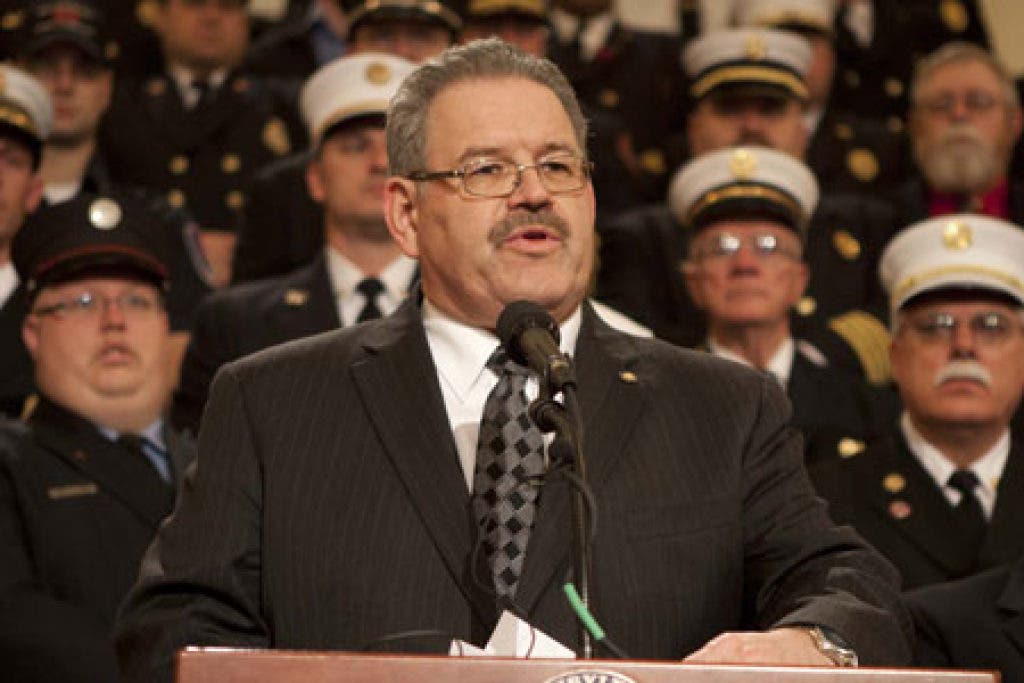
The final version of a bill intended to free Pittsburgh-area drivers from the cost of outdated gasoline regulations was a step backward, leaving the region’s commuters and vacationers saddled with millions of dollars in hidden taxes, said this week.
Hours before the Senate adjourned for the summer, the Senate concurred in House amendments to Senate Bill 1386, leaving a watered-down version that Solobay and Senate Democrats voted against.
“I can only assume that everybody from the Pittsburgh area who went along with the changes stopped to fill up on their way back home to their districts,” Solobay said. “Because gasoline in the Harrisburg area is 20 to 40 cents cheaper than it is back home and that adds up.”
Find out what's happening in Canon-Mcmillanfor free with the latest updates from Patch.
Six months ago, Solobay supported the measure, which would have ended the state regulation requiring a special “boutique” blend of gasoline to be sold in the seven-county Pittsburgh region.
The “summer gas” is routinely more expensive than gasoline sold in the rest of Pennsylvania and also in neighboring Ohio and West Virginia. Even with supplies relatively steady this year, gasoline prices in the region are running from 15 cents to 30 cents more than in surrounding counties, adding up to millions of dollars in extra expense.
Find out what's happening in Canon-Mcmillanfor free with the latest updates from Patch.
Solobay said the original version of SB 1386 was watered down by a House amendment calling for further study of the issue and setting conditions in which only a temporary waiver of the requirements could be requested if there are fuel shortages.
“For more than 10 years, every car manufactured has been required to have the technology to fix the problem,” Solobay said. “That means that the regulations do nothing for 60 percent of the cars on the road, but we’re still paying. We’re paying for the technology in the vehicles and we’re paying for more expensive gasoline.”
The requirement affects motorists in Allegheny, Armstrong, Beaver, Butler, Fayette, Washington and Westmoreland counties.
Since 1999, the Pennsylvania Department of Environmental Protection and the U.S. Environmental Protection Agency, through Pennsylvania’s State Implementation Plan (SIP), have required that gasoline sold in the seven counties between June 1 and Sept. 15 must have a Reid Vapor Pressure (RVP) of 7.8 psi. Regular gasoline has an RVP of 9.0.
Further, in 2007 a new federal rule required that all gasoline must contain ethanol, which acts to raise the RVP of gasoline, making it counterproductive to the RVP mandate intended to reduce Volatile Organic Compounds (VOCs).
The final version of SB 1386 did allow for the termination of another regulation requiring gas stations in the same seven-county Pittsburgh region, as well as the five-county region of Bucks, Chester, Delaware, Montgomery and Philadelphia, to install Stage II vapor recovery systems on fuel pumps. These pumps prevent the release of gasoline vapors when in use, but the law contains a specific provision to eliminate the requirement if onboard refueling emissions controls in vehicles became widespread.
“It’s frustrating to see the tendency to be intimidated by the federal government and some of these expensive mandates go on for years beyond their useful purpose,” Solobay said. “It’s not just bureaucracy, it’s expensive bureaucracy and bold action is the only thing that’s going to change it.”
Get more local news delivered straight to your inbox. Sign up for free Patch newsletters and alerts.