Politics & Government
Ten Random PA Policy Points
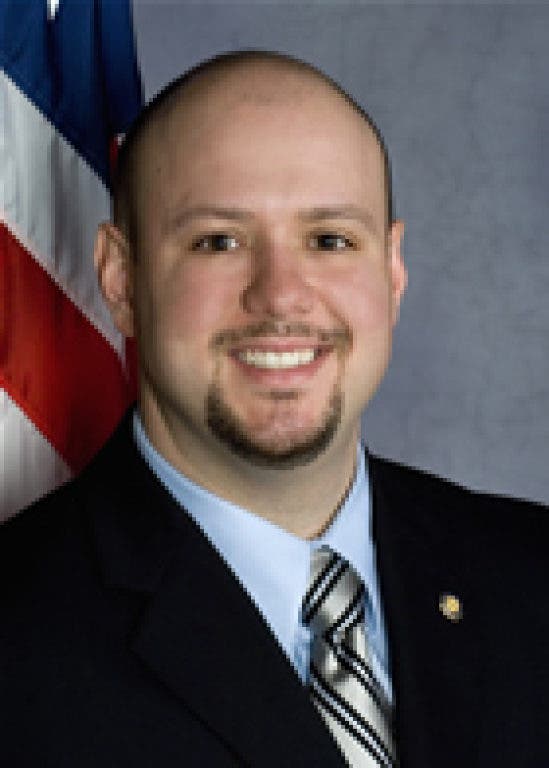
State Rep. Jesse White (D-Cecil) shares some interesting facts about the state, including welfare, transit, tourism, prison, health care, college loans and buying state-produced food.


Oftentimes, when debating or discussing politics and policy, facts are tossed aside in favor of more emotional arguments. Even worse, when one side of a legitimate but spirited debate falters, it has somehow become acceptable to either refuse to accept the facts as accurate or point out some comparable flaw in an effort to make two wrongs make a right.
By way of experimentation, here are 10 totally unrelated facts about issues we deal with in Pennsylvania government. …
1. According to Saint Joseph’s University, it is estimated that by devoting $10 per week of total food purchase dollars to buying PA-grown products, Pennsylvania’s 5.5 million households could reinvest over $2.9 billion food dollars into PA.
2. Over 140 public universities now use "differential tuition" plans, a 19-percent increase since 2006. These plans charge higher tuition for harder majors. This number is increasing as states cut higher-education spending and schools try to pay for expensive technical programs.
3. Pennsylvania’s college graduates now have the fifth-highest debt in the nation with an average of $28,000 in student loans. Meanwhile, there are 80,000 bartenders in the nation with bachelor’s degrees.
4. A study on the cost of long-term care in Pennsylvania calculated the median rate of a semi-private room at a nursing home to be $245 a day. The median rate for a private room was $265 a day, or $96,725 annually.
5. Pennsylvania’s hospitals employ nearly 268,000 people and more than 584,000 Pennsylvanians depend on hospitals for direct and indirect employment. Hospitals also contribute $98.9 billion to local communities and the state.
6. A prison reform expert found that 41 percent of PA inmates eligible for a parole interview in 2011 did not have one, with nearly 30 percent of those due to the prison system or parole offices not having the paperwork ready. When parole has been granted, inmates often remain in prison at an annual cost of $77 million, usually due to not having a place to stay when released, but also 33 percent of the time because some other bureaucratic item has not been met.
7. Pennsylvania’s equine industry has grown from $1.5 billion economic impact in 2001 to $4 billion currently. It has added 28,000 jobs since the creation of the and it will potentially lose 15,000 jobs if Gov. Corbett’s budget proposal is enacted. The governor wants to cut $72 million from the fund after cutting it by $47 million last year.
8. Pennsylvania’s nearly 1,000 museums host more than 32 million visitors a year, resulting in $1 billion in visitor spending, $2.9 billion in economic impact, 37,000 jobs and $90 million in state tax revenue. Heritage tourism and history make up the largest component of PA’s tourism industry.
9. About eight rural residents and seven urban residents out of every 1,000 Pennsylvanians participated in the Department of Public Welfare’s Homeless Assistance Program. According to client reports, 60 percent of those who benefited from assistance were adults, 40 percent were children and 2 percent were veterans.
10. In 2011, buses, subways, and trains had their second-highest ridership nationwide since 1957, behind only 2008 when the price of gas topped $4 a gallon.
Get more local news delivered straight to your inbox. Sign up for free Patch newsletters and alerts.