Health & Fitness
Why Writers Love Bucks County
Notable writers and other creative types have been adopting Bucks County for almost a century, drawn here by affordable homes and a down-to-earth, live-and-let-live cultural heritage.

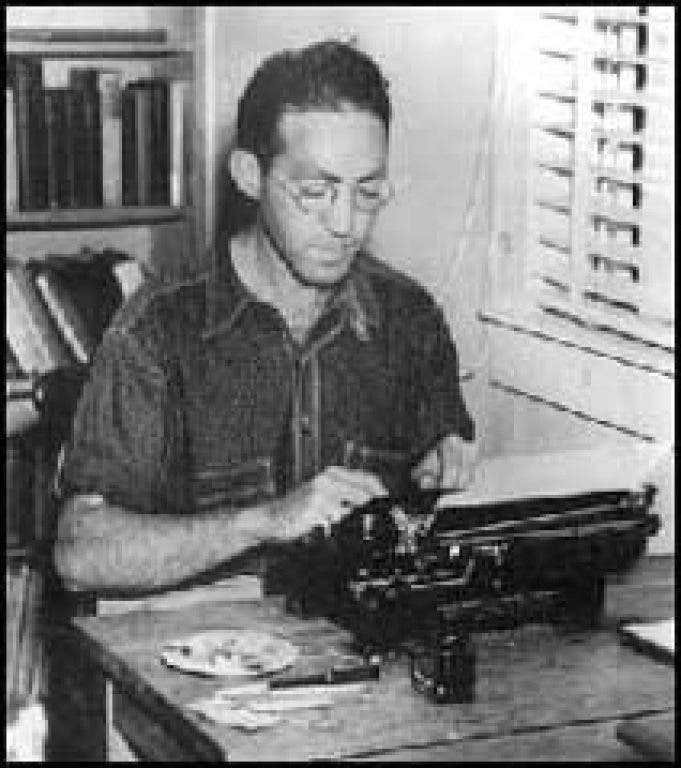
I became a writer because I grew up in Bucks County. As a child in Doylestown in the 1950s and 1960s, you could hardly throw a crab apple without hitting an author, lyricist, screen- or short-story writer, or someone who would become one.
I rode my bike from Cherry Lane to the Fanny Chapman pool every day in the summer, down East Street with the Black Angus steers and mansion of Oscar Hammerstein II on one side, and on the other what was then a field of corn that grew "as high as an elephant's eye," a signature line in Hammerstein's show Oklahoma.
Inside Hammerstein's mansion was where Stephen Sondheim, who went on to create many of Broadway's most loved shows of the last quarter century, spent the most important years of his youth while he attended George School in Newtown. Hammerstein had become Sondheim's surrogate father when he became estranged from his parents.
Find out what's happening in Doylestownfor free with the latest updates from Patch.
I've no doubt that on some of the days, as I huffed up the East Street hill and coasted down the other side, the two geniuses were sitting side-by-side on the piano bench working out notes and lyrics.
Everyone in Central and Upper Bucks knew about James Michener, one of the best-selling authors of all time (South Pacific, among many others), who had been born here out of wedlock, grew up in modest circumstances, and graduated from Doylestown High School.
Find out what's happening in Doylestownfor free with the latest updates from Patch.
Everyone also knew about Pearl Buck, who'd won the Nobel Prize for literature for The Good Earth and lived in an old farmhouse on Dublin Rd. in Hilltown.
Many were aware that Margaret Mead, a world-famous and controversial anthropologist, had lived in Doylestown on West Court St. I certainly was because my mother had studied her work, and Mead was the speaker at my high school graduation.
Out across the rolling hills and cropland, on sleepy country roads, in converted stone farmhouses at the end of long, leafy lanes, lived a galaxy of literary stars, many of whom have been long forgotten but at the time were the royalty of New York's cultural scene: in Tinicum Township, it included New Yorker Magazine writer Dorothy Parker, of Algonquin Roundtable fame; and Nathaniel West, who wrote what many consider the greatest American novel of the 20th century (Day of The Locust). In Buckingham it was Moss Hart, world-famous playwright; and his buddy, George S. Kaufman, an equally famous playwright. It was at Kaufman's farm, on Route 202, that John Steinbeck came to work on the stage version of his book "Of Mice and Men."
My favorite at the time was S.J. Perelman, who wrote scripts for the Marx Brothers and a hilarious book, Acres and Pains, about the travails of the city slicker who comes to Bucks County, buys an old farm, and discovers he's living in a money pit.
These luminaries were the tips of icebergs. There were others, and most of them had lots of famous guests who might be spotted on a lovely summer weekend at watering holes like the Pipersville Inn, the Water Wheel, and Cutalossa Inn, where Dorothy Parker lived for a time and where I played as a child while visiting my grandmother.
Among the literary stars who have adopted Bucks County in recent years are Jonathan Weiner, who won the Pulitzer Prize for nonfiction (Beak of the Finch); Ted Tally, who won an Oscar for the screenplay for "Silence of the Lambs,"; Christopher Durang, Obie Award-winning playwright; and James McBride, author of the huge bestseller The Color of Water, a memoir of growing up with a Jewish mother and black father.
So what is it about Bucks County that certain successful writers find so attractive? Originally, when writers first began to migrate here from New York in the 1930s, the allure was cheap land where it was possible to buy an old historic house, fix it up, and live like the truly wealthy could in the tonier Gotham suburbs. In fact, Bucks County was known at the time as the poor-man's Connecticut. So many noted artists, performers, and writers moved here in mid-century that the New York press dubbed us "the genius belt."
Bucks County is still cheaper than Connecticut and that is one reason why, when I was ready to leave New York City, I decided to come home. Locals may not believe it, but Bucks County looks like a bargain compared to Connecticut, the Hamptons, and just about anywhere else the "in" crowd summers.
But Bucks County also appeals to those creative types who have no interest in hobnobbing at cocktail parties on the beach, or being seen, or rubbing shoulders with celebrities. My theory is that Bucks County has benefitted by its Quaker and German heritage, even though it's becoming harder and harder to find true Pennsylvania Dutch families and Quakerism is practiced by a small segment of society.
Nevertheless, I believe that vestiges linger of the frugal, live-and-let-live attitudes that were promoted by William Penn's Quakers and brought with them by the early German settlers. It helps explain why New Hope (not Lambertville) became a mecca for artists and gay people in the early 20th century.
This is a stunningly beautiful place to feel safe and welcomed, just two hours from Manhattan, a place where a successful writer can find peace and quiet and still be able to go out and enjoy a first-class restaurant meal, without being pestered by fans or sycophants, without feeling like he or she has to hobnob or engage in pretense.
Whatever the reason, I feel fortunate to have been able to return home and find that Bucks County is still beloved by writers.