Schools
Controversial Neutrality Policy Approved By Central Bucks School Board
Policy 321 will ban teachers from advocating partisan, political and social issues in their classrooms.


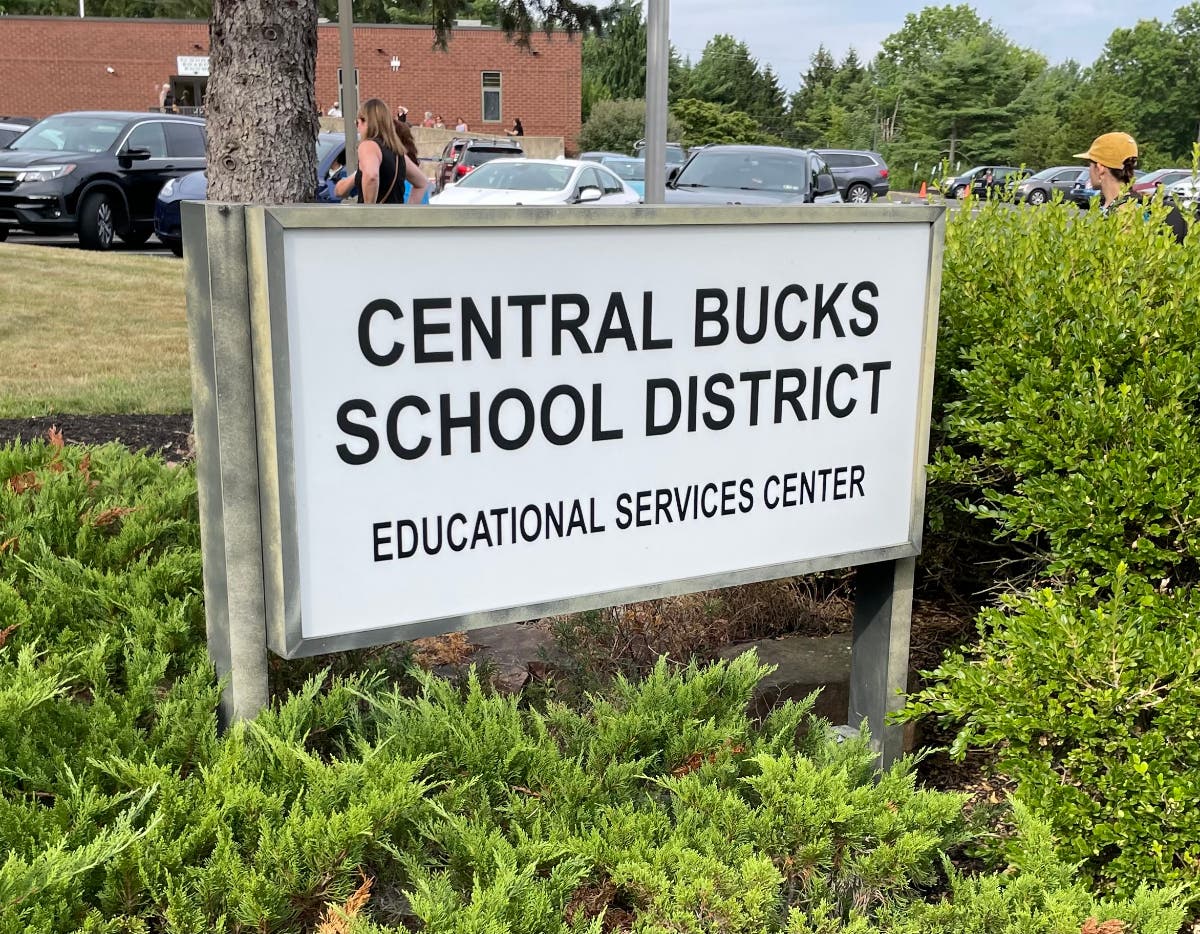
DOYLESTOWN, PA — The Central Bucks School Board on Tuesday voted to approve a new policy aimed at bringing neutrality and balance to the classroom.
Prior to the vote, board members listened for about two hours as residents spoke for and against the policy, which will ban teachers from advocating partisan, political and social advocacy issues in their classrooms in addition to banning any associated partisan and social decor, including flags.
Opponents of Policy 321 say it will end up "stifling creativity, free speech and thought" in classrooms across the district.
Find out what's happening in Doylestownfor free with the latest updates from Patch.
The policy has also raised flags with LGBTQ+ students who have argued against banning the Pride Flag, which they see as a symbol of acceptance and safe harbor in an atmosphere where they often feel unsafe.
"Feeling safe and included should not be political. A Pride flag hanging in a classroom shows unity, safety, connection and so much more," said CB student Emma Dickinson, speaking in support of the LGBTQ+ community. "When I see a Pride flag it doesn't tell me which political party they represent. It simply tells me that they care about their students."
Find out what's happening in Doylestownfor free with the latest updates from Patch.
Supporters argue that "the district’s role is to teach students how to think, not what to think, thereby keeping classrooms as places of education, not indoctrination.
“This policy is not a prohibition on topics of speech,” they say. “Rather, it is designed to promote education instead of indoctrination or endorsement of partisan, political or social policy matters."
Board members voted 6 to 3 to adopt Policy 321, which sets rules for what teachers can and cannot do politically in their classrooms, including ending the display of Pride flags and banners other than the flag of the United States.
Voting for the new policy were Dana Hunter, Leigh Vlasblom, Lisa Sciscio, Sharon Collopy, Debra T. Cannon and Jim Pepper. Tabitha Dell’Angelo joined members Karen Smith and Dr. Marian Mahmud in voting against the policy.
Smith blasted the policy, arguing that it will “stifle creativity, free speech and spontaneous thought.
“With all the issues we have in this district why the hurry on this policy," Smith continued. "This policy stifles thinking and creativity. The repeated use of the word indoctrination is demeaning to our staff,” she said of the policy wording. “How do we think we can educate our students to be global citizens if they can’t discuss social policy issues in school? We cannot teach children how to think when we are restricting and controlling thoughts. The policy is the very opposite of education.
“You can’t erase the path this policy followed from an administrative directive banning pride flags to its current state as an embarrassing list of restrictions on intellectual and personal freedom,” she said.
“I heard my fellow board members say this policy creates neutrality and that neutrality is good for education,” said Dell’Angelo. “I’ve also heard it stated that the policy is intended to create a more inclusive environment. I agree that those worthy goals include support for good academic outcomes and inclusive environments. As sometimes happens we agree on goals, but disagree on how to achieve them.
“Creating classrooms where students know they are valued and included lowers stress and improves cognitive function and leads to better outcomes," she continued, speaking of the students feeling marginalized by the policy. "Creating inclusive spaces, in part, means that students see themselves and one another reflected in positive ways in books, materials, displays, etc. The literature and research in this area supports including positive representations across identities, not taking them away. Let’s not create a policy that puts a barrier between what our instructional leaders know about what good practice is and what we are allowed to do for our students.”
Mahmud agreed with Dell'Angelo and argued that the policy also "takes away from the work of teaching and educating students about civic work and social issues, including things that we already do like Drug Free Schools, poverty, supporting marginalized groups. These are all social issues and this policy would take away from them," she argued.
"The language is also completely disrespectful to our staff and to our educators," Mahmud added. "We're already facing staff shortages and issues with recruitment. When we don't support our educators and our students we will lose them and it will be harder to retain them. Teaching in meaningful and best ways includes not following this policy."
Vlasblom defended the policy against allegations that it would "silence" teachers and conversations, pointing out that conversations can still take place in the classroom.
"This doesn't stifle the amazing work our teachers do. We have other policies that encourage our teachers to have these conversations, to engage with students, to continue to support students," said Vlasblom. "This policy just says do it with a mindset, which a majority of our teachers already do, of being open to welcoming all sides, all opinions. I wish that it wasn't necessary to write policy, but sometimes we have to tailor policy to different situations. It's part of the job.
"This does not address students' speech. It allows students to ask questions, engaging questions. And we have policies that encourage teachers to respond to them," added Vlasblom.
Board member Debra Cannon added her support for the policy, noting that there have been incidents in the past where one-sided representations have been made in the classrooms at Central Bucks.
“For example: a teacher who expresses a personal rule in their classroom that they refuse to say the name of a former president, but instead will only refer to them as ‘No. 45,’” Cannon said. "That's interesting. Teachers must be mindful of group think and curb it immediately," she said.
Cannon added another example. "A student is asked to share in an open discussion the name of a person who had achieved the American dream. After providing facts of their life and that person's accomplishments, a student with a dissenting view responded, 'That’s because they are a straight, white male and were able to do all of those things.' There's an uproar of laughter.
"Students should be taught critically, but through a clear lens. Let them review, analyze, reflect, process and express in an open space free of fear and animosity to determine their own lens view," said Cannon.
Get more local news delivered straight to your inbox. Sign up for free Patch newsletters and alerts.