Neighbor News
FIX This First
Stop Wasting Your Simulator Time: The Cold, Hard Truth About Your Golf Data


Let’s be brutally honest for a second. You’ve spent the last few months escaping the winter weather by hitting golf balls into a simulator screen. You’ve shelled out good money for bay time, you’ve hit thousands of shots, and you’ve stared at fifteen different data points after every single swing.
But as the spring golf season kicks off, ask yourself this: Are you actually getting any better? If you’re like 90% of everyday golfers, the answer is a frustrating no. In fact, you might actually be getting worse.
As a Top 100 Coach who has given over 40,000 lessons, I see this exact scenario play out every single day. The modern launch monitor is a miracle of technology, but for the average amateur, it’s a trap. You hit a drive, look up at the screen, and see your spin rate is "too high" at 3400 RPM. Immediately, your brain screams, “FIX IT!” You spend the next hour tweaking your swing, buying a new shaft online, and completely losing whatever natural rhythm you had.
Find out what's happening in Doylestownfor free with the latest updates from Patch.
Here is the cold, hard truth: Spin rate is a symptom, not the disease. You are treating every single metric on that screen as equally important. You are obsessing over the outcomes (spin, launch angle, distance) while completely ignoring the brutal reality of how you are actually delivering the club to the ball.
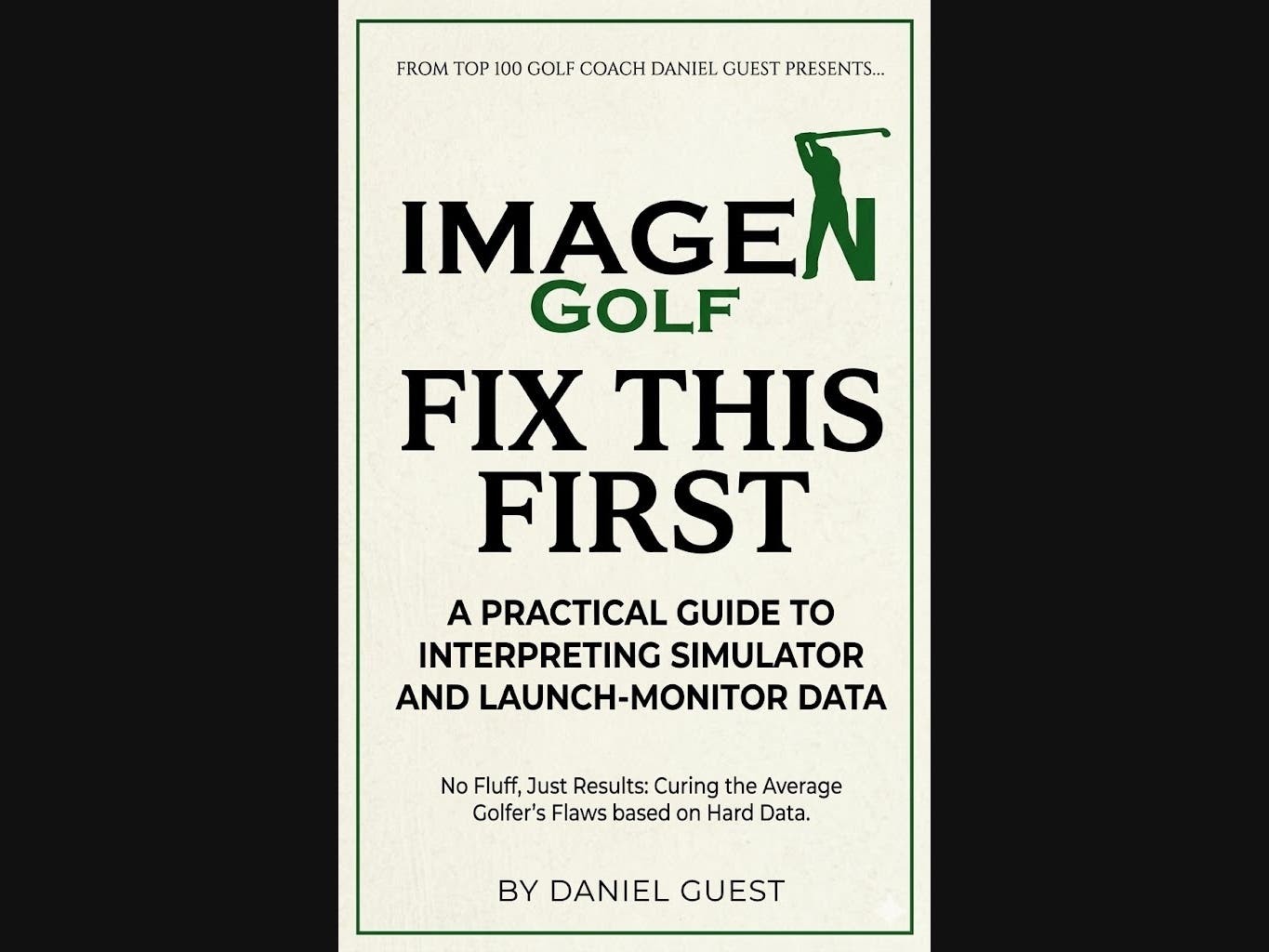
That massive disconnect is exactly why I wrote my new book, FIX THIS FIRST: A Practical Guide to Interpreting Simulator and Launch-Monitor Data.
Find out what's happening in Doylestownfor free with the latest updates from Patch.
I didn't write a 400-page theoretical textbook, and I’m definitely not going to tell you to chase the "perfect" numbers you see Tour Pros hitting on TV. Tour pros are aliens. Their numbers are not your blueprint. You don't need to be perfect to play great golf; you just need to be functional and predictable.
If you want to stop guessing and start actually improving, you need a decision-making framework. Next time you step into the simulator, I want you to ignore the distance and the tracer. Warm up, hit 10 stock driver swings, and run your averages through this 4-step diagnostic gauntlet.
Stop at the FIRST test you fail. That is your primary limiter.
- Limiter 1: Path Consistency. Is your club swinging wildly to the right on one swing, and across it to the left on the next? If your club path isn't stable, your start line is a lottery. Stop here. Ignore everything else until your swing direction is predictable.
- Limiter 2: Face-to-Path Variance. Path stable? Good. Now, is the clubface playing nice with that path? If this relationship is bouncing all over the place, you're cooking up unpredictable hooks and slices. Stop here and tame your curve.
- Limiter 3: Strike (Smash Factor). Path and face are behaving, but are you actually finding the sweet spot? If your smash factor is below 1.44 with a driver, you are bleeding power and distance because of off-center hits. Stop here. Put some foot spray on the face and learn to hit the center.
- Limiter 4: Dynamic Delivery. If everything else is dialed, but you're launching it like a brick or chopping down on the ball, now you can fix your angle of attack.
Most amateurs jump straight to step 4—or worse, they just try to buy a new driver—when their swing path is an absolute train wreck. They change three things at once and wonder why they feel lost.
Improvement isn't found in aimless repetition. It’s found in identifying your actual primary limiter, putting the blinders on, and practicing only that one thing.
Stop practicing your mistakes. Stop chasing ghosts.
Daniel Guest is a Top 100 Golf Coach and the founder of IMAGEN Golf. His new paperback workbook, FIX THIS FIRST, is available now on Amazon. For more data-driven, no-BS golf instruction, subscribe to the IMAGEN Golf YouTube channel, listen to The Imagen Golf Podcast, or follow @ImagenGolf on Instagram.