Community Corner
"Quarries" Exhibit At Michener Unearths Unexpected Side Of PA Impressionism
Quarries and Industry in PA Impressionism features the "poetic charm" of quarries in paintings by Daniel Garber, Charles Rosen, and others.


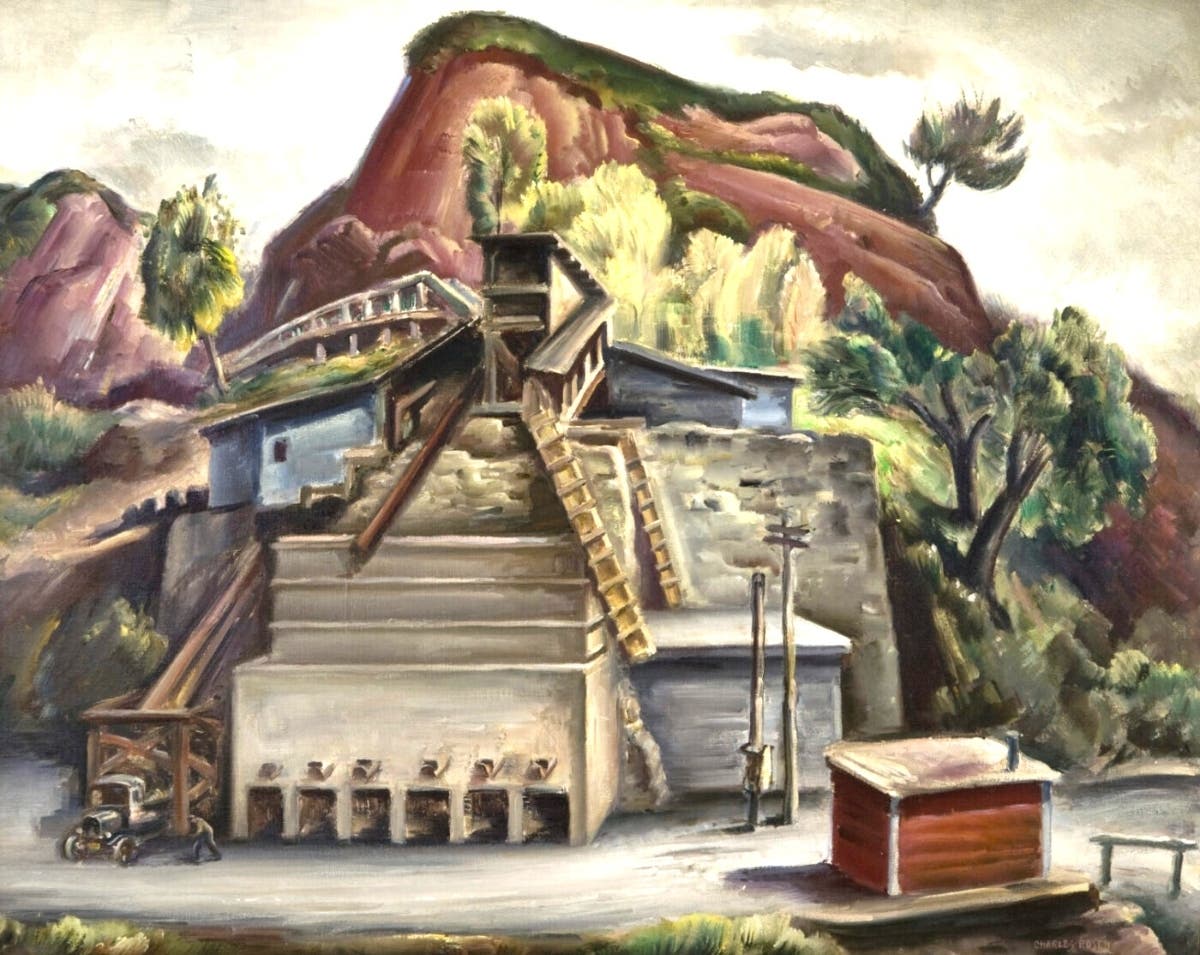
DOYLESTOWN, PA —While rural landscapes are the hallmark of Pennsylvania Impressionism, these artists also gave unusual attention to local quarries and factories in their paintings.
The new exhibition -"Abstractions of Nature: Quarries and Industry in Pennsylvania Impressionism" - at Michener Art Museum reveals this unexpected fascination from Daniel Garber, Charles Rosen, and others who lived through a time of industrial transformation in the greater Delaware Valley.
Opening Labor Day weekend on Saturday, September 5, and on view through Sunday, February 28, "Abstractions of Nature" explores how the biggest names of the New Hope School found new possibilities in their landscape paintings thanks to industrial sites. Fourteen artists are represented in works from the first half of the 20th century, including William Lathrop, Letitia Maxwell Ely, Roy C. Nuse, Edward Redfield, Bernard Badura, Walter Baum, George Sotter, R.A.D. Miller, Arthur Meltzer, and John Folinsbee. Some are loans from private collections that are rarely on public view.
Find out what's happening in Doylestownfor free with the latest updates from Patch.
Active quarries have been a part of Bucks County’s industry for centuries, mining deposits like Buckingham Valley, a narrow band of limestone and dolomite rock that extends southwest from Center Bridge, Penn., to the outskirts of Doylestown. Major Bucks County artists either portrayed quarries as part of the landscape and edited out any marker of active industry, or celebrated quarries at work by intentionally integrating workers and machinery within their compositions.
“Pennsylvania Impressionists depicted quarries as integrated components of the natural world,” said the Gerry and Marguerite Lenfest Chief Curator Laura Igoe. “They became part of the landscape for artists, providing structure, scale, and light. When you’re painting rolling scenes along the Delaware on canvas, quarries give a moment of drama.”
Find out what's happening in Doylestownfor free with the latest updates from Patch.
Daniel Garber, who was drawn to painting quarries after the success of The Hills of Byram that launched his career in 1909, praised the quarries along the Delaware River as giving “you things like the Grand Canyon but on a scale commensurate with the canvas.” He repeatedly painted the scene, overlooking Byram from Point Pleasant, throughout his life.
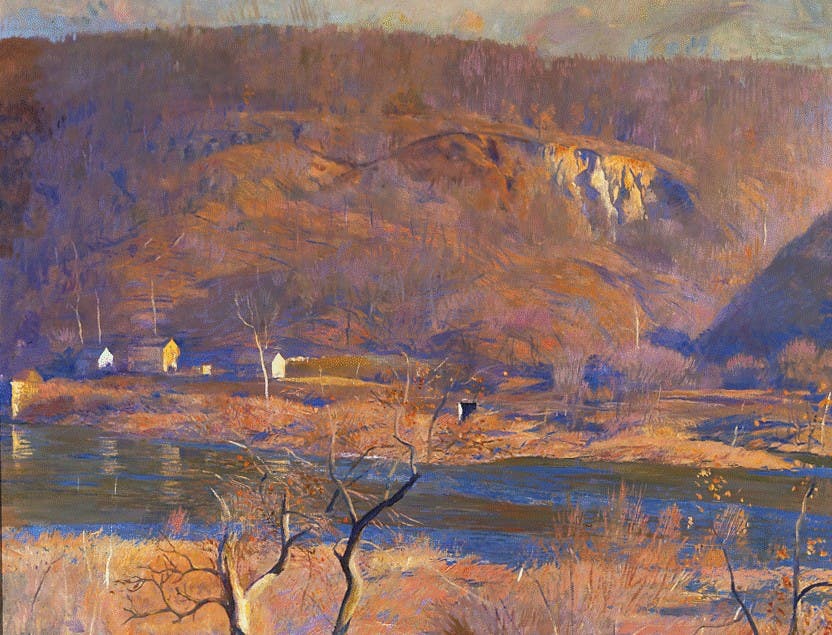
Daniel Garber's 1940 "Over At Byram." (Michener Art Museum)
Also on view by Garber is a rare charcoal study, Abandoned Quarry, for a painting Garber ultimately judged a failure and destroyed. He investigated the subject of quarries across media, from painting to drawing to etchings, with an unusual 1925 etching titled Harmonville on view in the exhibition. The etching is a pointed critique of industrialization, uncustomary for Garber, with factory chimneys billowing smoke and a dying tree in the foreground. Meanwhile, for many regional artists, the smoke from factories or steel mills was an opportunity to embrace the moody effects of air pollution or the geometry of factory architecture.
Garber displayed the Harmonville painting on which the etching is based at the 1926 Sesquicentennial International Exposition in Philadelphia, where in contrast, his monumental A Wooded Watershed mural was debuted as a showcase of Pennsylvania’s natural resources. Abstractions of Nature marks the 100th anniversary of A Wooded Watershed, on view as a focal point of Michener Art Museum’s permanent collection, while Garber destroyed his Harmonville painting after 1931.
Get more local news delivered straight to your inbox. Sign up for free Patch newsletters and alerts.