Community Corner
6 Historic Bucks County "Wow Houses" Worth Exploring
Tyler Mansion is arguably the grandest home ever built in Bucks and believed to be the last of the "great estates" constructed in the U.S.


But there's another class of "Wow" houses that makes our county stand out from the rest. They are the homes of our predecessors, people like the Tylers and the Mercers who built homes that have stood the test of time. Today, they stand as landmarks to ages past in a sea of new developments.
Here are some of Bucks County's landmark homes, many of which are open for public tours or can be explored through the lens of YouTube.
Find out what's happening in Doylestownfor free with the latest updates from Patch.
The Mansion At Andalusia
With its soaring white columns and superbly crafted interiors, the Mansion at Andalusia—called the Big House—is one of the finest, most distinctive examples of Greek Revival architecture in the United States. Inhabited from the 1790s until the 1970s, the story of Andalusia parallels and reflects that of the nation itself. Visiting this National Historic Landmark in Bensalem is a journey back in time, an invitation to see firsthand the traditions and tastes of the generations of Biddle family members who called it home. For tour information and special events including Champagne Garden Tours, visit Andalusiapa.org.

The Mansion at Andalusia in Bensalem Township.
Find out what's happening in Doylestownfor free with the latest updates from Patch.
Summerseat Mansion in Morrisville Borough
Few homes in America can boast the history of this Bucks County mansion. Tucked away on a residential street in Morrisville Borough, Summerseat has been owned by, or occupied by such important figures of the 18th century as Robert Morris and George Clymer, signers of the Declaration of Independence and the U.S. Constitution, and General George Washington. During Washington’s time here in 1776, Summerseat was owned by Thomas Barclay, America’s first consul overseas and who also negotiated the first treaty for the United States with a foreign nation, Morocco. John Adams and Thomas Jefferson, with whom Barclay worked while in France, recommended Barclay for this position. Summerseat was built in 1765 by one of America’s first self-made men, Adam Hoops, who was born on the Pennsylvania frontier about 1708, and became one of the colonies’ wealthiest men by hard work and sheer determination. Summerseat is perhaps most famous as the Headquarters of General George Washington from December 8th to 14th, 1776. The well-known directive, “that all the boats and water crafts should be secured or destroyed.,” was issued by Washington while he was staying at Summerseat. Many generals rode across the land that is now Patriots Park and up the marble steps of Summerseat: Thomas Mifflin (future governor of Pennsylvania, Lord Stirling (William Alexander), Henry Knox, General “Mad” Anthony Wayne, Cadwalader, Hugh Mercer and Israel Putman.
Tyler Mansion in Newtown Township
Tyler Mansion, built for George F. and Stella Elkins Tyler in the 1930s in Newtown Township, is arguably the grandest home ever built in Bucks County and believed to be the last of the “great estates” ever constructed in the United States. In 1987, Tyler Hall (as the mansion is now known) and Tyler Formal Gardens were placed on the National Register of Historical Places.
By many measures, Tyler Hall and Tyler Formal Gardens are true gems of Bucks County. And visiting this historic site - now part of the Bucks County Community College campus in Newtown - is a step back in time to an era of elegance that included the Golden Age of American Gardens.
The 300-foot long mansion with 60 rooms, several towers, and a castellated balcony was designed in the French Norman revival style. The stone used for the exterior and much of the interior as flooring was taken from a quarry on the Tyler estate. The mansion’s outside walls are two feet thick and insulated with cork. Interior walls are equally strong and are also lined with cork, and in some cases, reinforced with steel rods.
The cobblestone courtyard was laid with stones transported from Callowhill Street in Philadelphia. The floors are all reinforced with concrete, cork liners, and some are surfaced with rich wooden flooring. The roof consists of three overlapping layers of specially made tiles as well as copper rain gutters and downspouts. All the window casements are steel and concrete and have individual locks, which required 90 different keys.
The mansion, which had more than 20 fireplaces, also had many elaborate features such as gold fixtures in every bathroom. In addition, the Tylers had a 10-car turntable garage, enabling each car to be cranked to its own spot. Henry D. Slepper of Boston was hired to oversee the mansion’s interior decorating. Forty servants staffed the Tyler residence in its heyday, and they lived either in the east wing of the house or in the small cottages situated on the estate.
In 1932, the Tylers permanently moved to Indian Council Rock, and George Tyler established a stable of about 25 fine horses and restarted a dairy that had been abandoned in 1925. The new dairy was in operation for the next 40 years, and the Tylers had one of the leading Ayreshire herds in the country. The Tylers also raised grain, poultry, sheep, and pigs, and owned the Spring Garden Mill. In addition, the Tylers often purchased rare birds, exotic plants, flowers, and trees that had never previously been grown in Bucks County. Many species of wild fowl were bred at Indian Council Rock, and at one time, it was possible to find trees and flowers growing on the grounds that were found nowhere else in North America.
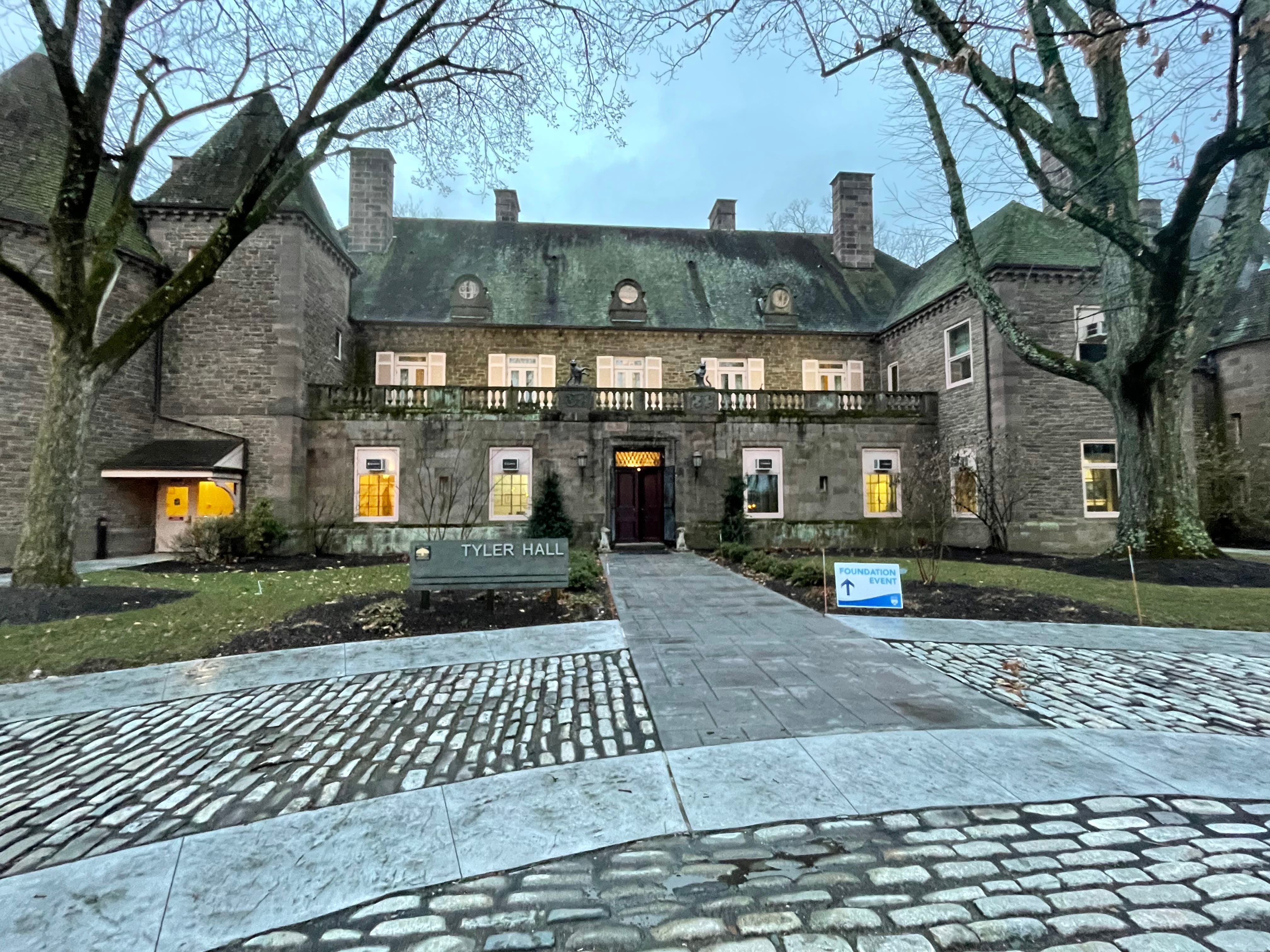
Tyler Hall at the Bucks County Community College in Newtown. (photo by Jeff Werner)
Henry Mercer's Fonthill Castle in Doylestown
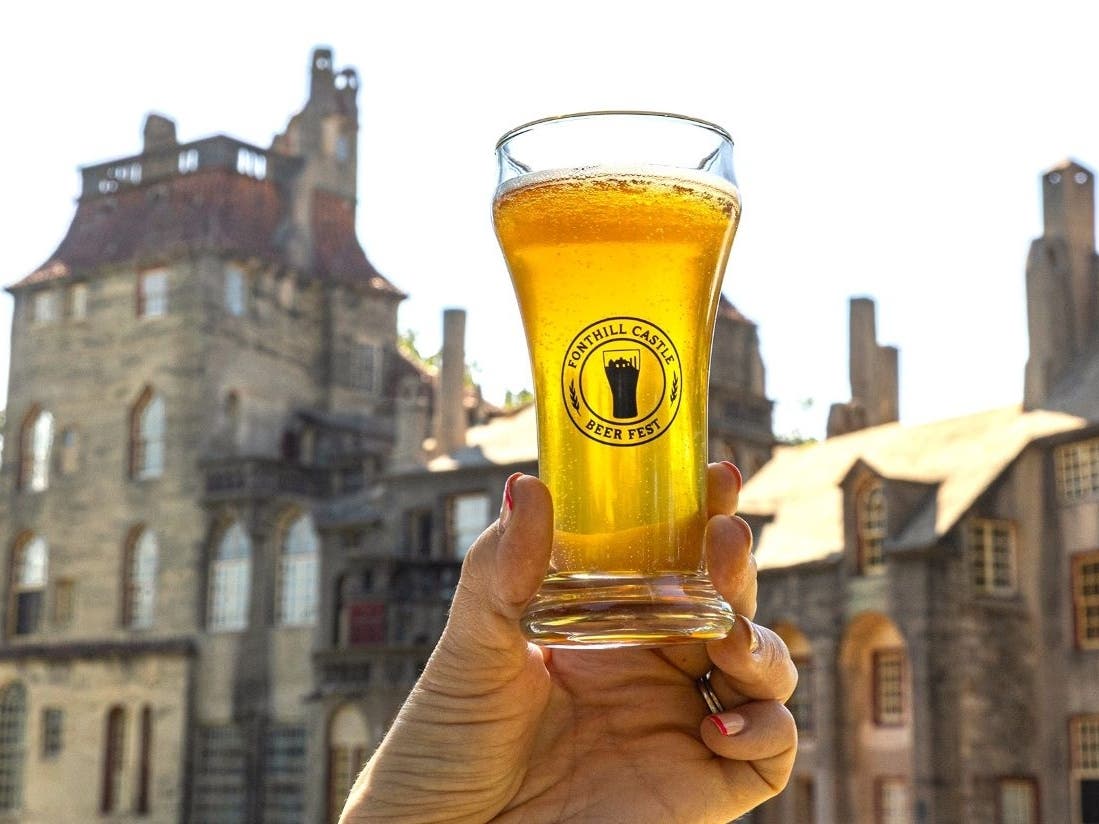
Not many communities in the United States can boast its very own castle. Fonthill Castle in Doylestown was built between 1908 and 1912 by Henry Chapman Mercer (1856-1930). Archaeologist, anthropologist, ceramicist, scholar and antiquarian, Mercer built the castle both as his home and as a showplace for his collection of famed Moravian tiles that were produced during the American Arts & Crafts Movement. Designed by Mercer, the building is an eclectic mix of Medieval, Gothic and Byzantine architectural styles, and is significant as an early example of poured reinforced concrete.
Today, Fonthill attracts more than 30,000 visitors annually from every state and more than 35 foreign countries. The site has been featured in numerous print and electronic media including the Arts & Entertainment Network’s popular “America’s Castles” series. Fonthill Castle is one of the original associate sites of the National Trust for Historic Preservation’s Historic Artists’ Homes and Studios program. In 2012 the Preservation Alliance of Greater Philadelphia recognized the 100th anniversary of Fonthill with a historic preservation award for stewardship presented to the Bucks County Historical Society.

Fonthill Castle in Doylestown. (photo by Jeff Werner)
The Parry Mansion On South Main Street in New Hope
Compared to today's multi-million-dollar homes and estates in neighboring Solebury and Upper Makefield, the Parry Mansion is small in stature, but rich in history.
The mansion was home to Benjamin Parry, who put New Hope on the map in the late 1700s and early 1800s.
Parry moved into his new mansion at 45 South Main Street in New Hope with his wife, Jane Paxson, about two years before George Washington became President of the United States. “He was the man to go to to get things done,” said New Hope historian Roy Ziegler and the author of the book, “The Parry’s of Philadelphia.”
As a young apprentice, Parry arrived in Coryell’s Ferry (now New Hope) in the late 18th Century after purchasing the local flour mill at the site of the present day Bucks County Playhouse. Not long afterwards, in 1790, the Hope Mill burned to the ground. Undeterred, he rebuilt the mill in one year and renamed it the "New" Hope Flour Mill. The name "New Hope" quickly became synonymous with the village and later replaced the town’s former name, Coryell’s Ferry, in 1837.
“They call him the Father of New Hope not only because he changed the name of the town, but his work expanded industry in town,” said Ziegler. “He expanded the Grist Mill. And he invented a process for preserving the grain and corn for shipping overseas. That made local farmers happy
because they could send their products as far as the West Indies and it made their crops more valuable.”
A few years later, Ziegler said Parry got the idea that the ferry operations was inadequate and he originated the idea for the first bridge across the Delaware to Lambertville.
“He plunked down the first few bucks - I think it was $7500 - and he got all the big guys in town to contribute. They financed the bridge and got it done in a few years. By 1814 it was open and ready to go," said Zeigler. “He created a saw mill, a lumber mill, a flax seed oil mill and a blacksmith. He expanded Farley’s Book Store. And all that brought more industry and business to town. He wasn’t a founder. The town was founded 300 years ago, but when he arrived here be brought vitality to the town and put it on the map.”
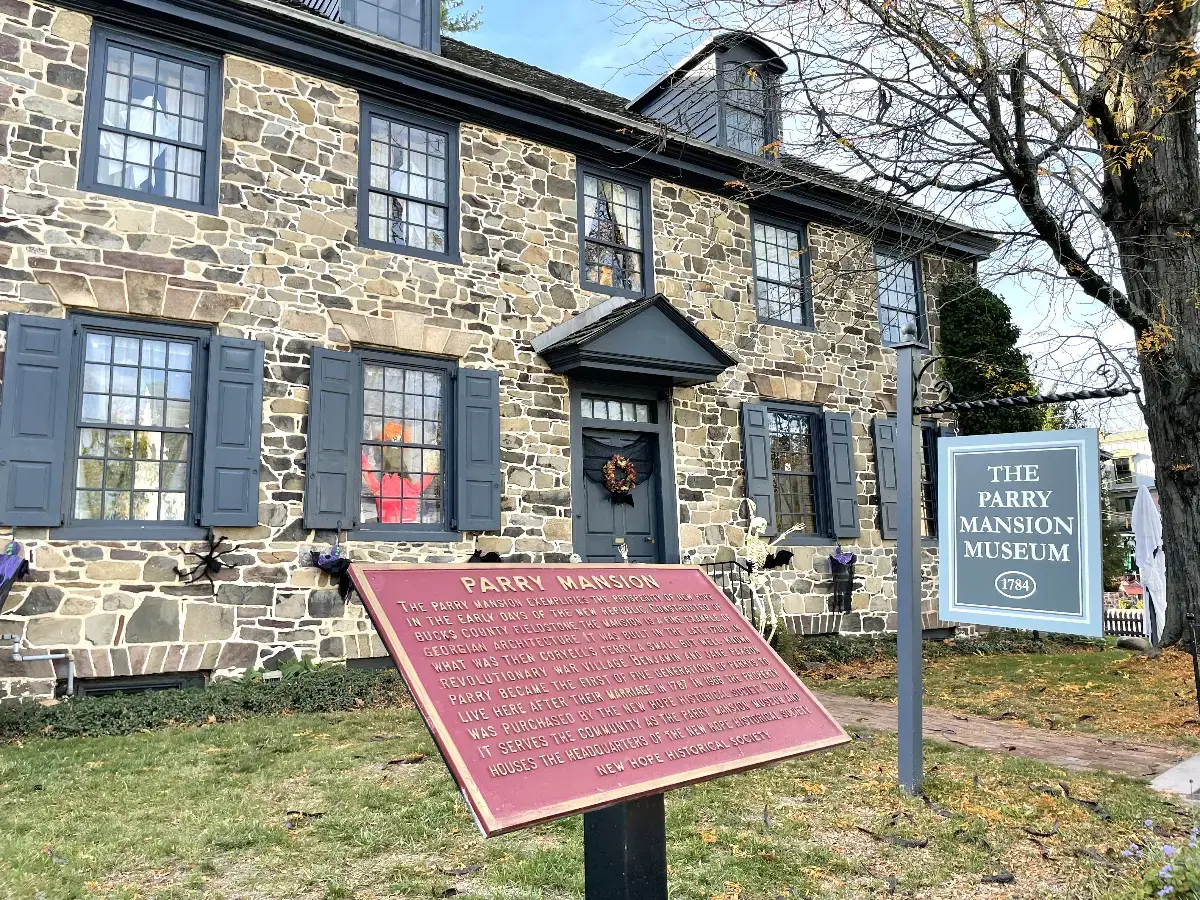
The Parry Mansion in New Hope Borough. (photo by Jeff Werner)
Warminster's Craven Hall And Steamboat Museum
Craven Hall is a stately Federal/Greek Revival home built in stages between 1790 and 1845 and serves as the headquarters of the Craven Hall Historical Society, Inc. The house is located on a ¾ acre plot at the southeast corner of Street and Newtown roads in Warminster. Craven Hall was placed on the National Register of Historic Place in 2007. An adjacent 1920s era carriage house/garage on the property houses the John Fitch Steamboat Museum dedicated to the inventor of the world’s first commercial steamboat in 1790. The Craven Hall Historical Society, Inc. owns and operates Craven Hall, The John Fitch Steamboat Museum and the nearby Craven/Vansant Burying Ground. The society is a non-profit corporation dedicated to providing education programs and conducting events to highlight late 18th and early 19th century life in this history-rich area of Bucks County. The building is open for tours on the second Sunday of every month from 12 to 3 p.m.
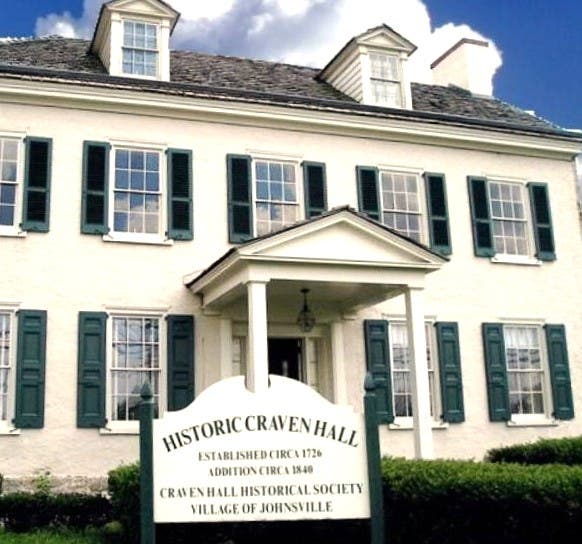
Historic Craven Hall in Warminster.
Get more local news delivered straight to your inbox. Sign up for free Patch newsletters and alerts.