Sports
Why Ben Hogan's Swing Isn't For You (And That's Okay!)
Ben Hogan, the legendary hall of fame golfer, is revered for his ball-striking prowess and his swing, a masterpiece of precision and power.


I was first introduced to Hogan in in 1979 when my great uncle Tommy Fisher, the long time head pro at the Dupont Country Club, gave me a tattered copy of "Power Golf '"Hogan's first book, I was hooked. It read like an encyclopedia of the golf swing, very formal, tactical with precise pictures. I can remember going out the field behind our house and hitting balls for hours glancing at the pages between swings.
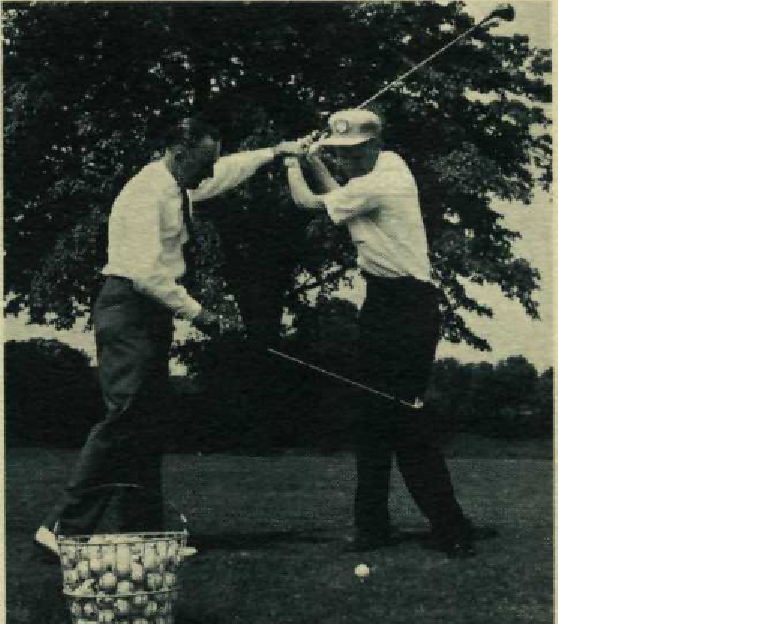
My great uncle, Tommy Fisher, giving a lesson at the Dupont Country Club, Wilmington, DE
His second book "Ben Hogan's Five Lessons: The Modern Fundamentals of Golf" was published in 1957 and would go to become the most read golf book in history. I still recommend it to all of our students to this day, no matter what's going on in their swing or their game, it's that good.
Find out what's happening in Doylestownfor free with the latest updates from Patch.
But while his swing is undoubtedly iconic, it's not necessarily a blueprint for the modern golfer. Trying to copy it directly can lead to more frustration than flushed irons. Here's a deeper dive into why:
1. The Hogan Swing: A Product of its Time
Find out what's happening in Doylestownfor free with the latest updates from Patch.
- Equipment Evolution: Hogan played in an era dominated by persimmon woods and balata balls. These required a steeper swing plane and precise timing to achieve optimal results. Modern equipment, with its larger sweet spots and forgiving technology, allows for a wider range of swing styles.
- Course Conditions: Courses in Hogan's era were vastly different. Fairways were often tighter, rough was thicker, and greens were slower. His controlled, low-trajectory ball flight was ideal for those conditions, but today's golfers often benefit from a higher launch for increased distance and stopping power.
2. Built Different: Physique and Flexibility
- Unique Body Mechanics: Hogan was a small, wiry man with exceptional strength and flexibility. His swing was built around his physique, incorporating a pronounced knee flex, a flat backswing plane, and significant wrist cock. Trying to replicate these moves without similar physical attributes can lead to inconsistency and potential injury.
- Modern Swing Philosophy: Contemporary golf instruction emphasizes a more athletic, rotation-based swing that utilizes the larger muscles of the body. While Hogan's swing relied heavily on timing and precise hand-eye coordination, modern swings prioritize generating power through core rotation and ground reaction forces.
3. The Hogan Grind: Dedication Beyond Reach
- Relentless Practice: Hogan was notorious for his obsessive practice regime. He spent countless hours honing his swing, often hitting balls until his hands bled. Most amateur golfers simply don't have the time or the inclination to dedicate themselves to this level of practice.
- Mental Fortitude: Hogan's swing demanded exceptional focus and mental resilience. He developed a pre-shot routine that bordered on ritualistic, and he was known for his unwavering concentration. While mental toughness is crucial in golf, attempting to mimic Hogan's intensity can be overwhelming for recreational players.
4. Risk vs. Reward: Potential for Injury
- Wrist Manipulation: Hogan's swing involved significant wrist action, particularly in the downswing. This can put stress on the wrists and elbows, especially for golfers who lack proper flexibility or conditioning.
- Strong Grip: Hogan advocated for a strong grip, which can promote a hook and make it difficult to square the clubface at impact. For some golfers, a weaker grip can lead to more consistent ball striking and reduce the risk of injury.
Embrace Your Own Swing
There are an infinite number of ways to swing a golf club effectively. Instead of trying to become a Hogan clone, focus on developing a swing that complements your body and your game.
- Seek Professional Guidance: A qualified instructor can analyze your swing and provide personalized drills to improve your technique.
- Prioritize Consistency: Focus on making solid contact and developing a repeatable swing. Distance will come with improved technique and efficient movement patterns.
- Play Your Game: Don't get caught up in chasing the "perfect" swing. Play to your strengths, manage your course, and enjoy the process.
Hogan's Legacy: Beyond the Swing
While Hogan's swing may not be the ideal model for everyone, his legacy extends far beyond technique. His dedication, work ethic, and unwavering pursuit of improvement are qualities that can inspire any golfer.
So, appreciate the artistry of Hogan's swing, but don't feel pressured to imitate it. Find a swing that feels natural, allows you to enjoy the game, and helps you shoot lower scores. After all, golf is about having fun, not striving for an unattainable ideal.
This is Golf as You've Always Imagined!
Daniel is a Top 100 golf Coach, PXG Staff Pro, World Long Drive Coach and the Head of Golf Instruction at IMAGEN Golf the area's leading golf instruction and advisory firm, host of the IMAGEN Golf podcast and Best-Selling Author of "Unleash The Golfer Within".
For more information visit www.ImagenGolf.com or call 215-595-6299 Reach out to Daniel directly at:Daniel@ImagenGolf.com
For free golf tips and more listen to The IMAGEN Golf Podcast on Spotify, Apple Podcast or wherever you get your podcasts and follow us:
Instagram @ Imagengolf
Twitter @imagengolf
Facebook Imagengolf
TikTok @ GolfBetterGuaranteed
Youtube ImagenGolf