
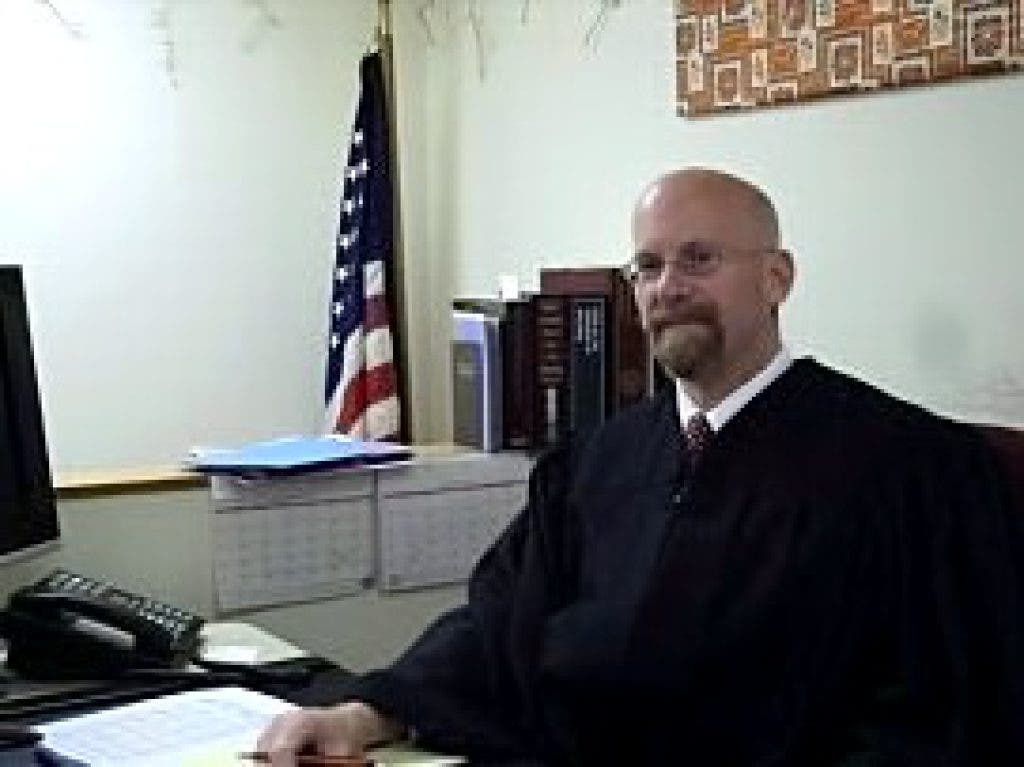

If you’re mesmerized by the cranky, naive, glacially paced antics of the U.S. Supreme Court justices weighing solemn matters like same-sex marriage and campaign financing, take heart -- there’s a better show in town down at the local district court.
If Chief Justice John Roberts and his eight somber colleagues sit atop the Olympus of American jurisprudence, the local district court is the absolute other end of the spectrum, the local point-of-entry to the justice system for matters criminal and civil.
Find out what's happening in Forest Hills-Regent Squarefor free with the latest updates from Patch.
The U.S. Supreme Court, with all its trappings, traditions and fawning news media, makes it seem like something enormously historic is going on there -- and sometimes it is.
Find out what's happening in Forest Hills-Regent Squarefor free with the latest updates from Patch.
Down in Forest Hills, District Court 05-2-08 seems a little more like “The Peoples Court” by comparison. This is where local people initiate legal action against family, strangers and obnoxious neighbors. District court is where the police bring suspected criminal offenders to see if charges can be brought and sustained. This is where people, literally, “have their day in court.”
The local district court, in a humble building at 2065 Ardmore Boulevard, serves Forest Hills and Churchill and recently was reconfigured to include Braddock Hills, Chalfant and Swissvale.
In Pennsylvania, there are 67 counties and in every county except Philadelphia there are, by law, “magisterial district courts.” These are so-called “inferior courts” of limited jurisdiction which handle landlord-tenant matters, small civil claims (amounts up to $12,000), summary offenses, violations of municipal ordinances, and preliminary hearings and arraignments in misdemeanor and felony offenses. These charges, if upheld at the district level, go on to be tried in the county court of common pleas.
By statute, magisterial district judges do not have to be lawyers; however, those who are not lawyers are required to complete a certification course prior to serving.
It’s a well-designed system that facilitates the concerns of residents, attorneys for both sides, and the needs of police departments and other municipal enforcement officials.
But it was not always so. As recently as the 1970s these local courts were a crazy-quilt of characters, some called "magistrate," some “alderman,” and some “squire.” Certainly there were many outstanding, learned practitioners in those days, but there were more than a few hacks and outright idiots.
You might find a judge holding court while dressed in a Hawaiian shirt. There were a few who obviously were corrupt and in cahoots with bondsmen over kickbacks for setting exorbitant bail. Not a few were puppets who rolled over for anything the police wanted. And then there were some who -- impishly -- seemed to delight in jagging off the cops by releasing suspects on flimsy grounds.
True story: deep in the previous century, I was a dopey 20-year-old newspaper reporter learning my craft in an alderman’s night court, sitting up there on the bench beside the judge, enjoying fried shrimp that had been brought in by the bondsman.
The judge, while munching, grilled the hapless defendant and, when it was time to set bail, looked around at the bondsman, at me, at the police sergeant and at the janitor -- and then blurted: “Whadda think, boys?”
Things have gotten better. And around here, way better. District 05-2-08 now is the bailiwick of Thomas P. Caulfield, an estimable professional and a Braddock guy who went to Pitt law school and tried thousands of cases as an Allegheny County public defender.
Caulfield was appointed to the position by former Governor Ed Rendell after a vacancy occurred. When the appointed term was up, he ran for election against four other big-time local politicians, corralling 40 percent of the vote. The next-nearest managed 21 percent.
Even so, today’s district magistrates are not immune to temptation. Over in the old, adjacent Rankin District Court 05-2-09, which until recently served Braddock, Braddock Hills, Swissvale and Rankin, former magistrate Ross Cioppa was successfully prosecuted for using his judicial clout to attempt to elicit sexual favors from women who came before the court.
Cioppa, an old-school, godfatherly 70-year-old who had held the post for 13 years, pleaded guilty to two counts each of indecent assault and official oppression, and in April 2012 was sentenced to six months of house arrest and four years of probation.
Cioppa’s comeuppance included the handling of his case by a woman, Common Pleas Judge Jill E. Rangos, who was pretty steamed about the whole business. At sentencing, Cioppa apologized to the court for his behavior. His defense counsel allowed that his client had experienced "a substantial and severe lapse in judgment."
William McCloskey used to be a newspaper reporter. Contact him at wmpgh@msn.com.