Politics & Government
GOP Senate Candidates Agree: No Tax Hikes, Cut Federal Spending
What to do about a potentially nuclear-armed Iran did spur a small disagreement among the candidates.
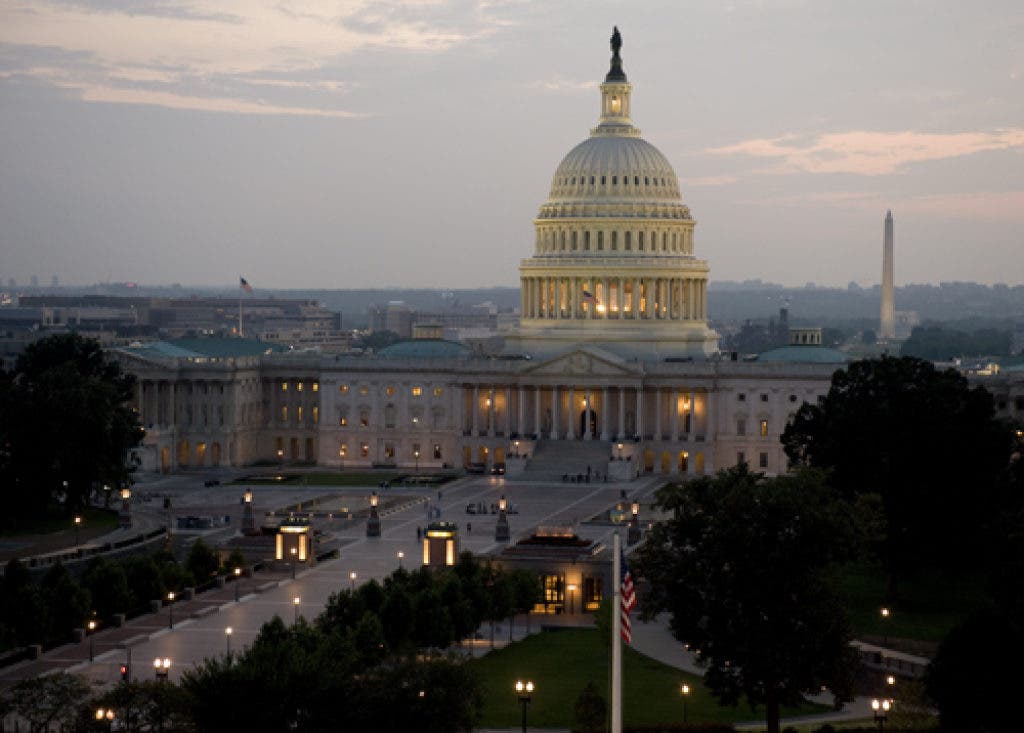
The seven Republican candidates for U.S. Senate from Pennsylvania who shared a stage Dec. 9 had one clear message: No new taxes, under any circumstances.
Instead, they said the federal government could save money by:
- Limiting regulations.
- Referring most spending decisions to the states.
- Trying to increase revenue through economic growth.
- Reducing or eliminating federal agencies and departments.
None of the candidates raised their hands when asked directly if they could foresee any circumstance in which they would support a tax increase.
Find out what's happening in Hellertown-Lower Sauconfor free with the latest updates from Patch.
“Those who push for increased revenues are really saying they want a bigger federal government,” said Sam Rohrer, a former state representative from Berks County. “We do not have a revenue problem; we have a spending problem.”
The debate, hosted by the Pennsylvania Business Council and part of the weekend-long Pennsylvania Society event in the Big Apple, allowed candidates to introduce themselves to potential Republican supporters and voters for the first time.
Find out what's happening in Hellertown-Lower Sauconfor free with the latest updates from Patch.
The Pennsylvania Business Council is a business advocacy organization that helps elect pro-business candidates. The Pennsylvania Society is an independent nonprofit that organizes an annual dinner in New York City for Pennsylvania's political and business leaders.
In a crowded field, the debate was a chance for the candidates to distinguish themselves.
But it was rare when any of them did.
When asked if they would support increases to the gasoline tax or tolls to help repair infrastructure, the candidates were again unanimous.
“We pay enough for gasoline taxes already,” said David Christian, a retired military veteran from Bucks County.
Instead, the states and the federal government should repeal , offered Marc Scaringi, a Cumberland County lawyer.
Laureen Cummings, a nurse and leader of the Scranton Tea Party, said tolling decisions should be put up for referendum, but she said she would oppose an increase in the gasoline tax.
But if new revenue is off the table, the candidates did not shy away from explaining how they would handle a federal budget with a $15 trillion deficit--by slashing and burning federal agencies, including the departments of education and energy, which the candidates agreed should be handled at the state level.
The same was true when asked how they would tackle reforms to entitlements like Medicare and Medicaid, which are federal health care programs for the elderly and the poor, respectively.
Robert Mansfield, a retired military veteran and Philadelphia resident, said Medicare should be turned into a voucher-based system and turned over to the states, with other candidates expressing support for similar “market-based” reforms to health care.
One of the few fractures among the candidates was revealed by the single foreign policy question: What to do about a potentially nuclear-armed Iran.
All agreed that military intervention should be on the table, but the degree of such intervention was debated.
“I don’t want to see a nuclear Iran, and I think we should take whatever steps necessary to prevent that from happening,” said Tim Burns, an Allegheny County businessman. “It’s time we get strong on foreign policy and act like the super power that we are.”
Steve Welch, a Chester County businessman, agreed that all options should be on the table, warning that a nuclear Iran would be a destabilizing force in the Middle East and globally.
But two candidates took a more cautious tone when it came to another potential conflict in the Middle East.
Rorher suggested supporting Israel in a potential face-off with Iran, since Israel has more at stake than the United States.
Scaringi warned against “banging the drums of war” and said he wanted to avoid more wars in the Middle East.
All candidates stood by their “no new taxes” promise when asked if such taxes could be necessary in the event of a war.
Given other opportunities to distinguish themselves from their primary opponents, the candidates remained united.
Would they support a U.S. Supreme Court candidate who was pro-choice? All said no.
Would they want to limit or eliminate the power of the filibuster, in hopes of spurring action in the Senate, the world’s most deliberative body? All said no.
Do they believe the federal government should take steps to limit global warming, even if it might cost jobs? All said no.
Welch was the only one to suggest that global warming may be influenced by human activity, though he said that did not mean such activity should cease.
“You have to weigh the risks and the rewards,” he said.
Rather than draw distinction among each other, candidates turned the focus on the man they all hope to challenge: U.S. Sen. Bob Casey, D-Pa.
Welch criticized President Barack Obama and Casey for “having no frame of reference” on how the economy works for small business owners. He said the federal government should lift regulations that limit innovation in the private sector and pass a constitutional amendment requiring balanced budgets.
Scaringi piled on, arguing that Casey and Obama were assaulting “freedom, liberty, the free enterprise system and our very way of life.”
Casey was not invited to the event, though he did hold a fundraiser in New York over the weekend.
Three other candidates for the GOP nomination turned down the invitation to participate: John Vernon, a retired military veteran; Tom Smith, a businessman; and John Kensinger, a pharmacist.