Politics & Government
Lawmakers Propose Using Surplus to Fund Flood Restorations
The hope is that the use of state funds will supplement federal assistance.




By Caleb Taylor | PA Independent
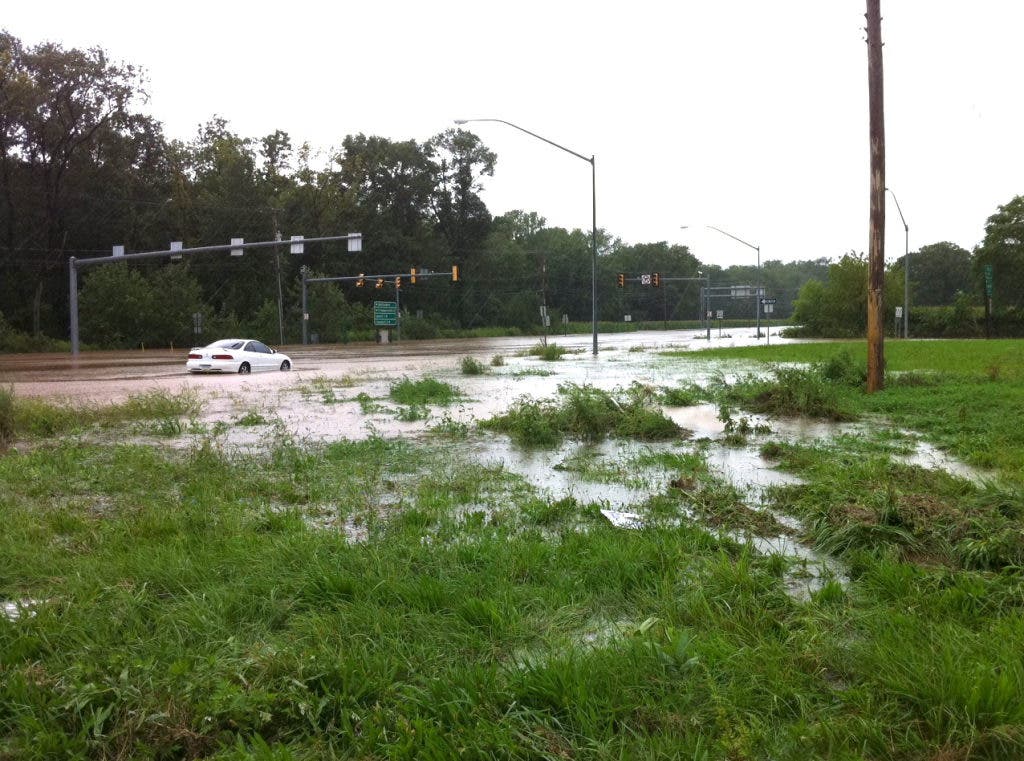
State lawmakers plan to spend about $270 million in state funds to pay for damages caused by Hurricane Irene and Tropical Storm Lee.
To do so, lawmakers say they will use some of last year’s extra tax revenue, borrow additional funds and re-arrange up to $20 million in this year’s budget. Two bills, announced at a Monday news conference in Harrisburg by state Sen. Lisa Baker, R-Pike, and state Sen. John Gordner, R-Columbia, target how this money would be spent.
Find out what's happening in Hellertown-Lower Sauconfor free with the latest updates from Patch.
Baker's bill would establish a state treasury fund from which an additional $10,000 would be given to individuals or families who meet federal guidelines for disaster assistance. Gordner's proposal would authorize a bond sale for up to $250 million to be spent on flood-damaged highway and bridge rehabilitation projects.
These measures are expected to be introduced next week with other bills aimed at preventing future flood damage in affected areas.
Find out what's happening in Hellertown-Lower Sauconfor free with the latest updates from Patch.
To be eligible for the $10,000 in state grants, individuals or businesses must qualify for and exceed the $30,200 per household available through the federal government.
So far, 125 Pennsylvanians have qualified, but lawmakers expect that number to increase in coming weeks.
“State government will never be the ultimate insurer, but when disaster strikes, it is a core function of government to protect lives and property, to restore public safety and infrastructure...when an emergency robs them of everything they need and value,” said Baker.
Baker said her bill would be funded by a portion of the $780 million tax revenue not spent in the fiscal 2011 budget.
Gordner estimated his bill would cost between $10 million and $20 million, though exact figures are difficult to project as damage assessments are still ongoing.
Under state law, Gov. Tom Corbett has the authority to move up to $20 million from unspent parts of the fiscal 2012 budget in the event of an emergency, such as flooding.
Gordner’s bill would target infrastructure damage caused by the flooding. The federal government will provide the state with 75 percent of all infrastructure repair costs. The bonds are intended to fill in the remaining 25 percent of flood-related highway and bridge rehabilitation projects.
The Federal Emergency Management Agency, or FEMA, reported that $13.8 million has been approved for Pennsylvanians because of Hurricane Irene and Tropical Storm Lee. Of the total funding approved, $13 million is going for housing assistance.
The overall total will increase when public infrastructure damage is fully accounted for, a process that will take a few more weeks.
Twenty-nine counties have been declared disaster areas by FEMA because of Hurricane Irene and Tropical Storm Lee.
“Even the recovery that the federal government is providing is only a percentage of total loss, and the obligation of the state to pick up some share remains. I’m glad to see that this package of bills will allow us to meet our share,” said state Sen. John Blake, D-Lackawanna.
State Sen. Gene Yaw, R-Lycoming, state Sen. John Yudichak, D-Luzerne, and Blake also unveiled legislation at the news conference.
Blake’s legislation would allow for local governments to reduce real estate taxes for properties substantially affected by flooding.
Gordner, Yaw and Yudichak said they plan to introduce measures authorizing only a county-by-county listing of flood-damaged highways and bridges as well as flood control and hazard mitigation projects.
The Public and Non-Public School Waiver Act, also proposed at the news conference, gives authority to the Secretary of Education to waive certain requirements for schools that were substantially affected by the flood.
“There’s normally a 180-day requirement for schools, but there is a provision that allows for 990 hours, so rather than figuring on days you can figure on hours,” said Gordner. He said the Benton Area School District in his district is still not open after the flooding that occurred more than a week ago.
Assuming a seven-hour school day, 990 hours would equal about 141 days. Each school district in the state sets its own schedule.
Yaw said the public should be aware that recovery from the disaster won’t happen overnight.
“This is not a recovery that will happen in weeks. Frankly, it is not going to happen in months, and in some situations it is going to be years,” he said.
Get more local news delivered straight to your inbox. Sign up for free Patch newsletters and alerts.