Politics & Government
New PA Independent Contractor Law Has Unintended Consequences
The state's Department of Labor and Industry insists that the law applies to the construction industry only.
Deborah Webster just wanted to send her son to a private school.
So three years ago, when her husband lost his job, they worked six part-time jobs. Since then their situations have improved, but Webster kept her last part-time job, which included cleaning an office building.
The job was enjoyable for her, she said, and the extra money helped make ends meet, but because of Act 72 of 2010, Webster can no longer work as an independent contractor.
Find out what's happening in Hellertown-Lower Sauconfor free with the latest updates from Patch.
Her employer informed Webster in July that she would have to leave the job or comply with the new state law, which did not include provisions to ensure existing contractors could keep their jobs--known as a "grandfather clause."
Webster said she got a call “saying that there had been some changes in the law and that I needed to basically decide if I wanted to remain an independent contractor or become an employee.”
Find out what's happening in Hellertown-Lower Sauconfor free with the latest updates from Patch.
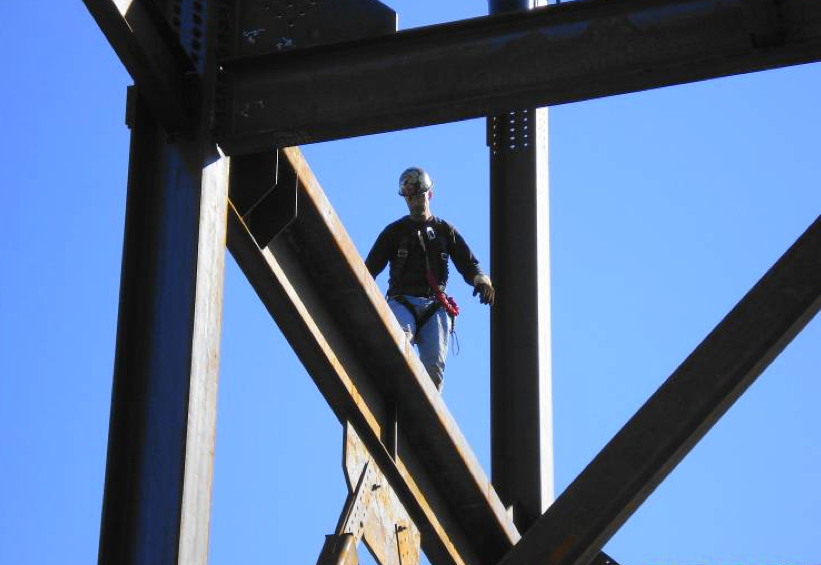
The law, signed by Gov. Ed Rendell last year and supported by labor unions in the state, is aimed at construction companies who classify employees as independent contractors and use them like full-time employees.
The law defines an independent contractor through several measures, such as owning their own tools, being free from direct managerial oversight, maintaining an office separate from his or her employer and offering services on the general market instead of working for a single employer at all times.
Frank Sirianni, president of the Pennsylvania Building and Construction Trades Council, a labor union, said the legislation was a good step forward for the construction industry by "cleaning up an industry that has had misclassification of workers for forever."
At the time, unions were pushing for a broader law to cover more than just the construction industry, but the final version was narrowly defined.
The legislation was opposed by the Pennsylvania Chamber of Business and Industry, which lobbies for businesses.
Sam Denisco, director of government affairs for the chamber, said the relationship between independent contractors and employers does not go by a “hard and fast” definition.
"The courts have eroded the test where anyone can be an independent contractor," said Denisco. "We have always held the position that even though the scope of this law is limited to the construction industry, a court of competent jurisdiction could always extend these standards to other industries as a rationale for classification."
The state Department of Labor and Industry maintains that the law only applies to construction workers and should not influence any other group.
As Webster’s case indicates, the law has had unintended consequences, particularly when employers are taking extra steps to comply and avoid costly fines and penalties. In this case, fines can total up to $2,500 per misclassified “independent contractor.”
Martin DiGiovine, an attorney and tax research business adviser for Pittsburgh-based Schneider Downs, a top-60 national accounting firm, said businesses will make changes to comply with state laws even if they are unsure about how the laws apply to them.
“Because existing independent contractors are not grandfathered in under this law, it would have more of a chilling effect on an employer, where they would be more inclined to make changes based on this law,” DiGiovine said.
Legal analysts said the law likely will be tested in court to see if the provisions extend beyond the construction industry.
But with the law passed, Webster is retiring--and planning to write her legislator.
“This job was great,” said Webster. “I basically set my own hours. I could come at any time in the evening. I could come after dinner after feeding my family or on a weekend. The pay was good and it helped subsidize the cost of having my child in private school."
Webster's former employer declined to go on the record and asked to be kept confidential.
PA Independent's Eric Boehm contributed to this report.