Crime & Safety
Carfentanil: What You Should Know About The Deadly New Opioid Sweeping Across PA
Carfentanil, an elephant tranquilizer, is 10,000 times deadlier than street-level heroin.


Just when things seemed like they couldn’t get any worse on the opioid front, the drug culture in Pennsylvania took a gargantuan step backward in 2017 with the popularization and distribution of a substance so deadly that first responders need to wear protective equipment before handling it.
Carfentanil, which until this spring had only been widespread in western Pennsylvania, has been responsible for several overdoses and arrests in the Philadelphia area over the past several months.
Here’s what you need to know about the lethal drug diffusing through the streets of southeastern Pennsylvania.
Find out what's happening in Hatboro-Horshamfor free with the latest updates from Patch.
Genesis
Carfentanil was designed in 1974 by Janssen Pharmaceutica, according to the Pennsylvania Department of Health. Janssen is owned by Johnson and Johnson.
Find out what's happening in Hatboro-Horshamfor free with the latest updates from Patch.
Marketed for veterinary and zoological use under the name Wildnil, its purpose is as a tranquilizer to control very large animals, including elephants. However, in recent years it has begun showing up on the streets, being put to a very different purpose.
Authorities believe the drug to be 10,000 times deadlier than street-level heroin and 100 times deadlier than the already lethal fentanyl.
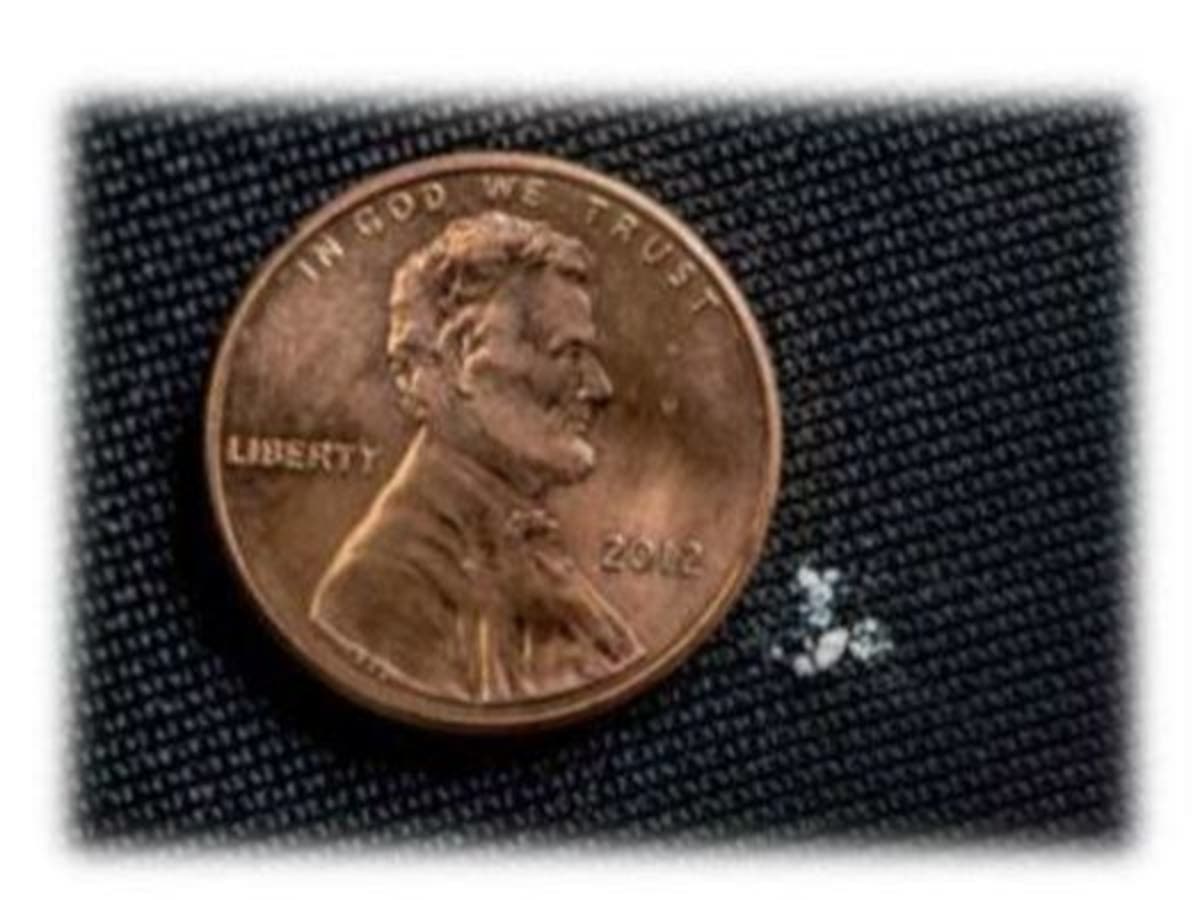
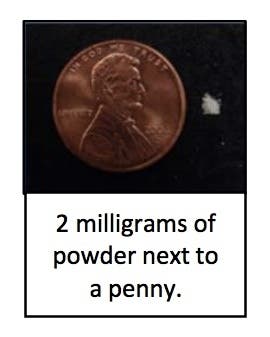
The equivalent of roughly one grain of salt of carfentanil is enough to kill a human. In 2016, the U.S. Drug Enforcement Administration produced a graphic showing what a deadly amount of two milligrams of carfentanil looks like next to a penny. The lethal powder barely covers President Lincoln’s cheek.
There is growing evidence that suggests even touching the substance can cause damage.
Symptoms of include respiratory depression or arrest, drowsiness, disorientation, sedation, pinpoint pupils and clammy skin, according to health officials. Symptoms typically occur just minutes after exposure.
The drug has never been approved for use on humans in any form.
Gray Death
Taking on the street name “gray death,” widespread carfentanil overdoses first hit the United States in the summer of 2016.
A 2016 Associated Press investigative report revealed that the drug has potential terrorist implications and is primarily manufactured in China. However, Chinese officials earlier this year agreed to ban it.
In September 2016, the DEA issued a warning about carfentanil.
“Carfentanil is surfacing in more and more communities,” then-DEA Acting Administrator Chuck Rosenberg said at the time. “We see it on the streets, often disguised as heroin. It is crazy dangerous.”
There have been hundreds of fatal carfentanil overdoses across the U.S. over the last year, mostly in the Midwest, though the the drug began appearing in new areas in early 2017.
The drug is dispensed in a wide variety of forms, ranging from powder, blotter paper, tablets, patches, and sprays, according to the Pennsylvania Department of Health.
Arrival in Pennsylvania and the Philadelphia Area
While heroin and the even deadlier fentanyl ravaged southeastern Pennsylvania, there was no sign of carfentanil until recently. Health officials said that they had been tracking carfentanil in western Pennsylvania for some time, but that the drug only began its spread from the Harrisburg area to Philadelphia this spring.
Calling the growing threat "extremely dangerous," Gov. Wolf announced on Sept. 29, 2016 the temporary transition of carfentanil to a schedule II controlled substance, giving law enforcement more leverage in fighting the spread of the drug.
The Philadelphia Department of Public Health issued an alert on July 11 which revealed that carfentanil overdoses had killed a 59-year-old man in Dec. 2016, and then two more victims in June of 2017.
On June 6, the Secretary of the Pennsylvania Department of Health, Karen M. Murphy, issued a statewide “Health Advisory” warning hospitals, health departments, first responders, and local care providers about the increasing popularity of the drug and warning of its dangers.
The crisis, however, would not be contained to the city. The first carfentanil overdose in Montgomery County was reported on July 14; however, the victim, a Lower Merion man died on June 10, just days after the advisory was issued.
Chester County’s first death occurred on July 4, and was made public by officials in the weeks after.
Then, in Bucks County, four first responders were hospitalized on July 10 after coming into contact with the substance on the arm of a man who was suffering cardiac arrest.
Cause of Increase in Overdoses
While officials cannot say exactly what has caused the sudden popularity of the drug, there are many theories. For one, addicts are often not looking for carfentanil just as they are not looking for fentanyl; they want heroin, and then buy a substance which they are told is just a stronger dose or a new strain of it. In reality it turns out to be carfentanil, disguised as heroin.
"Fentanyl and its analogues are often mixed with heroin both with and without the user's knowledge," the Philadelphia Department of Public Health said in their July health alert.
A district attorney in Middlesex, Massachussetts, Marian Ryan, said there is also growing trend showing cocaine is becoming more popular nationally because it can be cut with opoids like fentanyl - and carfentanil.
War on Opioids
The CDC estimates that 89 people die every day from an opioid-related overdose in the U.S.
Carfentanil joins heroin and fentanyl in the ongoing war on opioids in southeastern Pennsylvania and across the nation.
A Montgomery County grand jury investigation which concluded in May made six recommendations for officials fighting the spread of opioids:
- Restoration of controversial "mandatory minimum" prison sentences for drug dealers, a measure hotly contested by some lawmakers
- Increased collaboration and better data collection with regional anti-opioid organizations
- Create pre-arrest drug court for young offenders to encourage early intervention
- Collaborate with Pennsylvania Medical Society and the insurance industry
- Establish more thorough treatment protocols, including the Warm Handoff Program, to deliver patients from law enforcement to the needed treatment
- Create statewide online system to identity available treatment beds in a timely manner for those in need
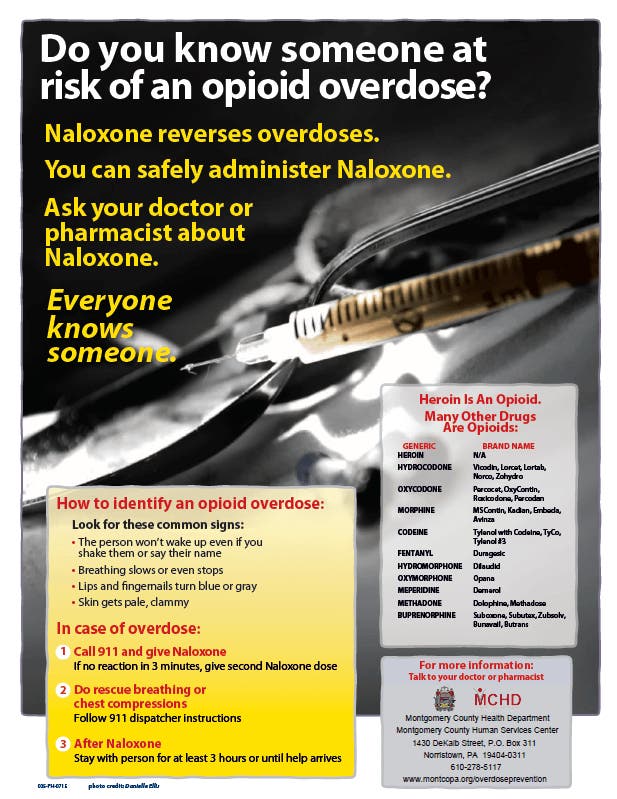
Are you or someone you know suffering from opioid addiction? Call Pennsylvania's Department of Drug and Alcohol Programs at 1-800-662-4357 and find resources to help you online here.
Main image courtesy Massachusetts State Police
Get more local news delivered straight to your inbox. Sign up for free Patch newsletters and alerts.