Politics & Government
Leadership in Review - Q&A with Former Royersford Mayor Dave Urner: Finale
A multi-part series, conversing with former Royersford Mayor Dave Urner about life, the borough and his seven-plus-year term.

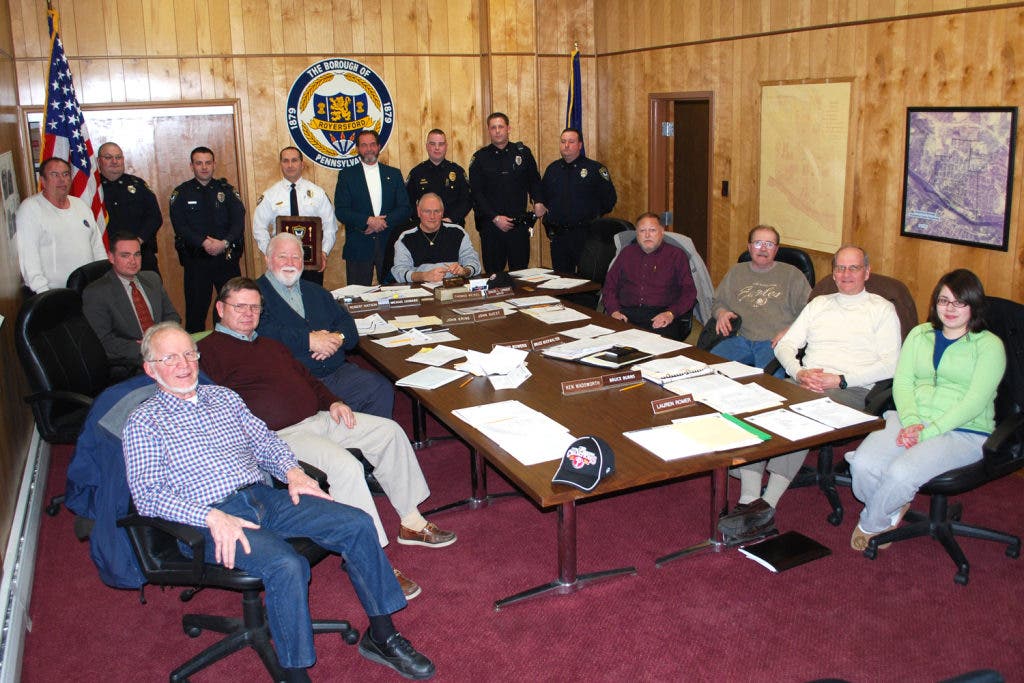


Royersford Mayor Dave Urner made a truly difficult decision in September. He announced that he would be stepping down just about a year shy of the expiration of his term for personal reasons. His resignation was effective Sept. 30 and in the meantime, the borough council had to make moves to select an interim.
Urner took a few hours of his time to sit down with Limerick-Royersford-Spring City Patch Editor Kevin Haslam and discussed everything from the genesis to his term to the wonderful people he's served in the community.
In of our series, Urner discussed his seven-year term, as well as the revitalization efforts of the past, present and future in Royersford. Today, we continue our conversation with the former mayor.
Find out what's happening in Limerick-Royersford-Spring Cityfor free with the latest updates from Patch.
In of our series, the former mayor talked about the police and fire departments, as well as his joy for the ceremonial aspects of the position.
In of our series, he went into detail about the individuals on the council, as well as the importance of voting and having a voice in the community.
Find out what's happening in Limerick-Royersford-Spring Cityfor free with the latest updates from Patch.
In of our series, Urner talked about his successor, John Guest.
And now, the conclusion of our Q&A...
LRSC Patch: Do you have any final thoughts or a last message you’d like to impart upon the community?
Dave Urner: I worked with Locally Yours, which is a magazine that has those coupons. There are several out there. Locally Yours is very well done. The woman started this out, but also reached out to the communities of Collegeville, Royersford, Conshohocken, King of Prussia and all of those areas. I was wanting to communicate to the public in some sort of way through the media. The Mercury, I couldn’t afford to do on a weekly or bi-weekly basis. The Reporter, I wasn’t satisfied with that. I was in the office down there one day and I was looking at this booklet about 12 pages, which is generally what it is, so I called her. I said, ‘Let’s talk about something I’d like to do, like a From the Mayor’s Desk or something like this.’
She told me she would really like for me to do this. I had no budget I could use to support this thing, so I said she was going to have to give me a figure I could live with, because I was going to do it myself. So, she did and four to five times a year, I had a write-up in there. So, I elected to do a feature on every committee we have and explained people don’t know what some of these committees do. They don’t come to the council sessions. So, I decided I would introduce myself. She gave me a half of a page and it really worked great. I put a picture of myself in there and the different things I do, then I featured the police department, then I featured the public works department, then the sewer plant. I had about 12 articles over the period of about three years. She did a super job on them. It got out there. I hope people read them. The magazine was so well done.
At any rate, my last one was just this last month [October], and I explained why I was stepping down and how it all came about and the fact that I stressed communication and negotiation, but also the importance of being involved through voting. I don’t know if you know where I live or not, but I live on Lewis Road and my garage door has a red apple on it that says ‘Live Happily.’ I get signs made up at Sign-O-Rama that talk about voting and things to remember and read and get involved and ask questions – just little short things people can read as they go by. Hopefully that will impact them.
Anyway, I did these articles, but now I don’t have them. It was an opportunity to speak straight from the shoulders. She didn’t alter them at all except for any grammatical error. I will miss writing that article. It was a contact with the community.
The overall ceremonial things – I used to be a very shy person believe it or not. I was just shy, but this changed me. I can speak to 10 or 100 people. That’s another thing I did. If there was an issue in an area of the community, I would get the neighbors together in the back yard, bring a couple of gallons of iced tea, sit down and asked what the issue was. I didn’t want any talking over each other, but I wanted to hear what everyone had to say, and a lot got accomplished in doing it that way. Not that there was a lot of that, but it’s an opportunity to give people the opportunity to talk.
In many cases, Kevin, I’ll tell you, I don’t know if you find it, people just want somebody’s ear to listen. Once they get it off of their shoulders, then that’s half of it. And, so it is, that I would say 80-percent of my responsibility was people-related – hearing people and listening to what they had to say. I never promised anything, except that I’ll get an answer for you. If it’s an ordinance-related thing, then I have to tell you the law. If it’s a grey area, well, then we’ll deal with it. We’ll negotiate it and come up with something that’s agreeable. These are the things that I’ll miss, because the mayor has to be in position to do that thing if it arises.
Once people have confidence in you and know that you’re not blowing smoke and are true blue – if you walk your talk – then they will confide in you and bring their concerns to you. I don’t like to use the word gripe or complaint. I call it concern. If you have a concern, I want to hear it. It may be negative, it may be positive, but you’re in a position where you’re going to hear more negatives and positives. After the fact, if you get something resolved, then you get accolades. But that’s not why you’re in the mayor position – to get praised. You’re there to help the people understand what’s what. If I were to run on a platform… I never had to run on a platform, because I was never in that position, but it would be: what’s right is right, what’s wrong is wrong and everything in between is negotiable. That may sound oversimplified, but we have ordinances that dictate what is going to be done. There’s an ordinance that says you can’t put chairs on the sidewalk if there’s less than three feet from the curb to where the chair is. That’s the law. Don’t ask me for an exception because you’re wrong. What’s right is right and what’s wrong is wrong. This is the way I negotiate with people – in a way that they understand. If they don’t understand that, then they don’t understand English. It may be oversimplified, but that’s the way it’s set up. If there’s no ordinance, you have to look at it for what it is. ‘Is what you want to do going to affect your neighbor?’
So, the people association, I will miss. The ceremonial aspects of what the mayor has the privilege of being involved with, I will miss. That’s pretty much everything in a nutshell. I don’t know how you’ll make a story up on all of this!
From the Editor: I again would like to stress what a pleasure it was to sit down with Dave Urner and chat with him about his seven-plus year term as mayor. Not being from the area, all I know is what I can research, what I am told and what I can step back and see for myself. Although some residents of Royersford will always have their concerns, I personally see a borough that does wish to work within the best interests of the people.
Do you have some comments for the former mayor? About this series? A goodbye? Leave them in the comments box. We look forward to hearing what you have to say!
Get more local news delivered straight to your inbox. Sign up for free Patch newsletters and alerts.