Crime & Safety
Fire Department Dive Rescue Team Receives Advanced SCUBA Instruction
The Lower Southampton Fire Department's Dive Rescue Team received advanced SCUBA instruction September 10.

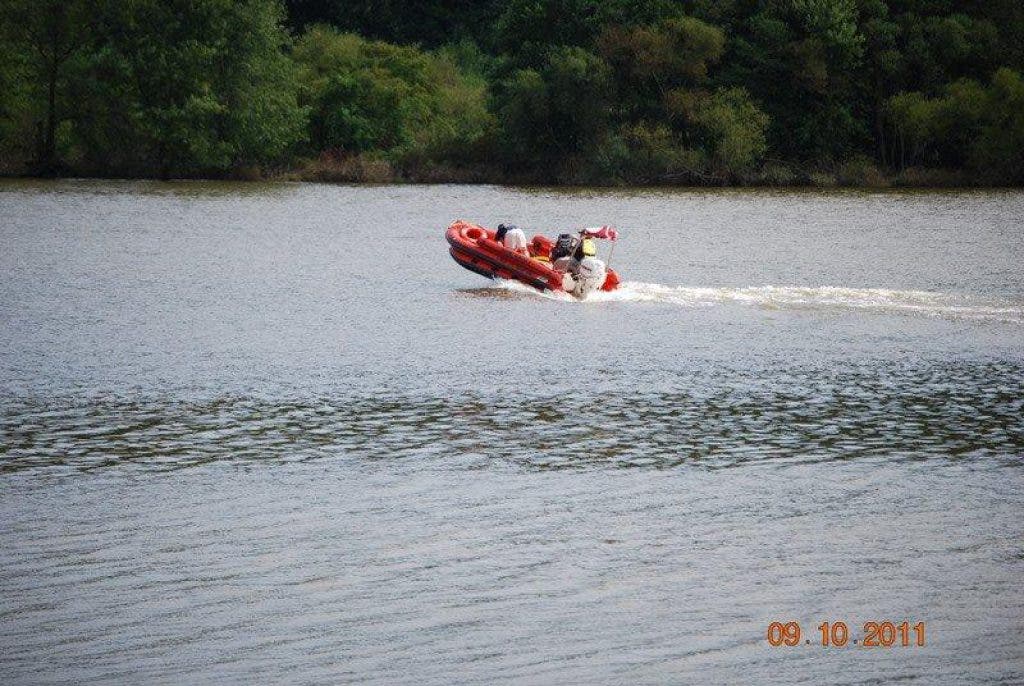


The members of the Dive Rescue Team received advanced SCUBA instruction on September 10. The members of the team are all certified divers and water response
technicians with advance training in various specialties such as swiftwater rescue, ice training, vehicle recovery, and boating operations to name a few.
According to Lower Southampton Fire Department President Dan Walsh, the LSFD team is one of only three fire departments in Bucks County that performs dive rescue. The others are Point Pleasant Fire Company North of Doylestown and the Haycock Fire Company situated outside of
Quakertown.
The LSFD team responds wherever needed, however, the majority of their dispatches are South of Doylestown, according to Walsh. In the past, they have also assisted the Philadelphia Police Department and New Jersey State Police in special operations.
Find out what's happening in Lower Southamptonfor free with the latest updates from Patch.
The exercises consisted of both classroom and water sessions at Lake Luxembourg in Middletown Township. The training utilized real-life scenarios faced by emergency personnel when responding to water emergencies. Training was conducted by Dive Rescue International which provides instruction for military, police and fire departments around the world.
According to Walsh, Steve Salach, the instructor from Dive Rescue International, split the divers from LSFD into two groups; The first group acted as park goers who witnessed two swimmers submerge, then disappear. The second group's role was to locate and retrieve the lost swimmers. Group one placed mannequins representing the victims in approximately 15 feet of chocolate-colored water roughly 50 feet from shore. Upon arrival, group two began interviewing witnesses, while the divers geared up in dry suits and SCUBA gear.
Find out what's happening in Lower Southamptonfor free with the latest updates from Patch.
In order to add realism to the scenario, one witness became hostile and refused to assist, then another witness ran into the water pretending to be the grieving mother of the victims.
The team needed to deal with Dive Rescue Training these situations as well as determine the location of the victims by gathering and sifting through the information to decide where to deploy the divers. Techniques such as triangulation and grid searches were utilized during the search.
These techniques paid off; each team recovered the mannequins in less then thirty minutes. According to Walsh, this is significant because time is of the essence when responding to a water incident. Victims submerged for less than an hour have a chance of being successfully resuscitated, therefore; it is critical that the team accurately locates, recovers and quickly begins CPR.
Unlike recreational diving, rescue applications often occur in harsh conditions such as stormy weather, cold dark waters filled with debris, and excited bystanders and family. The Divers also wear unique gear designed for not only harsh weather, but also hazardous materials such as highly contaminated waterways. Each diver wears a hazardous material resistant dry suit and full-face mask with the ability to connect to the shore via a cable used to both direct, control, and communicate with the swimmer.
The need to act quickly in order to save a life coupled with the complexity of the dive gear requires countless hours of training and drills like this one.
Get more local news delivered straight to your inbox. Sign up for free Patch newsletters and alerts.