Politics & Government
Human Relations Commission Under Consideration In Solebury
A proposed non-discrimination ordinance would include the formation of a commission that would attempt to mediate issues when they arise.


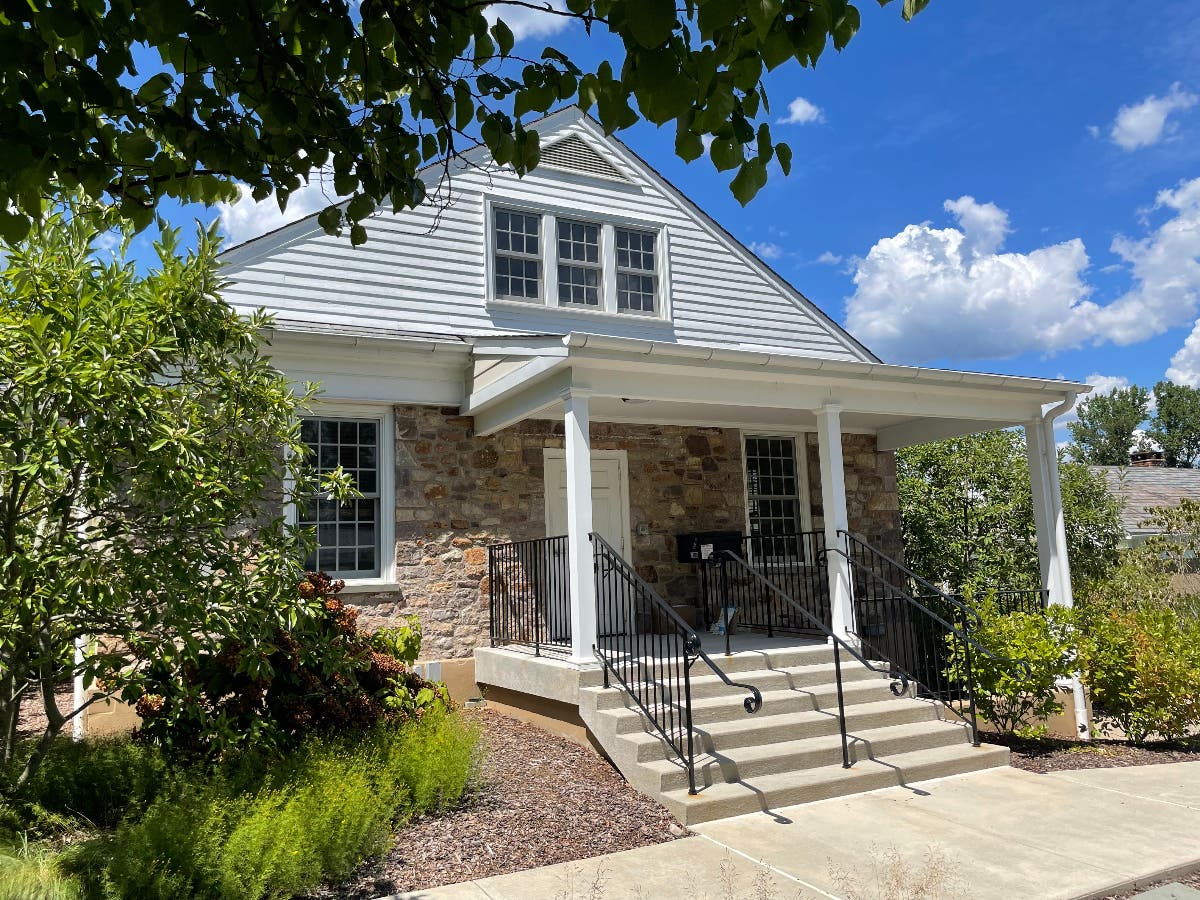
SOLEBURY TOWNSHIP, Pa. — The Solebury Township Board of Supervisors is considering
passage of a non-discrimination ordinance aimed at protecting its marginalized residents.
At its August meeting, the supervisors voted unanimously to advertise the ordinance, which will be considered by the board for enactment at a future meeting.
A few years ago, the board unanimously adopted a non-discrimination resolution. At that time there were conversations about a non-discrimination ordinance, but very few smaller municipalities had adopted such an ordinance.
Find out what's happening in New Hope-Lambertvillefor free with the latest updates from Patch.
“One of the concerns at the time was that it would have required the creation of a committee, which would have involve recruiting a lot of new members,” said Chairman Mark Baum Baicker. “At the time we were having a lot of trouble recruiting members for our committees.
“But times have changed in a number of respects,” said Baicker. “More smaller communities are enacting such ordinances and given what is going on in the larger world, I think marginalized individuals need all the protections they can get,” he said. “So there is more of a need for such an ordinance on the local level.
Find out what's happening in New Hope-Lambertvillefor free with the latest updates from Patch.
“We’re also at the point now luckily where we have been getting more and more interest on the part of residents volunteering for our committees,” he said.
After speaking with community members about volunteering to serve on a human relations committee, Baicker said he’s convinced that the township can find the three to five members to fill the slots on the proposed commission.
The ordinance introduced by Baicker would give protections to all individuals “regardless of actual or perceived race, color, sex, religion, ancestry, genetic information, national origin, sexual
orientation, gender identity or expression, familial status, marital status, veteran status, mental or physical disability, use of guide or support animals and/or mechanical aids in the areas of employment, public accommodations, housing and access to educational institutions.”
The ordinance would also create a three to five member human relations commission, which is a board that would be called upon to act as mediators when complaints arise in the township.
As part of the process, anyone who feels they are discriminated against would be able to file a complaint with the Human Relations Commission. The commission would then review the complaint and set up a mediation.
“It’s an effort to try and resolve issues,” said solicitor Mark Freed. “If it can’t be resolved, the complainant has the ability to appeal, if they are unsatisfied with the resolution or the process, up to the Bucks County Court of Common Pleas.”
Vice Chair John Francis, who voiced complete support for the ordinance, asked what the cost would be to the township for the new commission and how it would work.
“Like every other committee, it’s going to depend on issues as they come up,” said Freed.
“This particular proposed ordinance, based on recommendations from the state, is a very streamlined process. It does two things,” said Freed. “Number one it creates the anti-discrimination provisions and a complaint process that triggers some sort of mediation. It also provides private rights of action based on the rights granted by the ordinance so the parties, if they feel they haven’t resolved the issues, can take it to the Court of Common Pleas as opposed to some of the bigger municipalities where the committee would sit and adjudicate as a panel. That’s not what’s set up here. That can be very resource driven and can be very difficult for a municipality of this size to implement.”
In other communities where such an ordinance has been passed there have been very few complaints so far, noted Freed.
“That doesn’t mean it’s not going to change,” he said. “The commission could meet on a monthly basis to work on educational outreach and communications. But normally their meetings would be complaint driven.”
Freed speculated that the township’s biggest challenge will be finding residents to staff the committee.
Supervisor Hanna Howe said while the board needs to talk about the cost and the additional load of adding a new committee, she said that she’s “incredibly proud to be part of a board that is considering this.
“It’s important that we’re showing our support and protection of all of our citizens in a local way where those protections are not guaranteed by other parts of our government,” she said.
During public comment, resident Tom Lyon personally thanked the board of supervisors for considering the ordinance.
“You’re doing something concrete, but you’re also doing something symbolic. And I think that’s just as important as the concrete part. The community members that this affects will be very grateful when they hear about this.”
Get more local news delivered straight to your inbox. Sign up for free Patch newsletters and alerts.