Politics & Government
U.S. House Passes Big Cats Public Safety Act
A bill is pending before the U.S. Senate that would prohibit anyone from keeping tigers, lions and other big cat species as pets.


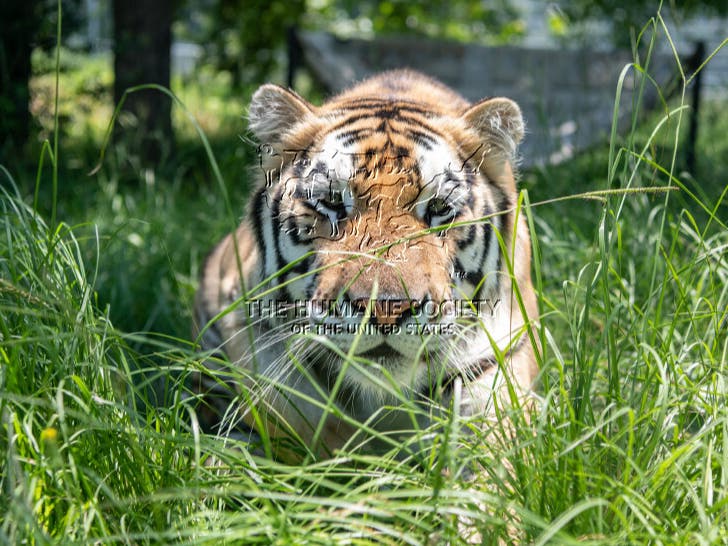
WASHINGTON, D.C. — A bill is pending before the U.S. Senate that would prohibit anyone from keeping tigers, lions and other big cat species as pets and would ban direct public contact, like petting.
The U.S. House of Representatives this week passed the Big Cat Public Safety Act (H.R. 263) by a vote of 278 to 134. The bill is sponsored by Rep. Michael Quigley, D-Ill., and Bucks County, Pa. Congressman Brian Fitzpatrick (R-Pa.). It now moves to the U.S. Senate for consideration.
Believe it or not, big cat ownership is actually an epidemic in the U.S. with untold numbers of captive big cats living in shoddy roadside zoos or as pets living in homes, according to the Humane Society of the United States.
Find out what's happening in Newtownfor free with the latest updates from Patch.
More often than not, these large, dangerous, wide-roaming apex predators are kept in small, barren cages where they can barely turn around, according to the society. They are improperly fed, are not provided with appropriate veterinary care, and have no means to express their complex emotional and behavioral needs.
"As a member of the bipartisan Congressional Animal Protection Caucus, I am committed to ensuring our government is doing its part to promote animal welfare," said Fitzpatrick. "For too long, big cats have been mistreated, exploited, and abused in private roadside zoos. Our Big Cat Public Safety Act will prohibit the unlicensed, private possession of big cats and restrict their direct contact with the public, and I am proud to again join Congressman Quigley in championing this bipartisan bill."
Find out what's happening in Newtownfor free with the latest updates from Patch.
According to the society, since 1992 there have been at least 100 dangerous and cruel incidents involving big cats kept as pets or in private menageries. Among them, a juvenile tiger wandered into a Houston, Texas neighborhood in 2021 and an escaped pet cougar was found lounging in a driveway in Parkland, Florida, in 2019.
In 2013, a 400-pound pet lion escaped in Fairfield Beach, Ohio. In 2009, a 330-pound tiger was discovered in a backyard in Ingram, Texas. In 2008, a leopard approached a woman in her
yard in Neosho, Missouri. In 2005, a tiger roamed loose for days before being shot and killed in Simi Valley, California.
“The big cat breeding and cub petting industry creates a cycle of never-ending misery for the animals involved. In an effort to control the true wild nature of these poor captive animals, breeders and exhibitors mistreat the cubs from the day they are born," said Kitty Block, president and CEO of the Humane Society of the United States. "One paying customer after another handles the cubs, day in and day out, until they grow too big and dangerous. Then they have nowhere to go.
"Sometimes they are sold to roadside zoos, where they pace the confines of their cages, or they end up in basements or backyards as ‘pets.’ Others simply disappear," said Block. "‘Tiger King’ showed just a glimpse of why we need a swift end to the big cat breeding and cub petting industry in the U.S. There are countless Joe Exotics out there. As long as cub petting remains legal, nothing will prevent the next generation of profiteering con artists from casting vulnerable big cats to an uncertain fate.”
Sara Amundson, president of the Humane Society Legislative Fund, said House passage of the Big Cat Public Safety Act, H.R. 263, is "a giant step toward addressing a problem that has been festering for years — America’s surplus of captive tigers and other big cats. It’s the product of people like those in the series ‘Tiger King,’ who breed big cats to make money, not to provide any conservation value.
"Although most of the scofflaw breeders in ‘Tiger King’ have been held to account, as long as cub petting remains legal, nothing will prevent Joe Exotic wannabes from relentlessly exploiting, mistreating and dumping big cat cubs. With well over half of the House cosponsoring this bill, Congress should pass it without delay," said Amundson.
Get more local news delivered straight to your inbox. Sign up for free Patch newsletters and alerts.