By now you've probably noticed spring is here. Along with the daffodils and cherry blossoms comes the mulch volcanoes. Read more about this epidemic, and ways to avoid it, in the following Bird Town feature article by Steven Saffier:
Planting native trees and increasing canopy coverage is one of the best things you can do for birds as a Bird Town resident. I applauded the recent addition by my neighbor of three young trees to their front yard. The trees are Pennsylvania natives so they will provide for wildlife, reduce storm water runoff, sequester carbon, and add esthetic and monetary value.
The trees were planted at the proper depth; the root crown (also known as “root flare”) - that part of the trunk that widens near the base - was just above the surface of soil. They did not stake the trees instead allowing the tree to compensate for stirring winds with rapid cell growth that will strengthen the tree.
Find out what's happening in Newtownfor free with the latest updates from Patch.
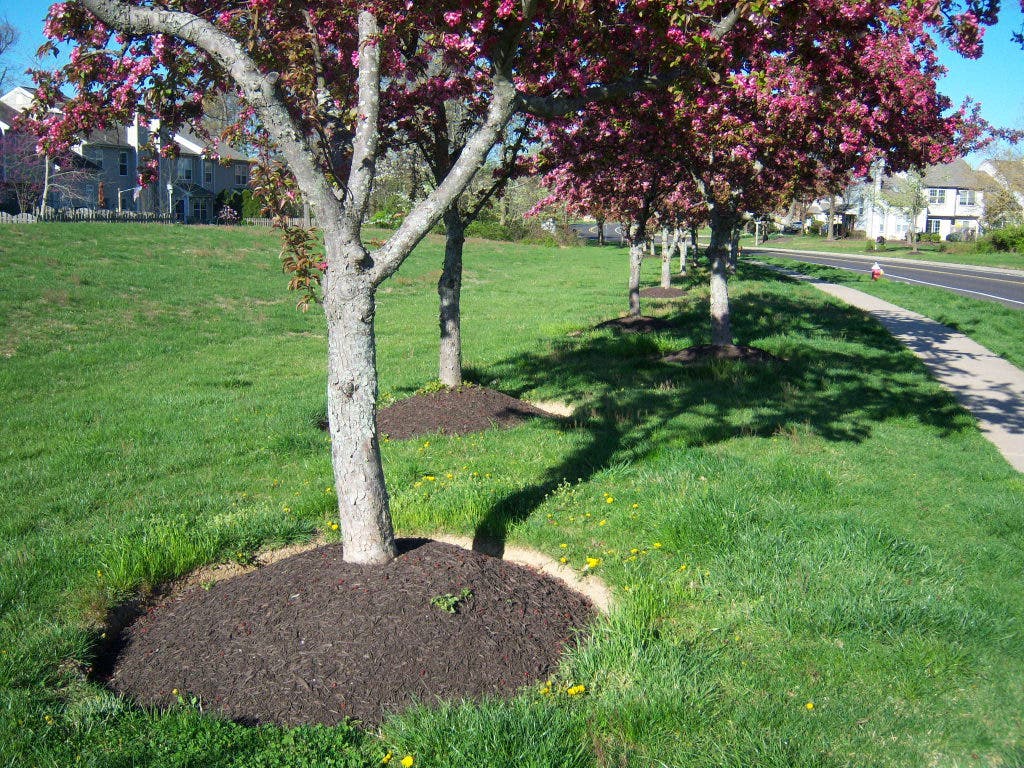
But a week after planting something showed up that is indicative of an epidemic in our area. A large, cone-shaped pile of black mulch was placed at the base of each tree. Known as “tree volcanoes” these mulch piles (or leaf piles) are intended, I suppose, to help retain moisture in the ground for the tree. But it’s actually bad news for the tree.
The root crown is a critical part of a tree where an exchange of gases exists, including oxygen necessary for healthy growth of both roots and the above-ground parts. Since trees and shrubs send their roots outward to seek moisture and nutrients (away from the main trunk), putting a pile of mulch up against the tree does nothing to retain moisture where it is needed most.
Find out what's happening in Newtownfor free with the latest updates from Patch.
In fact, facilitating moisture against the trunk is an invitation for rot, a portal for insect damage and a guarantee your tree will struggle to survive. The alternative is to put a ring of mulch at the drip line of the tree – near the outer boundaries of the longest branches.
If you have a tree that has been mulched year after year near the trunk, pull the mulch away from the base. Don’t be surprised to see a tangle of small roots sprouted by the tree in a desperate attempt to get oxygen. These small roots, sap energy from the tree and weaken large roots that anchor the tree to the ground.
We’ve grown accustomed to tree volcanoes to the point of wide acceptance. But the damage they do in spite of the perceived esthetic and botanical value gives tree volcanoes “looks that kill.” Consider the more eco-friendly alternative - rake everything away from the root crown and let it breathe!!
Bird Town is a working partnership of Audubon and municipalities in Pennsylvania to promote conservation and community-based actions to create a healthy, more sustainable environment for birds and people. For more information, go to http://pa.audubon.org
Steven Saffier is the Director of the Audubon At Home Program for Audubon Pennsylvania and manages the Bird Town program.