Politics & Government
Dr. Gloria Post Comments on WWTP & PFAS
Dr. Post notified Newtown supervisors that a proposed local sewer treatment plant would discharge PFAS into Lake Luxembourg

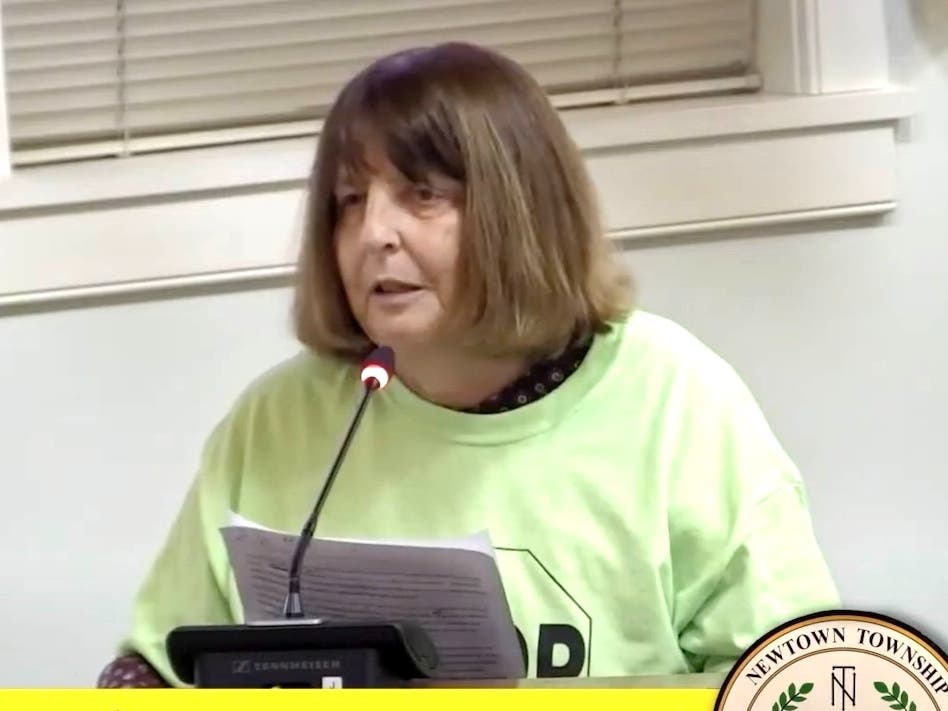

The following comments were made at the 22 January 2025 Newtown Board of Supervisors (BOS) Meeting. View the video of Dr. Post’s comments here: https://youtu.be/3jl-PLIM3mw. Graphics and links were added by John Mack as well as some edits. The final document was reviewed by Dr. Post.
My name is Gloria Post, and I've lived in Lakeview Estates in Middletown for 35 years. Thank you so much for the opportunity to speak here tonight.
I'm going to talk about the expected cost of future regulation of PFAS [per- and polyfluoroalkyl substances], which are manmade chemicals that contain carbon and fluorine atoms. They're often called “forever chemicals.” These costs were not considered in predicting the cost of the proposed sewer plant.
Find out what's happening in Newtownfor free with the latest updates from Patch.
Dr. Post’s Qualifications
I'm a board-certified Ph.D. toxicologist, and I recently retired after almost 39 years as a Research Scientist at the New Jersey Department of Environmental Protection. I worked on emerging environmental contaminants, and PFAS was my main focus for the past 20 years. I'm an author of 10 scientific papers about PFAS, including a review article that has been cited more than 700 times in other scientific publications. I also served on several national and international PFAS advisory groups including for the United States Environmental Protection Agency (USEPA), and I'm currently on the World Health Organization's Technical Advisory Group for PFAS.
PFAS Are A Special Concern Near Proposed Sewer Plant
PFAS has become a huge issue in the United States and all around the world. It is constantly in the news and is probably one of the biggest environmental health problems ever. Pennsylvania, along with many other states and the federal government, have been aggressive in setting new regulations for PFAS, specifically in drinking water. And right now, future regulation of PFAS at sewage treatment plants is one of the most important issues about PFAS.
Find out what's happening in Newtownfor free with the latest updates from Patch.
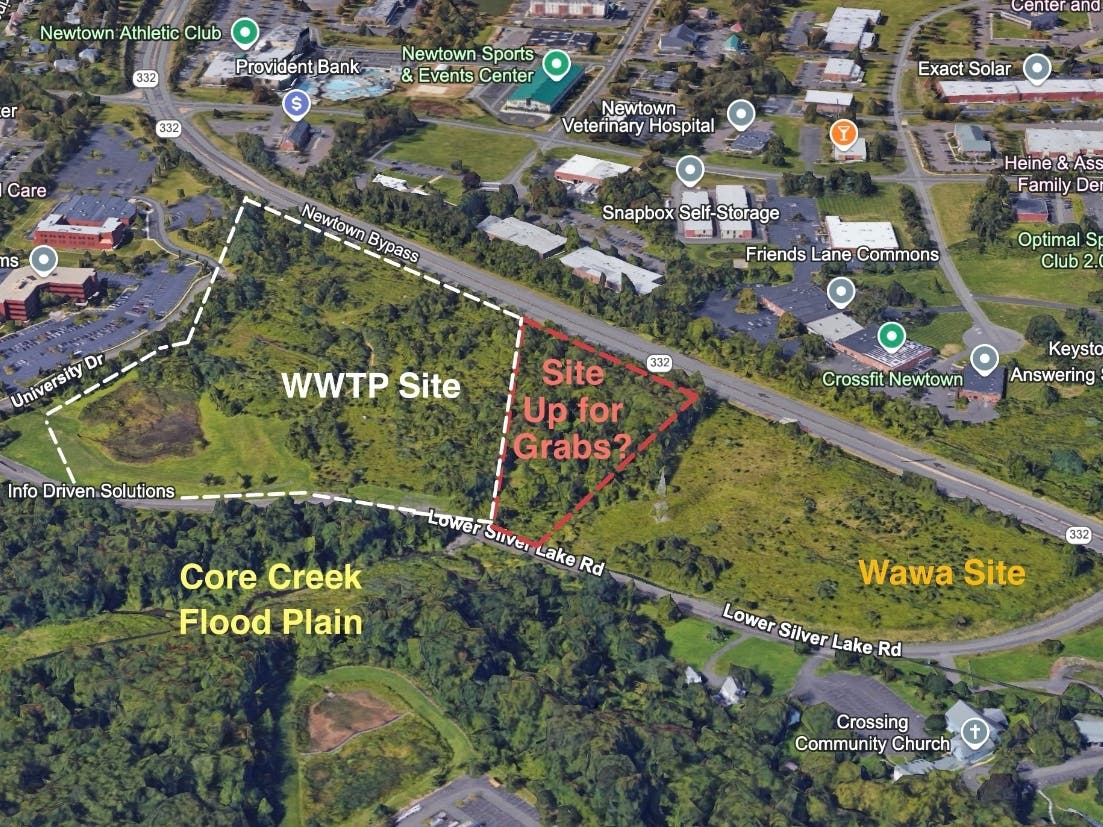
I want to make sure everyone here knows that PFAS are a special concern in the area near the proposed sewer plant because PFAS levels are exceptionally high in the water and in the fish there. The Pennsylvania Department of Environmental Protection (PA DEP) and the United States Geological Survey did a study of PFAS in rivers, streams, and lakes throughout Pennsylvania, and out of all 178 locations tested all over the state, the sample from the Neshaminy Creek in Langhorne had the highest PFAS Levels by far! Levels of PFAS are also very high in the fish in this area, and PA DEP has issued a Do Not Eat advisory for all fish caught in the Neshaminy Creek Basin including Neshaminy Creek, Core Creek, and Lake Luxembourg.

There are many reasons why PFAS are such a huge public health concern. First of all, these chemicals are incredibly stable and never break down in the environment. That's why they're called “forever chemicals.” They're detected in almost everyone's blood. They build up in people's bodies over time, and if exposure ends, it takes many years for them to leave the body.
[Dr. Post listed the health risks posed by even very low exposure levels of PFAS. They include:
- decreased response to vaccines
- increased cholesterol levels in blood
- decreased birth weight in infants
- harmful effects to the liver
Also, USEPA has determined that the two most common types of PFAS [perfluorooctanoic acid (PFOA) and perfluorooctane sulfonate (PFOS)] increase the risk of certain types of cancer.]
Finally and disturbingly, PFAS build up in breast milk, and breastfed infants have much higher PFAS blood levels than their mothers. This is a big concern because infants and young children are especially sensitive to the effects of PFAS.
PFAS Are In Sewage Plant Waste Water Influent
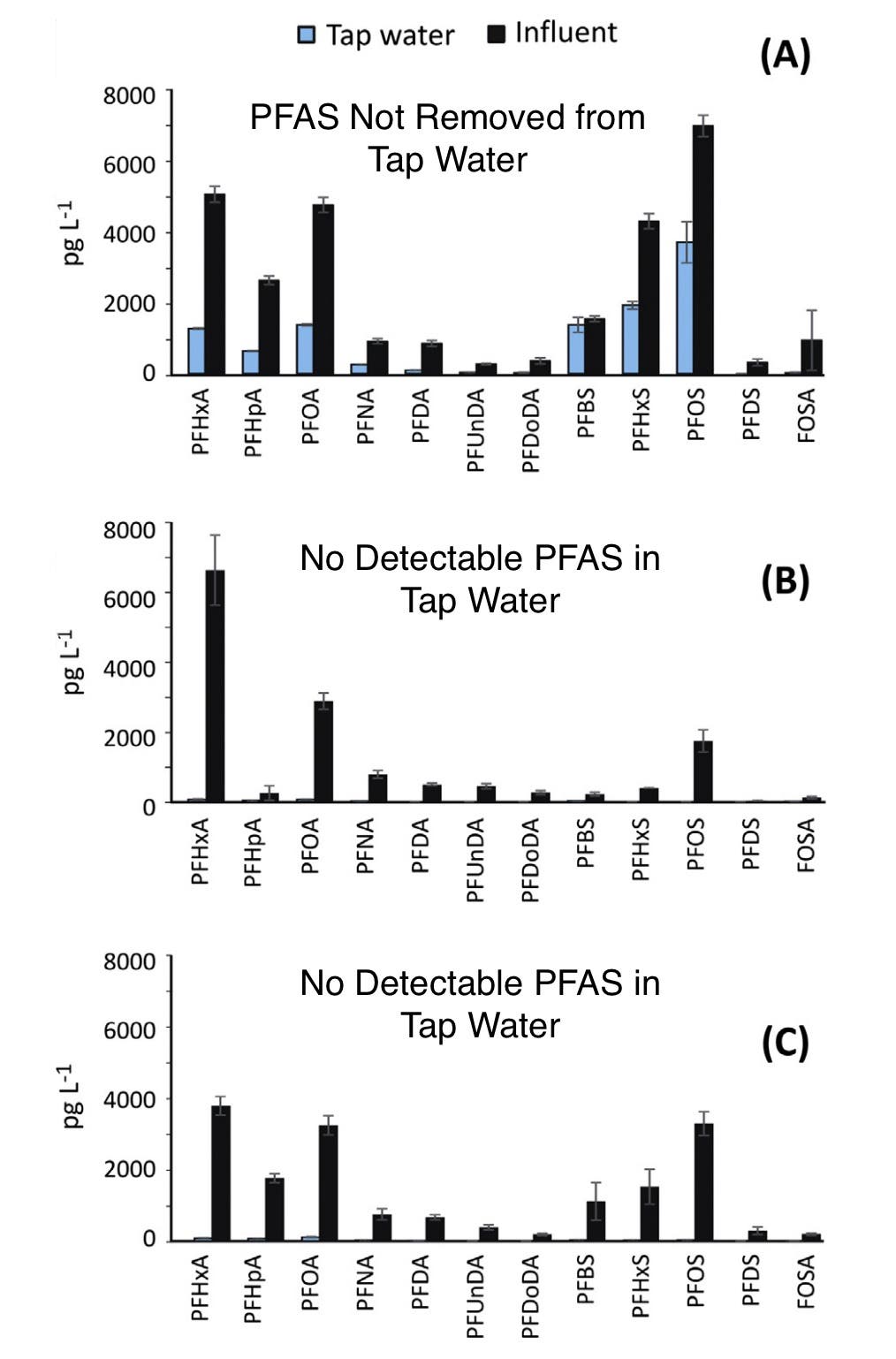
The relevant issue for us here tonight is that PFAS are in the wastewater received by sewage treatment plants [aka “influent”]. The PFAS are in the wastewater that comes from homes, not just in industrial wastewater. Residential sources include PFAS in consumer products that go down the drain or are excreted in human waste and laundering of fabrics coated with PFAS.
************************
Traditional wastewater treatment does NOT remove PFAS.
************************
The treatment to remove PFAS is very expensive, and they remain in the treated wastewater that's released [“effluent”]. PFAS are also in the solid sludge called biosolids that are taken away for disposal. The biosolids are spread on farmland as fertilizer, sent to landfills, or incinerated, and PFAS are released into the environment from all of these disposal methods.
Recent USEPA evaluations show that there are unacceptable health risks - risks that exceed USEPA's acceptable risk thresholds - from even very low levels of PFAS in waterbodies and biosolids. USEPA has proposed very strict [regulatory] levels [called water quality criteria] for PFAS in waterbodies. When finalized, these criteria will be used nationwide to regulate PFAS in wastewater. Additionally, some states are already regulating PFAS in biosolids and/or in wastewater, and other states are currently working on setting such regulations. For example, New Jersey plans to propose very strict water quality criteria for PFAS soon. [LINK: https://dep.nj.gov/wp-content/uploads/workgroups/swqs-20241121-pres.pdf]
************************
It's likely that PFAS at sewage treatment plants will also be regulated in Pennsylvania in the not too distant future.
************************
Removal of PFAS Will Be Costly
The relative costs of these new regulations will be much higher for small local sewer plants like the one proposed in Newtown than for larger regional facilities.
Microplastics are another important emerging contaminant that have highly concerning environmental and human health risks. As for PFAS, microplastics are present in wastewater effluent and biosolids [from sewage treatment plants], and costly regulations at sewer plants appear likely to be on the horizon for them as well.
To Sum Up
Future regulation of emerging contaminants at sewage treatment plans is likely. These regulations will be expensive, and relative costs will be much higher for smaller facilities. These expected costs have not been considered so far [for the proposed Newtown sewage treatment plant] and they should be considered when developing [future] cost estimates for [this plant].