Politics & Government
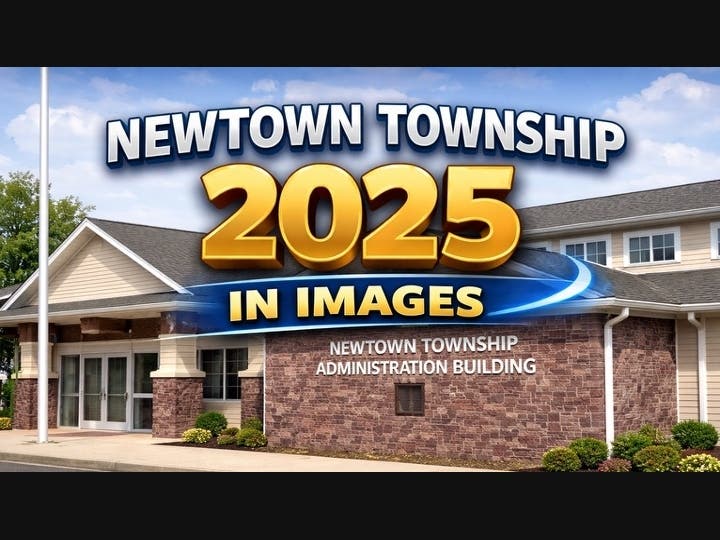
Five 2025 Newtown Township Stories Buried in Municipal Decisions
A deep dive into Newtown Township's 2025 issues has uncovered several surprising & impactful stories that every resident should know.

Introduction: The Details Hiding in Plain Sight
While national politics often grabs the headlines, the decisions with the most direct impact on our daily lives frequently happen at the local level, buried in dense budget proposals and the minutes of township meetings. It's in these documents that our tax dollars are allocated, our roads are prioritized, and our community's future is shaped.
A recent "Deep Dive" into Newtown Township's 2025 plans and 2026 budget has uncovered several surprising, counter-intuitive, and impactful stories that every resident should know. This article breaks down the top five most significant takeaways into a clear, accessible list, revealing the critical details hiding in plain sight. You can also view the following video:
Find out what's happening in Newtownfor free with the latest updates from Patch.
1. The Budget Paradox: Paying More for Less
The central conflict in the 2026 budget projections is stark: total taxes are projected to jump 30% between 2024 and 2026 (from 13.12 to 17.12 mills), while the actual miles of roads being repaved are projected to decrease by 25% over the same period (from 2.5 to 1.9 miles).
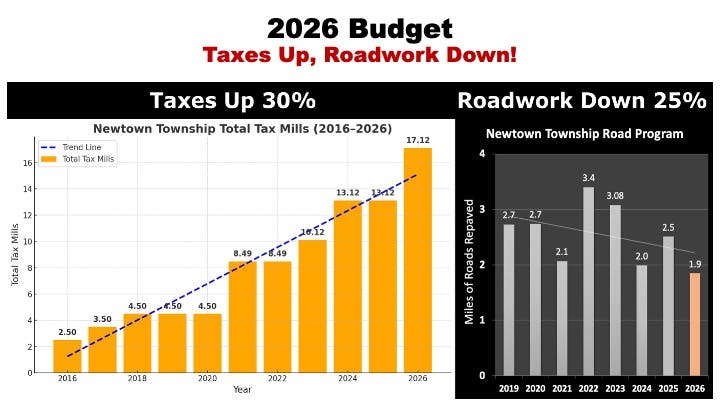
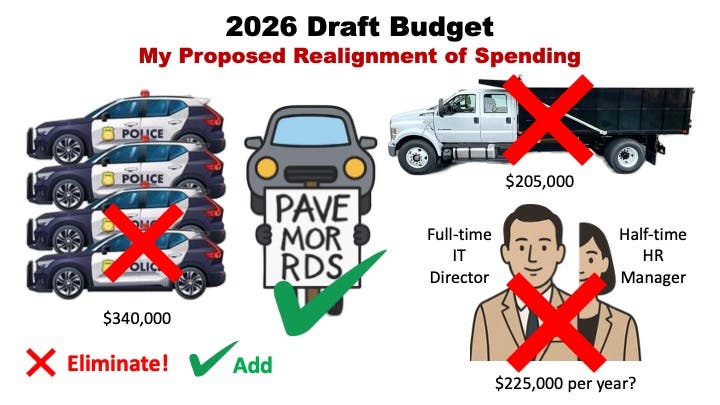
This discrepancy stems from the budget's spending priorities, which favor hiring what some consider unneeded additional staff—including a new IT Director and HR position—and purchasing multiple new police cars and a dump truck over funding for infrastructure. Supervisor John Mack offered a counter-proposal that highlighted this trade-off: forgoing two of the new police cars ($170 K) and the dump truck ($205 K) could free up enough funds to pave nearly 0.8 additional miles of road. Unfortunately, that suggestion was voted down by the Supervisors.
Find out what's happening in Newtownfor free with the latest updates from Patch.
This isn't just a one-year problem; it's a symptom of a deeper issue. The 2026 budget features a $3.23 million structural deficit, and the projected ending balance is not enough to cover it in 2027. This will likely force a future tax hike of at least 6 mills.
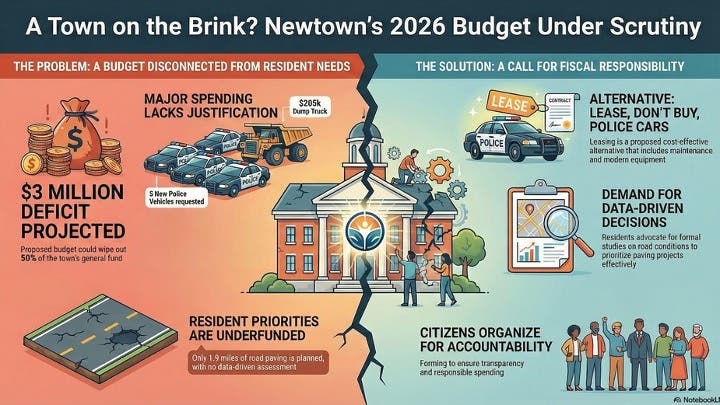
Consistently underfunding road maintenance creates a "long-term infrastructure deficit," a scenario where roads degrade faster than the township can repair them, leading to more significant and costly problems for taxpayers down the line.
2. A "Stopped" Sewer Project, a 47% Rate Hike, and an $11.5 Million Twist
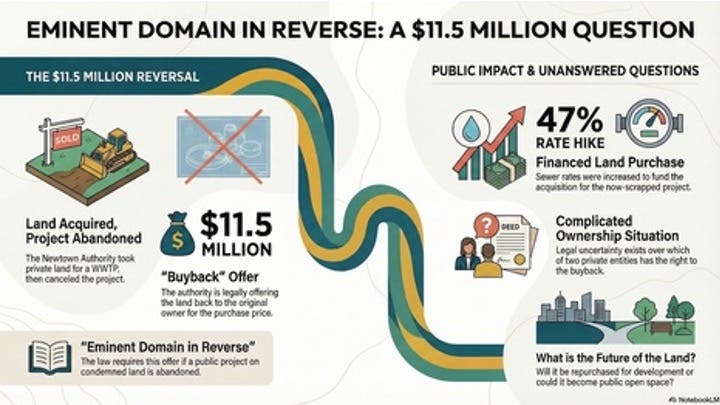
A major controversy erupted over a proposed sewage treatment facility that the Newtown Board of Supervisors "vehemently opposed." In response to public pressure, the Newtown Bucks County Joint Municipal Authority (NBCJMA) voted to "stop" the plan. However, the crucial nuance is that they did not vote to "abandon" it, leaving the door open to resume the project in the future.
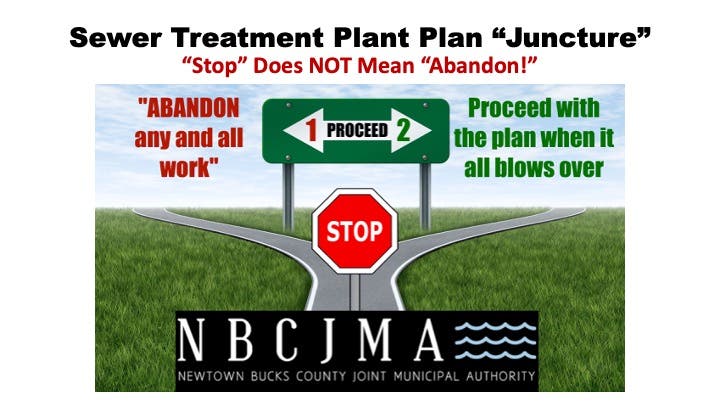
The financial fallout for residents has already been significant, including a 47% sewer rate hike used to finance the purchase of land for the now-paused project. In a shocking new development, a concept best described as "eminent domain in reverse" has emerged. Under Pennsylvania’s Eminent Domain Code, when a public project on condemned land is abandoned, the authority must offer the property back to the original owner. Now, the NBCJMA is legally required to offer to sell the land back for the $11.5 million purchase price.
The Board of Supervisors made its position unequivocally clear in a letter to the authority:
“Newtown Township [BOS] is vehemently opposed to the continued exploration, planning, and construction of a sewage treatment facility in Newtown Township…The Township strongly recommends that the NBCJMA immediately abandon any and all work associated with the creation of a new treatment facility...”
3. The Pedestrian Safety Project Halted by a Phantom Objection
A straightforward pedestrian safety project—a proposed sidewalk along Newtown-Yardley Road adjacent to the Newtown Cemetery—was unexpectedly "scuttled." The project was halted after BOS Chair Elen Snyder claimed she spoke to someone from the cemetery who was opposed to the sidewalk and alleged that the cemetery owned the land where the trail was to be located.
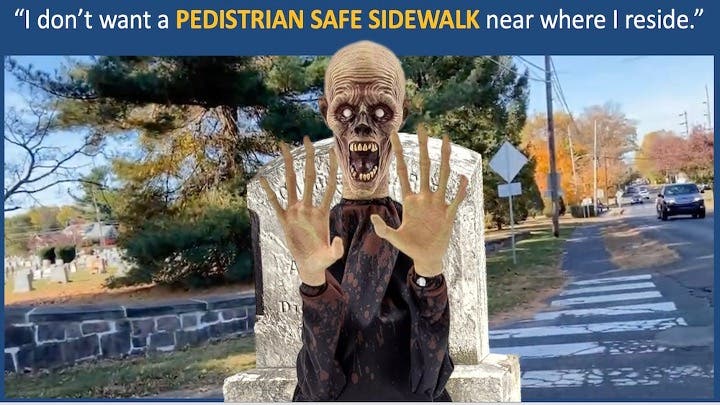
However, a local resident, Charles Feuer, investigated this claim and reported a conversation he had with the president of the Newtown Cemetery Association. The president's reported response directly contradicted the reason for the project's cancellation. Mr. Feuer shared the president's alleged statement at a public meeting:
"I don't know who they talked to, but that's not true. I am wholeheartedly in favor of that."
Further research also indicated that the cemetery does not own the land in question, leaving the true reason for the project's stoppage shrouded in mystery.
4. Is Zoning Enforcement a Two-Tiered System?
Two separate zoning cases—one involving a misplaced sign for the Newtown Athletic Club (NAC) and another concerning unapproved window installations at the Mélange restaurant—have raised serious questions about inconsistent enforcement of township ordinances.
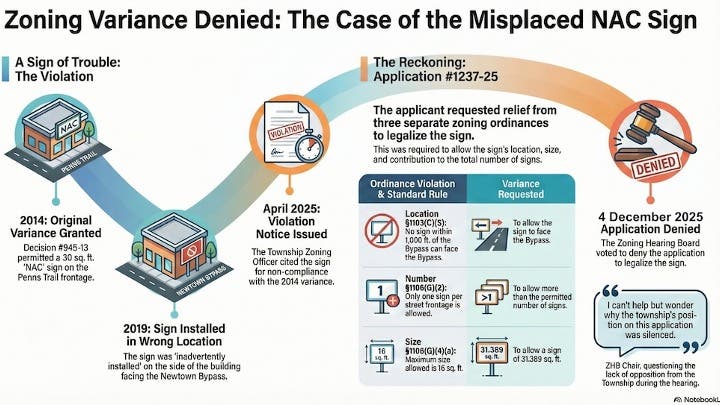
In the NAC sign case, the Zoning Hearing Board (ZHB) denied a variance that would have legalized a non-compliant sign. During the hearing, the ZHB Chair openly questioned why the Township, which has historically fought aggressively against such signs on the bypass, remained silent on this specific application. Adding to the unusual nature of the hearing, the township's Zoning Officer was observed sitting at the applicant's table with their attorney. The ZHB Chair concluded that the board needed to reflect on "what appears to be selective enforcement of our sign ordinances. I can't help but wonder why the township's position on this application was silenced," said the ZHB Chairperson.
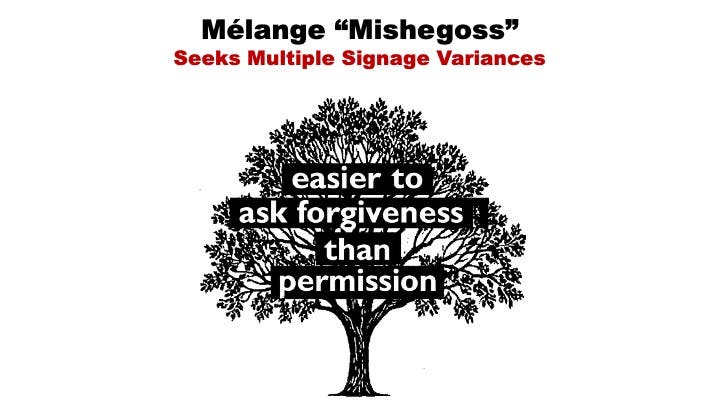
This concern was echoed in the Mélange case, where a debate arose that if the restaurant were granted a variance for its unapproved windows, it could be seen as discriminatory, especially after another local business, the Borscht Belt deli, was not given similar leeway for its signage.
5. A Debate Over Opioid Funds and Police Hardware
A controversial proposal surfaced to use money from a national opioid settlement to help purchase a police "surveillance truck." The plan immediately sparked a debate over the appropriate use of these restricted funds.
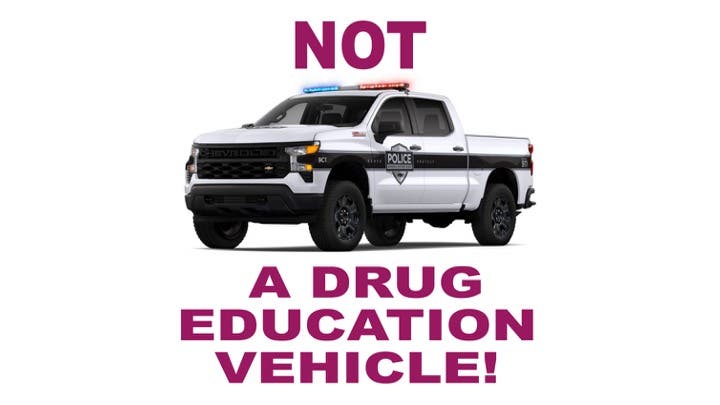
Supporters argued that the vehicle would be a tool to investigate drug-related activity. However, critics and residents questioned whether this aligned with the funds' intended purpose, which is explicitly focused on prevention, treatment, and recovery efforts. They argued the proposal diverted money away from direct public-health initiatives.
The motion was ultimately removed from the meeting agenda, but the issue is far from settled. According to insight from Supervisor John Mack, BOS Chair Elen Snyder stated the proposal would be reconsidered in January 2026. This would be after Mr. Mack and Mr. Fisher, two board members who had issues with the idea, are no longer on the board. The proposal is likely to be placed on the infamous "Consent Agenda" to discourage discussion and comments, a political maneuver designed to pass controversial items with minimal public scrutiny.
Conclusion: Know What's Happening in Your Town!
The common thread weaving through these five stories is the critical importance of resident awareness and engagement. From budgets and zoning to infrastructure and public safety, informed citizens are the most effective check on ensuring local government operates with accountability and fiscal responsibility.
These stories unfolded in one township, but they raise a universal question: Do you really know what decisions are being made in your name, and where your tax dollars are going?