Traffic & Transit
Residents Speak Out On Washington Crossing Bridge Alternatives
Professionals and engineers briefed the public on the alternatives they are at considering for the historic Washington Crossing Bridge.


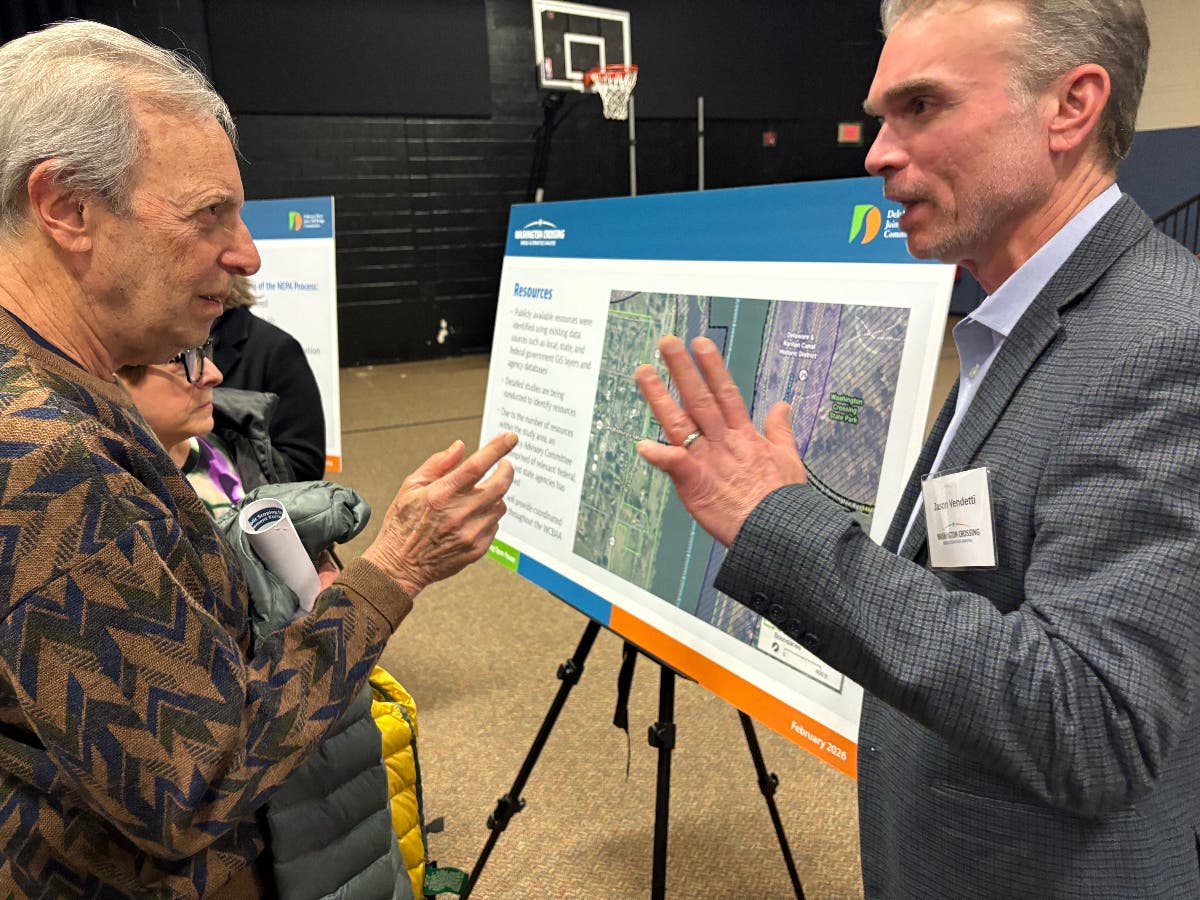
UPPER MAKEFIELD, PA — The future of the Washington Crossing Bridge drew a large crowd Tuesday and Wednesday evenings for open house events at the Crossing Church in Pennsylvania and the Union Fire Company and Rescue Squad in New Jersey.
During the first of two “scoping” sessions organized by the Delaware River Joint Toll Bridge Commission at the Crossing Church in Upper Makefield, several hundred residents met and talked with the engineers and professionals exploring alternatives for the more than a century-old bridge.
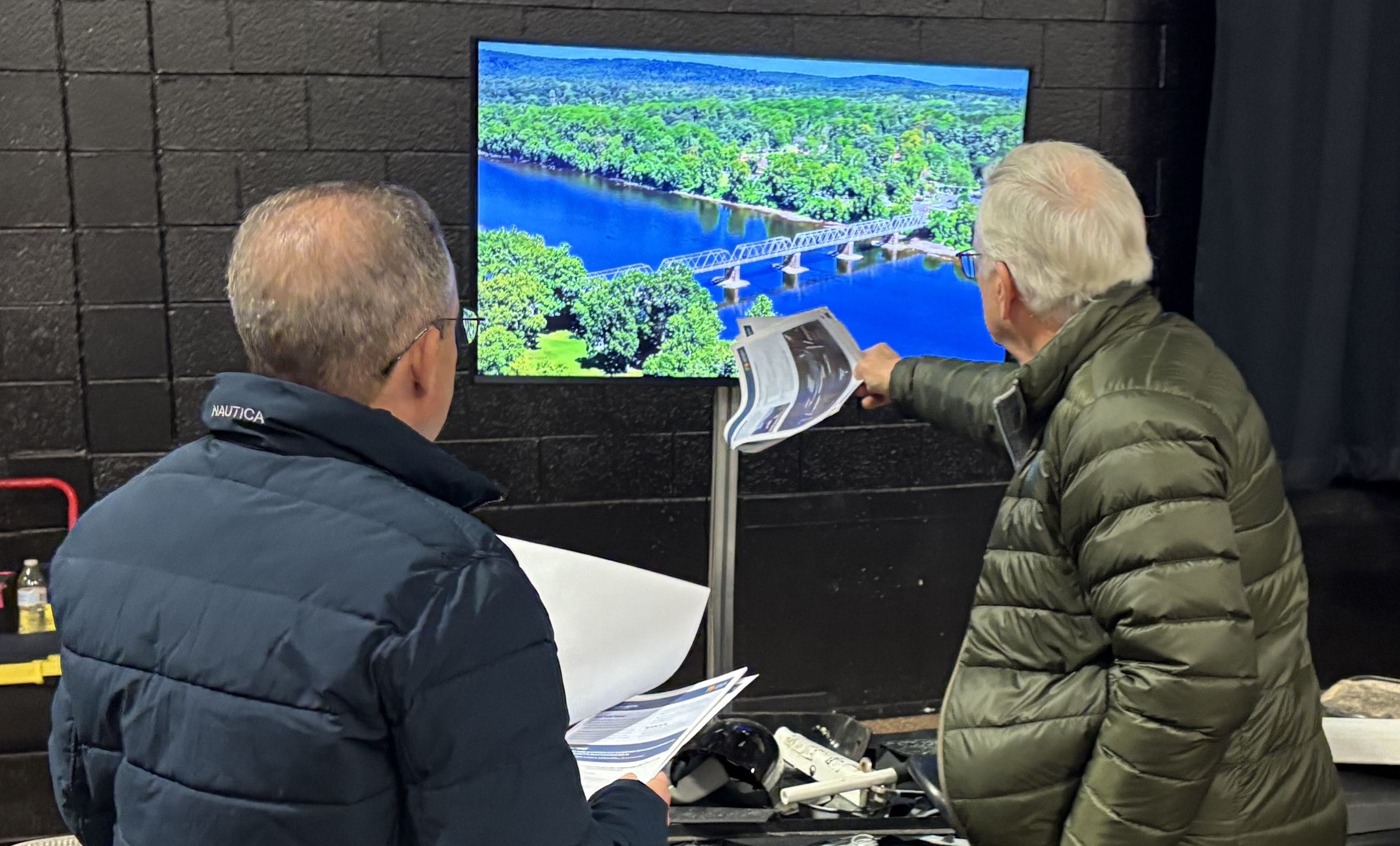
Residents attending Tuesday's event filed past tables filled with car parts and broken mirrors, snapped off of vehicles traversing the span, which commission officials say is rife with inherent flaws, including a substandard design, narrow travel lanes, a bare-minimum load rating, frequent vehicle collisions, and timber-crib foundations.
Find out what's happening in Newtownfor free with the latest updates from Patch.
They also watched a video running on a loop documenting the span’s deficiencies.
But the story board exhibits drawing the biggest crowds at the event were the ones focused on alternative fixes for the historic steel-truss superstructure, which has linked the two states since 1905 when it was built.
Find out what's happening in Newtownfor free with the latest updates from Patch.
Between now and the fall, when a second open house is planned, engineers will be taking a deep dive into alternatives for the bridge, which has been identified by the commission as having "significant deficiencies," including deterioration, limited load capacity, and inadequate pedestrian and bicycle accommodations.
Those alternatives range from doing nothing to rehabilitating the existing span by widening the current structure to replacing the span with a new bridge meeting PennDOT's modern standards, which would open the door to heavy truck traffic through the historic village.
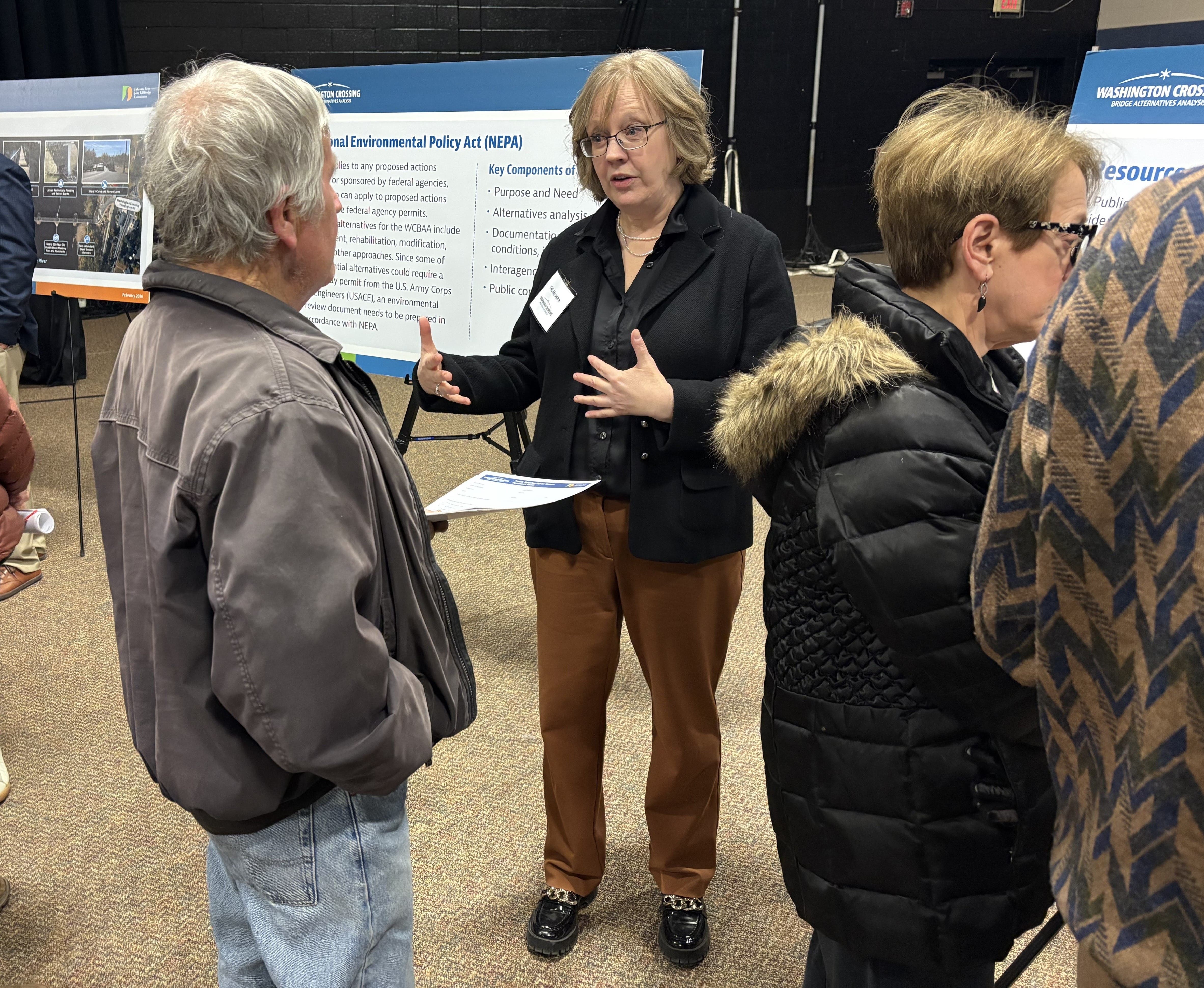
Information boards contained depictions of the study area showing the location of the existing bridge and a series of spaghetti lines showing alternative locations for a new bridge, including one that is envisioned south of the current location.
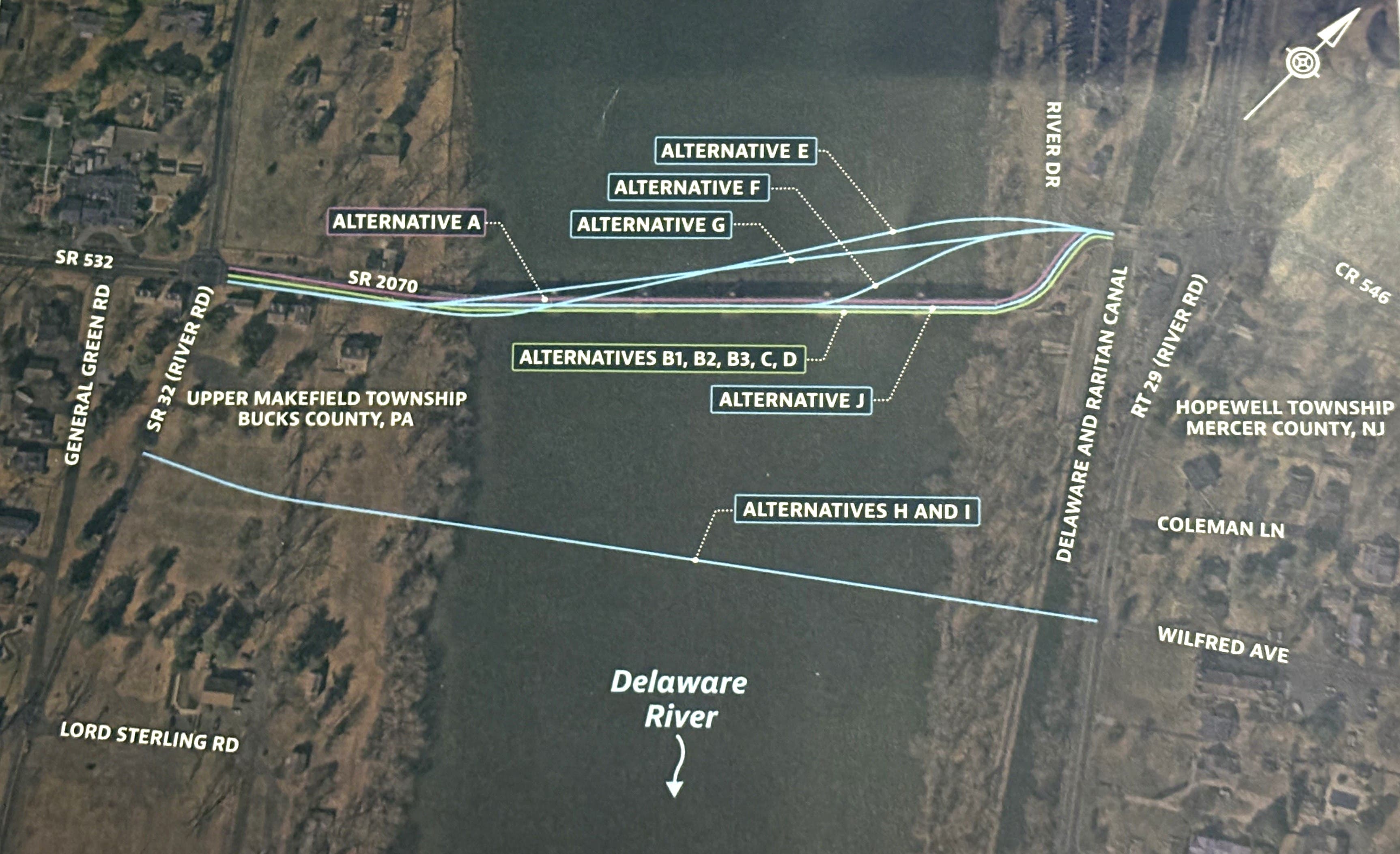
This shows the alternatives being considered. (Delaware River Joint Toll Bridge Commission)
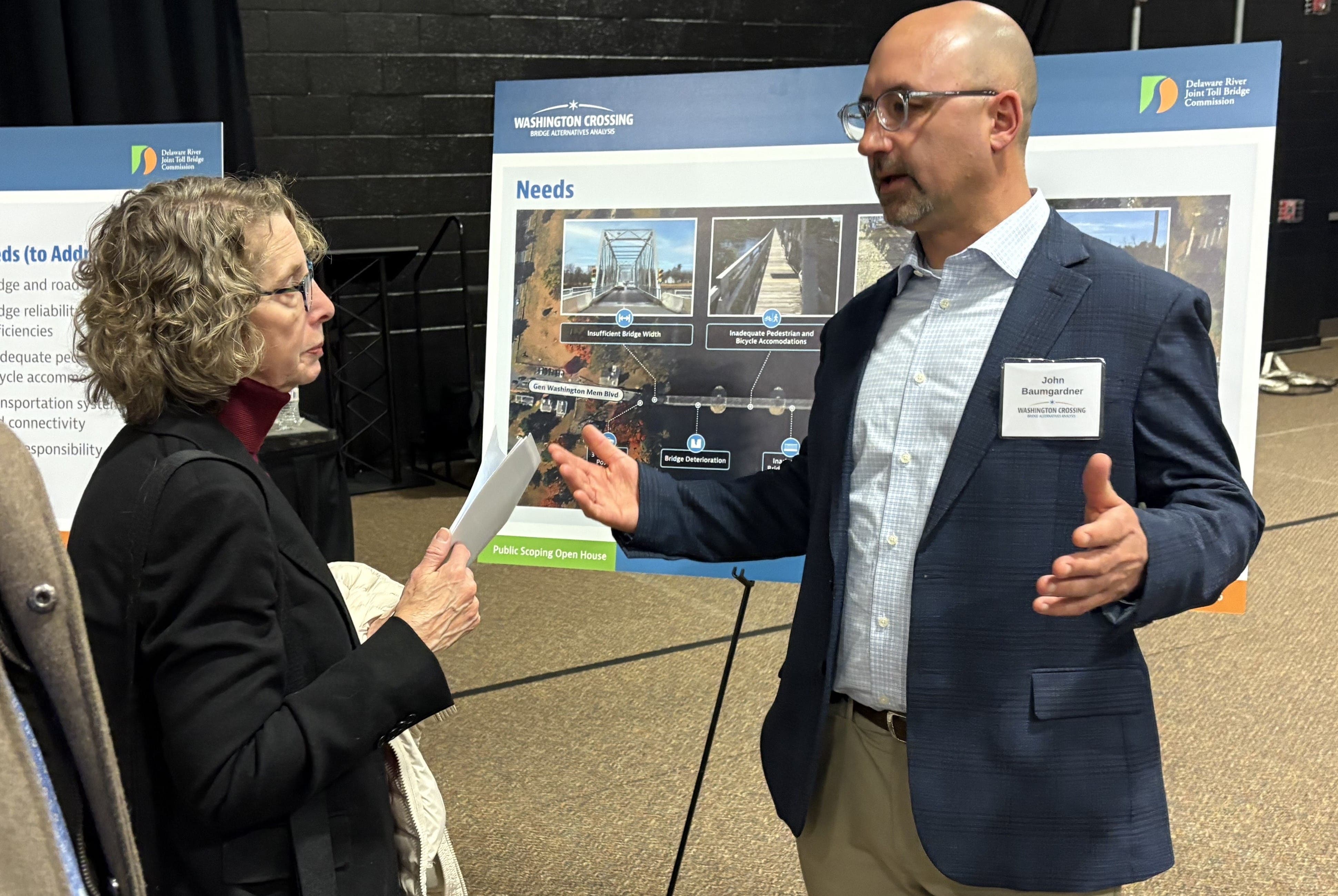
(Photo by Jeff Werner)
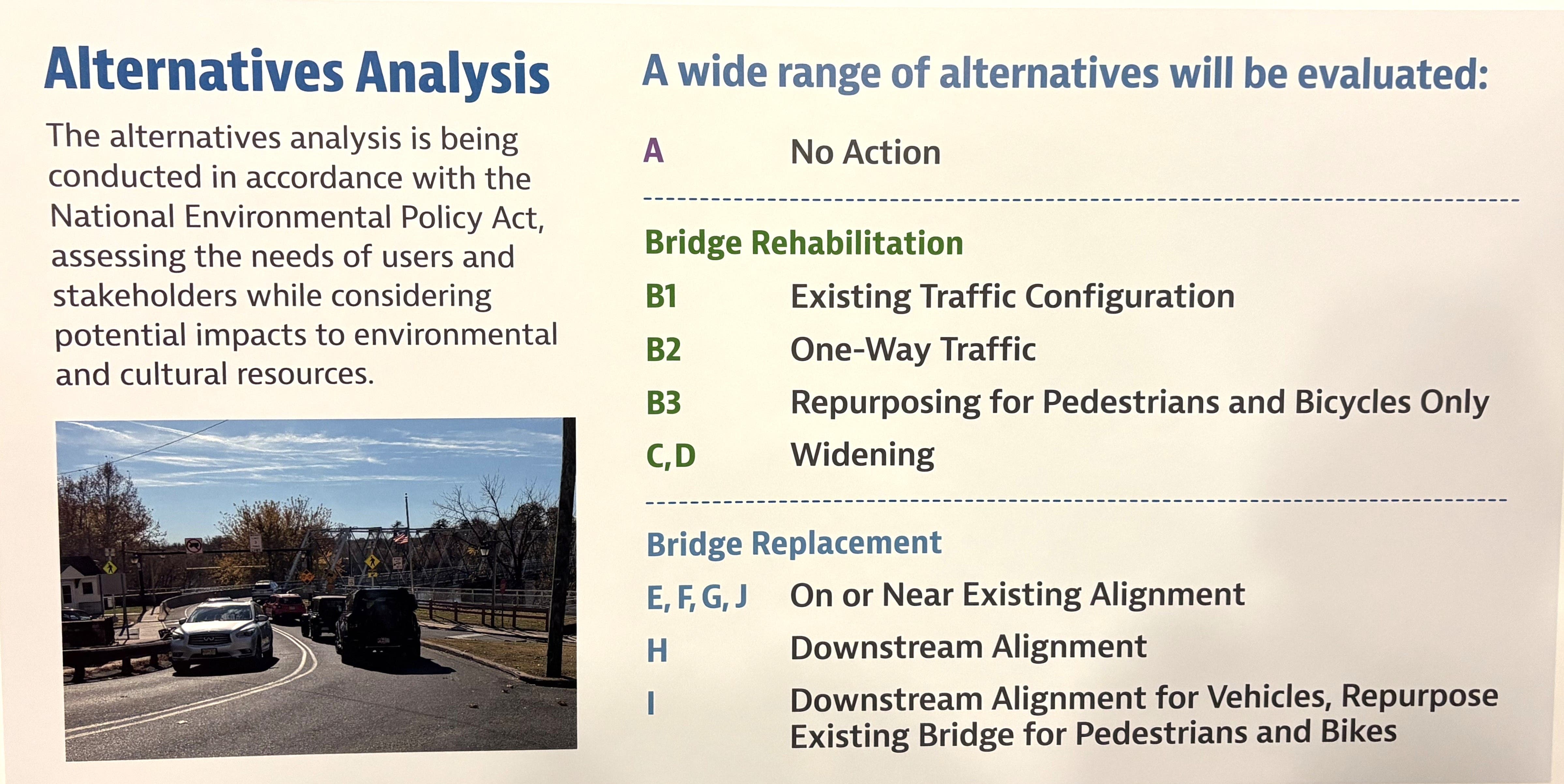
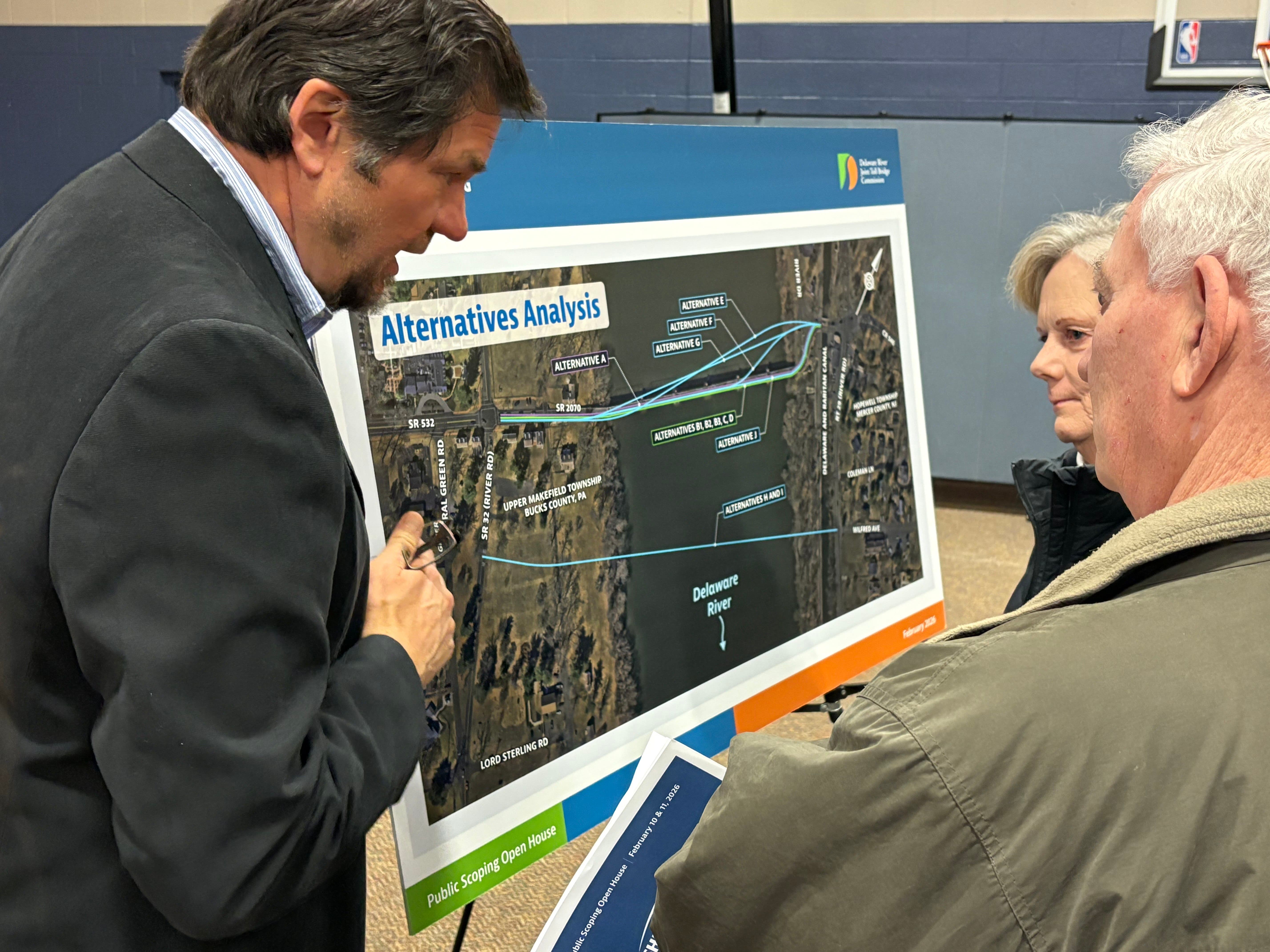
(Jeff Werner/Patch)
The alternative anaylsis is broken down into three areas - taking no action, bridge rehabilitation and bridge replacement.
Under a bridge rehabilitation, engineers will be looking at the existing traffic configuration, considering one-way traffic heading westbound, repurposing the span for pedestrians and bicycle use only and widening the existing bridge by a few feet.
Under the bridge replacement option, the engineers are considering four different bridge alignments on or near the existing alignment; a downstream alignment that would intersect with River Road south of Route 532; and a downstream alignment for vehicles that repurposes the existing bridge for pedestrians and bikes.
"Between now and the fall, our professionals and our team will be putting enough detail together to have a robust discussion of the pros and cons of each alternative," one of the professionals told residents. "We won't be designing anything, but we'll get it to a point where we'll have a pretty good idea of what's going to work and what the cost will be."
Throughout the evening, residents peppered the professionals with questions regarding the timeline for the project, the cost, its impact on the community and the historic park, and whether a new bridge would be tolled.
"The turnout was very good. It's along the lines of what we anticipated," said Joe Donnelly, of Tuesday night's open house. Donnelly is the deputy executive director of communications for the bridge commission.
"Next steps will include the determination of alternatives and then fleshing them out and later on analyzing them and then conducting all the various studies that will help guide the process going forward," he said.
A tentative commission timeline for the alternates study shows a public open house scheduled for late summer or early fall to brief the public on the alternatives analysis, the preparation of a draft plan in the winter of 2026-27, a draft document containing a preferred alternative and a public hearing a year from now, and the production of a final document in spring 2027.
"Tonight is an introductory event. Hopefully, people at least learn from this that we haven't made any decision yet. A lot of people already think we're designing a new bridge. That's just not the case," said Connolly. "We want this to be a cooperative and productive process
"While this is a first step, it could lead to four different approaches. Those broad categories include no action, rehabilitation, reconstruction (building an entirely new bridge) or repurposing using the current infrastructure for a different purpose.
"The location itself is very challenging," said Donnelly. "We're a prisoner of the past. This is a piece of infrastructure that was constructed by a private bridge company. It existed 30 years before the commission was even created. And the commission didn't even own it for another 50 years. So for the first 80 years of its existence, we didn't even own it."
Upper Makefield Supervisor Tom Cino, who attended Tuesday’s event, said the township is concerned by how the project will impact the historic nature of the park and the village of Washington Crossing.
“If they build to their standard, they’re going to build a bridge that’s bigger, heavier and wider," said Cino, noting that most of the alternatives will take the bridge traffic past the village's historic buildings, some of which have dirt foundations and couldn't hold up to the vibrations. "The only way that is going to work is to build something off standard, which is a question they (the commission) are going to have to answer.
"There is not a good option," said Cino. "You can't go north because that's where the park is. And building it to the south doesn't work either because you create a jog in the traffic. The best alternative is to not hurt our town. I don’t know of a solution that would protect the historic village and provide a new, bigger bridge.”
(Jeff Werner/Patch)
(Jeff Werner/Patch)
Get more local news delivered straight to your inbox. Sign up for free Patch newsletters and alerts.