Politics & Government
Farm Park Wetlands a Work in Progress
Norristown Farm Park land will compensate for areas lost to turnpike widening.
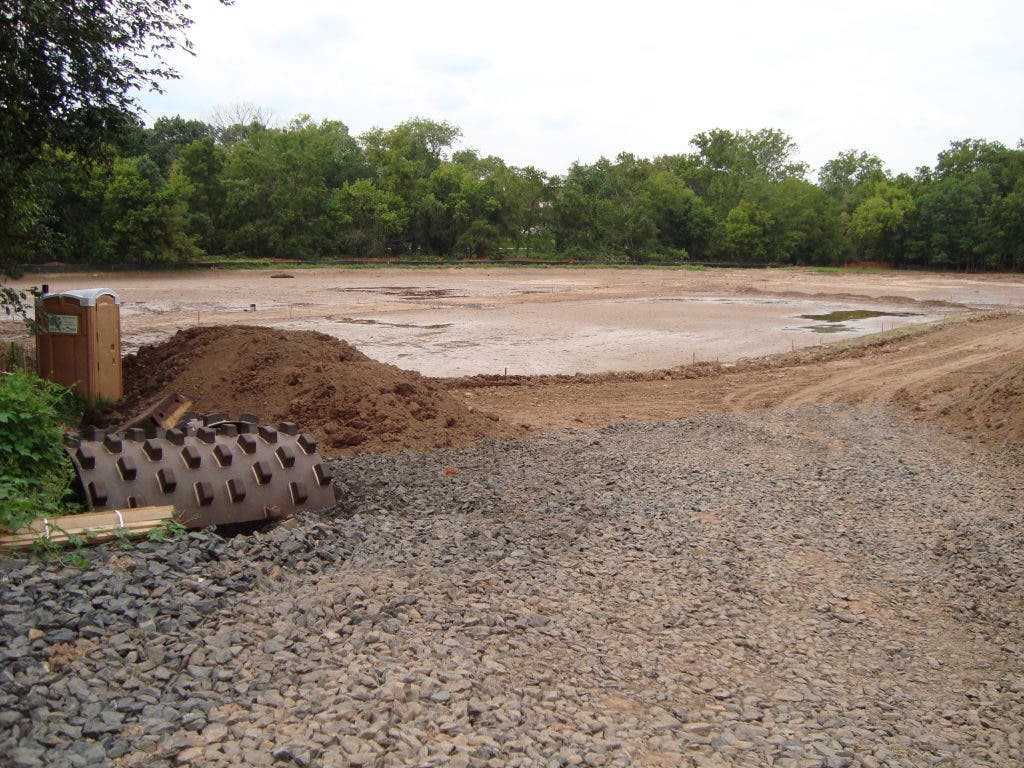


The is getting a few new wetland areas and it isn’t because it’s been raining a lot lately.
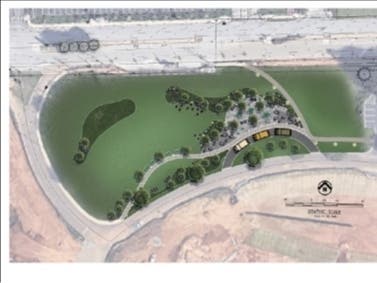
Work on the project has been underway for several months at three locations, totaling 18 acres. One of the construction sites is across from a springhouse on Lower Farm Road in East Norriton, while the other two areas are next to the Hospital Bridge, on the site opposite a boiler plant on the grounds of Norristown State Hospital.
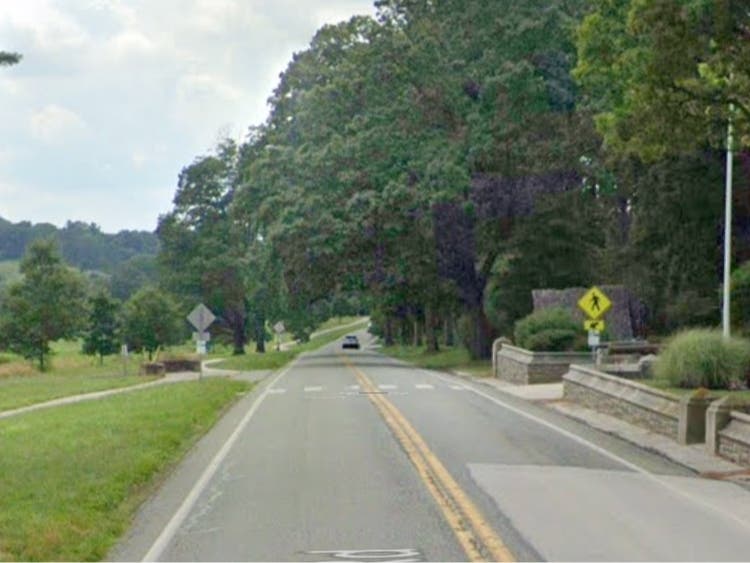
Park Supervisor Kenneth W. Shellenberger said all three of the prospective wetland areas are adjacent to, and visible from, paved walking trails. He added that the sites will be fenced off for a five-year monitoring period, “to ensure that they’re working properly, and the plant material has been successfully established.”
Find out what's happening in Norristownfor free with the latest updates from Patch.
"Once we’re certain that the plant material has been established and that the areas are working as designed, we’ll be taking the deer fencing down," said Shellenberger. "Then it’ll be just another open area of the park.”
The wetland areas are located on former agricultural fields that have been prone to flooding, Shellenberger said.
Find out what's happening in Norristownfor free with the latest updates from Patch.
He explained that the 690-acre park, which is jointly administered by Montgomery County and the state Department of Conservation and Natural Resources, comprises “the old agricultural fields and lands that supported the Norristown State Hospital during its operation. Basically all the food and sustenance that was required for the state hospital was grown on this facility.”
According to Shellenberger, a tenant farmer currently works about 400 acres on the park, primarily growing corn, soybean and hay.
“Aside from that, the park is basically passive recreation. We have picnic facilities here. There are eight miles of walking paths. Folks take advantage of bird-watching, hiking, roller-blading, bicycling [and] picnicking,” he added.
Shellenberger noted that Stony Creek and Kepner Creek run through the park, as well. The wetlands are being built next to Stony Creek. The site near the springhouse is 6.94 acres in area, while one near the Hospital Bridge is 4.49 acres. The other is 6.61 acres.
According to Shellenberger, the Pennsylvania Turnpike Commission approached the park several years ago because it needed to replace wetlands that were going to be lost through the widening of a 10-mile stretch of I-476 between the Plymouth Meeting and Lansdale interchanges.
According to Andrew Lutz, an environmental scientist with the Turnpike Commission, it is necessary to determine and minimize the environmental effects for any such reconstruction or widening project. He added that the commission, working with the Department of Environmental Protection, Army Corps of Engineers, state Fish and Boat Commission and county conservation districts, identifies where there will be a permanent impact on wetlands and develops a “compensatory mitigation plan.”
Lutz added that a hierarchy followed with mitigation gives preference to locating new wetlands in areas adjacent to those where the impact is taking place. Because that was not possible in the case of the turnpike widening project, it was then necessary to look to nearby locations, and then the drainage area and watershed.
“They looked at a number of different areas and they finally settled on the Farm Park,” said Shellenberger. “When they settled on the Farm Park, we looked at a number of sites in here, and basically what they looked for were areas that were wet already... were prone to flooding or had a higher water table. “
It seemed to make sense to make some of the area in question riparian corridors or wetlands, Shellenberger added, “to help with stream erosion, runoff and the retention of some water to recharge aquifers.”
He said one of the farm fields – the one near the springhouse – had actually been taken out of agricultural operation several years ago due to flooding. Last October, during a period of heavy rain with six inches of precipitation in less than 24 hours, the areas being developed as wetlands were under water, Shellenberger added.
Lutz pointed out that not all of the 18 acres under construction are being made into wetlands. Some of the area will serve as a riparian habitat, which he described as a buffer around the actual wetlands.
About 2-½ acres of wetlands, in various municipalities, will be affected by the turnpike project, Lutz estimated. Although noting that there are designs for improvements on I-476 to the north of Lansdale, he added that the turnpike commission would not anticipate coming back to the Farm Park for any additional wetlands mitigation, “because it would be out of the watershed.”
Both Lutz and Shellenberger identified J.D. Morrissey Inc., of Philadelphia, as the contractor on the wetlands remediation project. Lutz said work started shortly after the contract was awarded in the spring.
Before construction even began it was necessary to map the sites and determine where groundwater was located. Lutz said the idea was to make sure that the completed work would fit in with the topography of the surrounding area.
According to Shellenberger, the work involved stripping off topsoil and removing subsoil. Most of the topsoil will be put back in place, along with some clay, and checked for permeability and compaction.
When the job is finished, there will be three “cells” in each of the three construction sites. Shellenberger explained that the cells, ranging in depth from 6 to 12 inches, will be designed to retain varying amounts of water for different lengths of time. The cells will be interconnected and eventually flow into the creek, he added.
Shellenberger said that it had been hoped that the excavation work would be completed by the end of September, but because of the recent wet weather, that goal might not be reached. He added that one of the sites near the Hospital Bridge had been excavated and restored to the proper depth, but black composted mulch still needed to be spread over it before the area could be seeded.
Carl DeFebo, a spokesman for the Turnpike Commission, said that a variety of types of vegetation, including trees, shrubs, small plans and grasses, will be planted on the construction areas. The species will all be native to southeastern Pennsylvania, Lutz said. While some planting will take place in the fall, he added, the rest will have to wait until the spring.
Lutz said the total cost for the project is about $1 million, all of which will be borne by the turnpike commission.
Among the benefits of the new wetlands, Shellenberger said, will “be retention of floodwaters, which will allow sediments and various pollutants to settle out before they actually enter into the watercourse.”
He also cited the benefit to native and migratory species at the park, in that there will be an addition of different ground cover and food sources.
“It’s going to be a nice added feature here that birders and folks that use the park can take advantage of. They’re going to see things down there, perhaps, they hadn’t seen before – species of birds or plants or flowers or things like that,” Shellenberger said.
DeFebo said he and Lutz could think of only a few occasions when land in a public park had been used for wetlands remediation. The big benefit, he added, would be to the public, “because anyone who lives in that area, or visitors to the park, will have access to that wetland, to learn from it, to observe it and just kind of to benefit from the beauty of it.”
According to DeFebo, “there’s an obvious value to the community, which is unique for this type of a project. In other words, a lot of times, when we build these wetlands mitigation sites, there’s environmental benefits, but they don’t always benefit the public.”