Community Corner
Seeing Montgomery Cemetery
The West Norriton burial ground holds clues to local and national history.

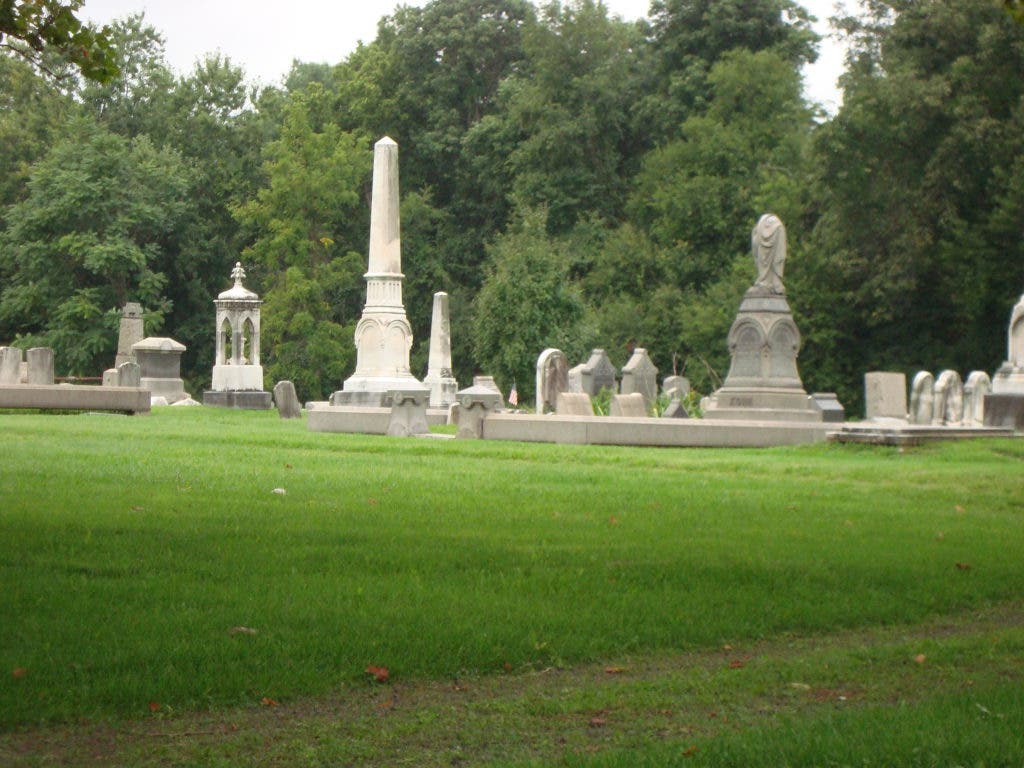
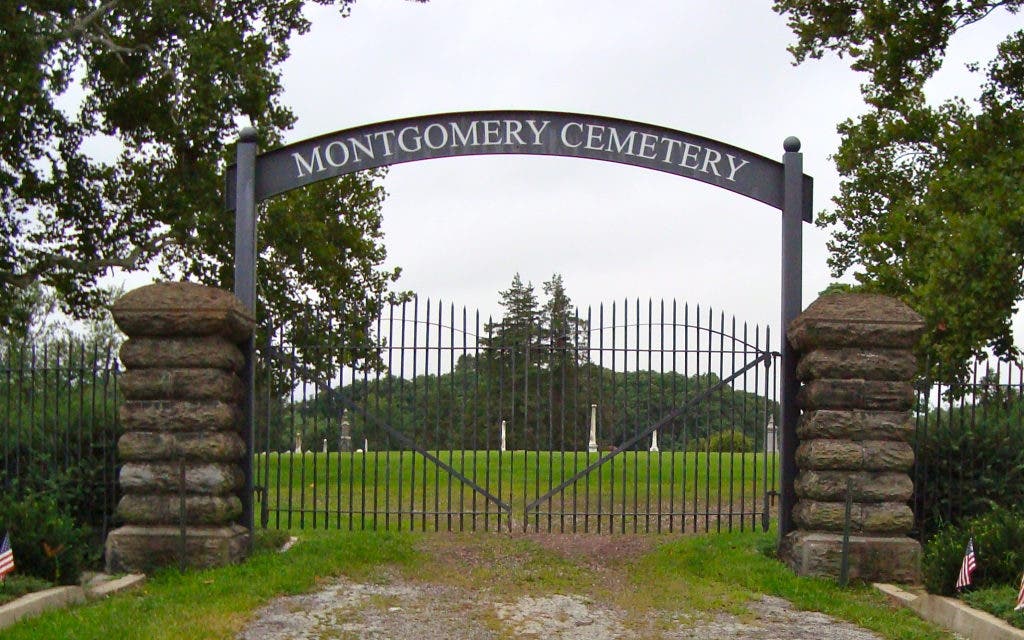


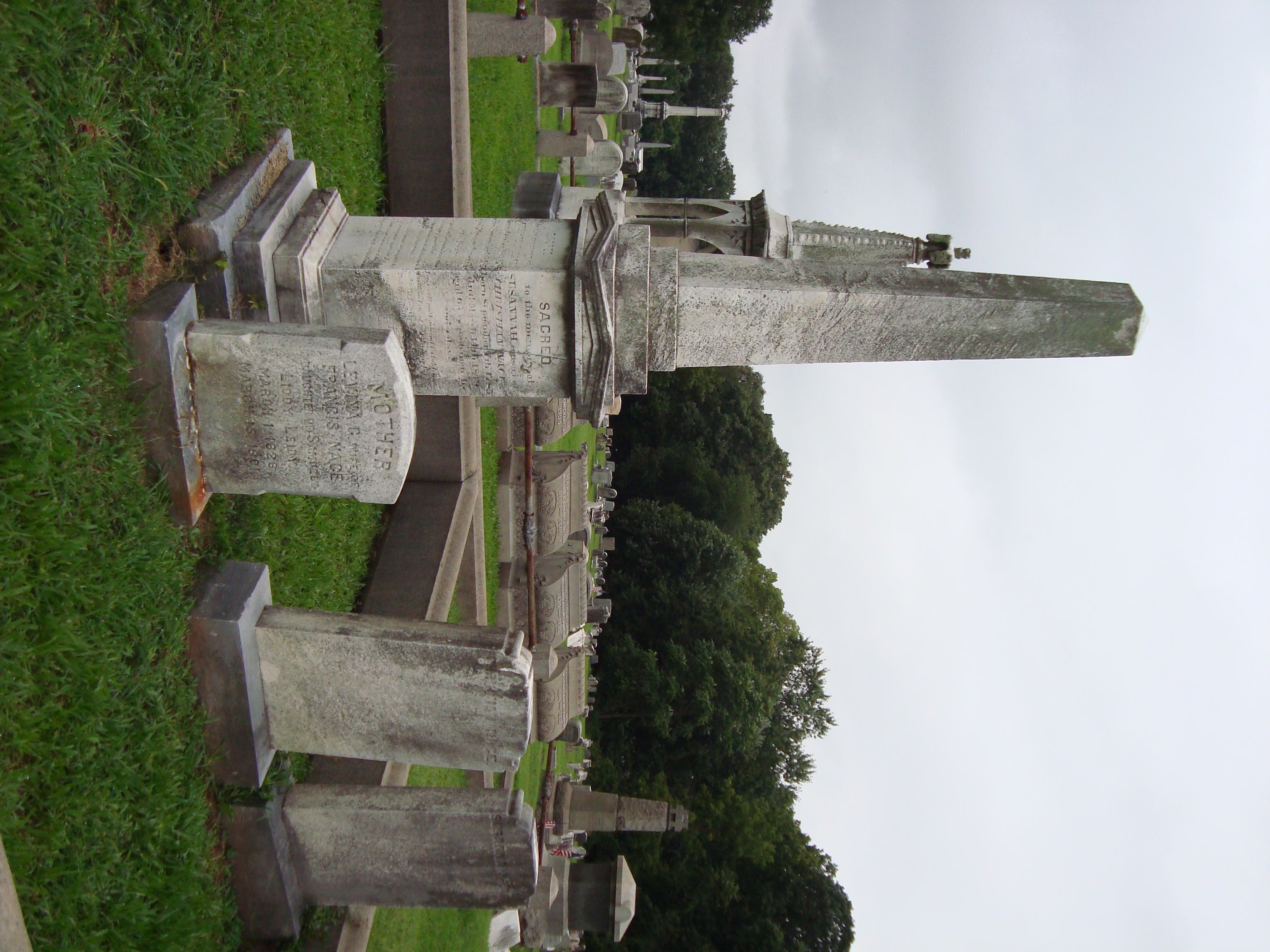
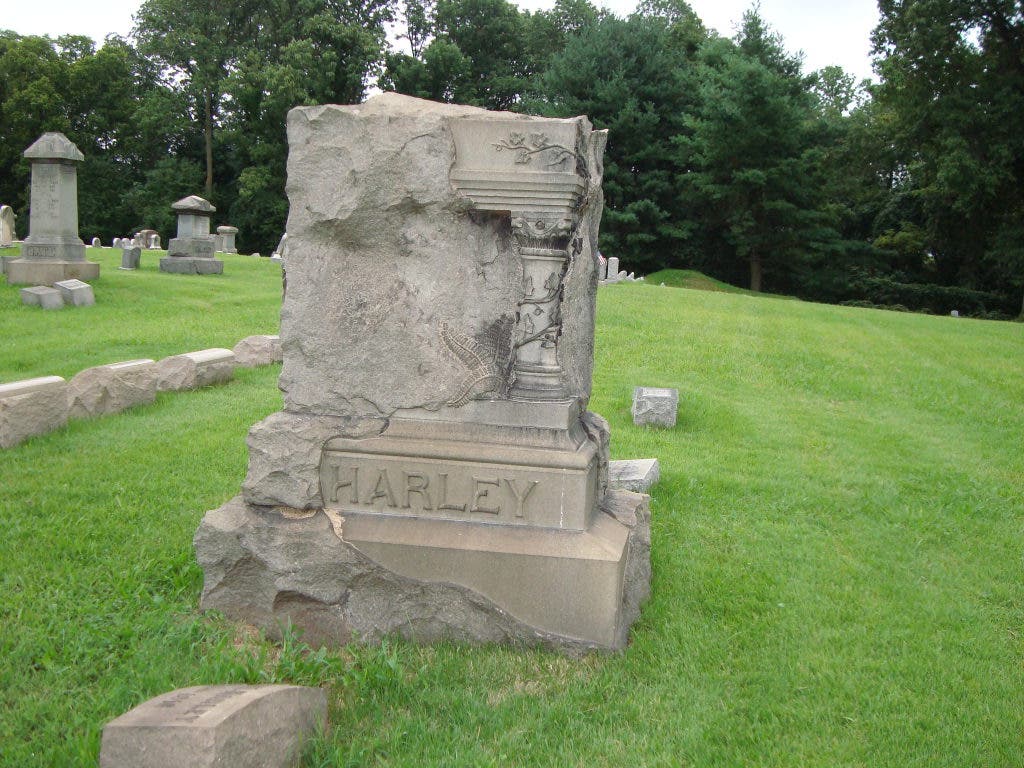
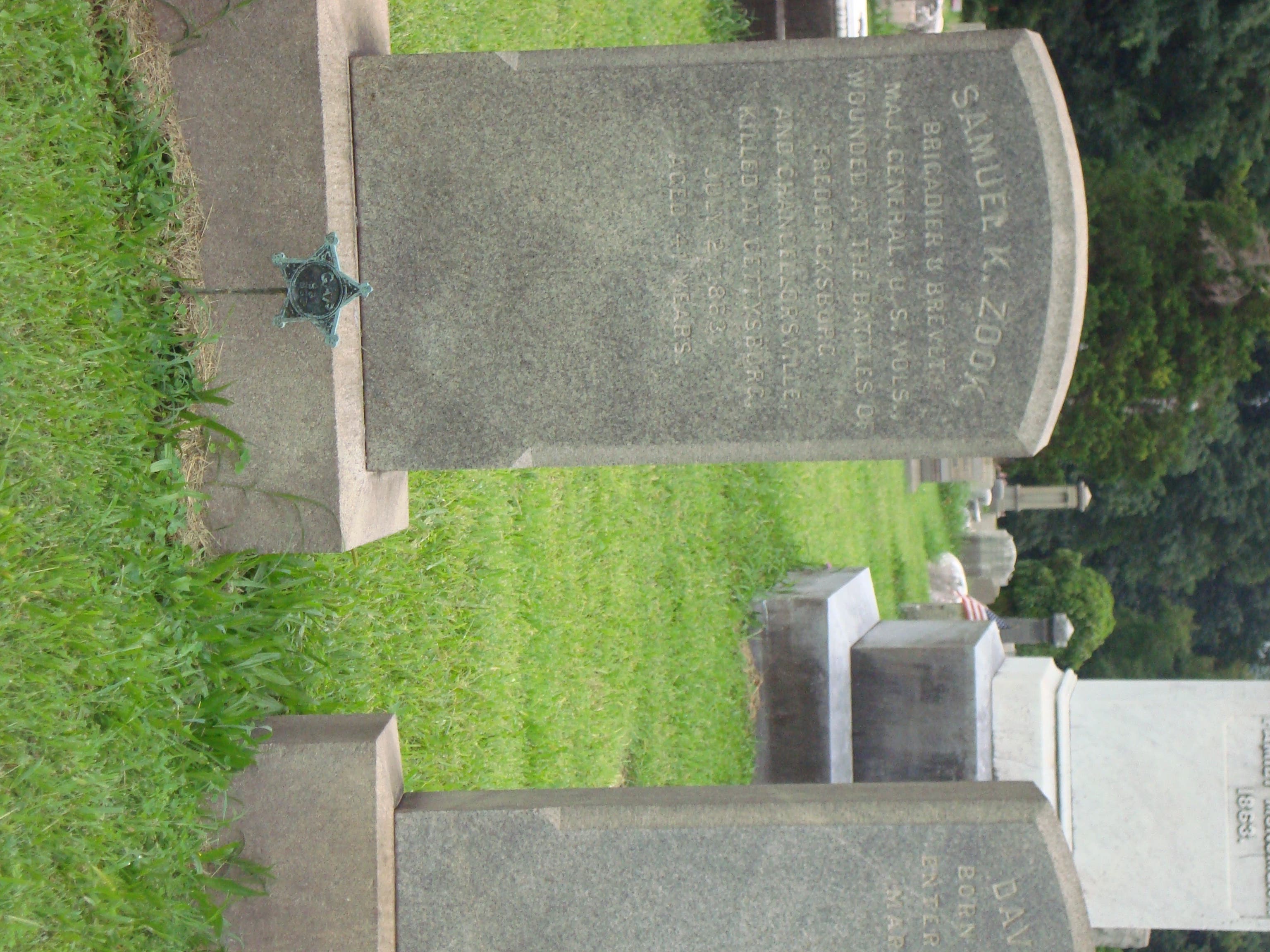
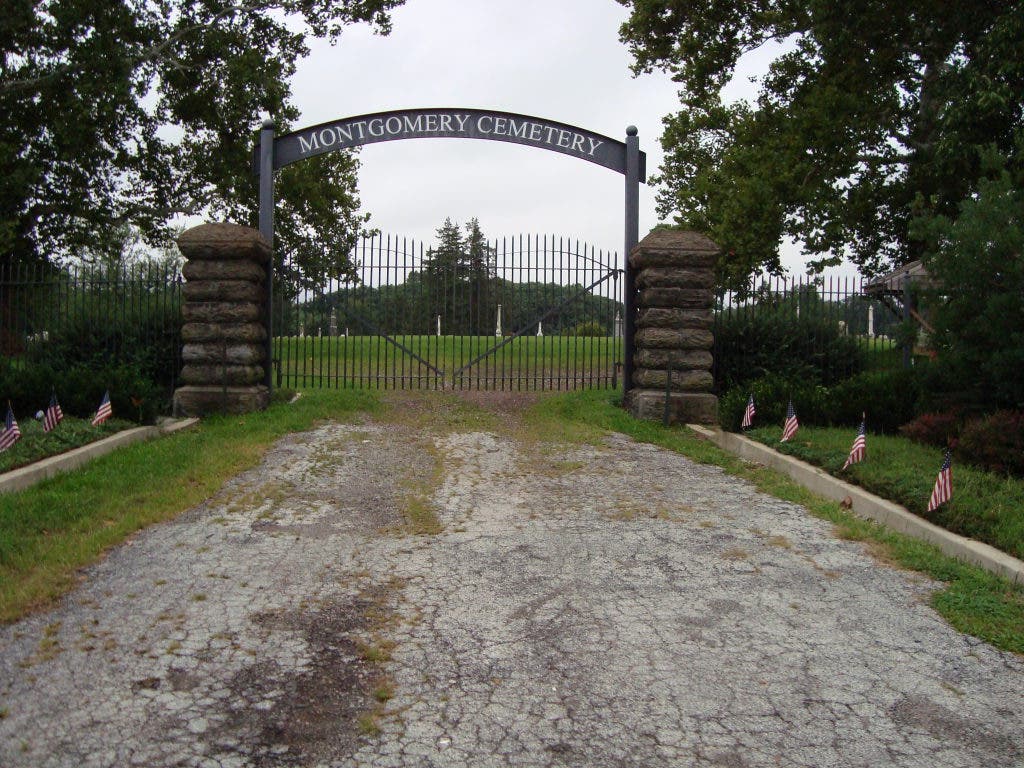
Walking the grounds of the , one is almost certain to come across names tied to local, state and even national history.
Located at 1 Hartranft Ave. in West Norriton Township, the 44-acre cemetery has been owned by the since 1997, when it acquired the property from the Goodwill Baptist Church.
The cemetery was the first nonsectarian burial ground in Montgomery County, said Karen Wolfe, the historical society’s executive director. Established in 1847, the cemetery originally had been owned by the Montgomery Cemetery Co., which sold it to the Mills family in 1935. The cemetery was transferred to the Baptist church in 1987. Plans to build a church on the grounds fell through, as did a developer’s proposal to locate houses there.
Find out what's happening in Norristownfor free with the latest updates from Patch.
Still, the cemetery has not been immune to change. At one time, Wolfe said, it was a rural location, as the land nearby had not been developed. The cemetery’s gates originally were located on Main Street, at the top of a beautiful tree-lined driveway. However, when the land between the street and the burial grounds was sold, the gates were moved to their present location, said Eileen Santori, a historical society board member and cemetery historian.
A building currently called the gatehouse was at one time the cemetery superintendent’s home, built around 1850. Over time, the Mills family and a Baptist church parishioner also lived there and maintained the cemetery.
Find out what's happening in Norristownfor free with the latest updates from Patch.
According to Santori, the first floor of the house was damaged in a fire, but the historical society has been able to restore the building.
On the “first floor, we now have a meeting room, a kitchen, a handicap-accessible bathroom, and then we also have someone now residing on the second floor. What we did was we cut the steps out to the second floor and made a residence for someone to be there, like our eyes and ears,” she added.
A chapel and wishing well that were once on the property were removed in the 1920s. During the Second World War, fencing that had been placed around many family plots was removed so the metal could be used.
Wolfe said burial plots in the cemetery are no longer sold.
“We are a closed cemetery,” she added.
However, Wolfe said, burials are allowed for those who have a deed to a plot.
Santori said the first person buried in Montgomery Cemetery was Susannah Nace, born in 1785 and died in 1849. Her husband, Christian, was also buried in the cemetery.
“Nace is an old family name,” said Wolfe.
The burial grounds have come to be the resting place of more than 400 veterans, from as far back as the War of 1812 up through the Vietnam War. Of the perhaps 330 Civil War veterans buried in Montgomery Cemetery, 33 were interred in the plot for the Gen. Zook Post No. 11 of the Grand Army of the Republic.
“Their families could not afford to bury them, so the post came forward and gave them a proper military burial at no charge to their families,” Santori said.
The Grand Army of the Republic, which was made up of the veterans of the Union army, was “very, very powerful,” she added. “They established homes for soliders, like the current [Veterans Administration] system,” as well as orphanages for children of the fighting men who had been killed or were unable to support their families because of disability.
In its day, Santori said, the Grand Army of the Republic was “a very big deal. I mean, they would have annual encampments. They’d get together and they were very proud, very strong-willed, very determined me, because they spent four years together, and that brotherhood continued. They were the ones that established Memorial Day, as we know it.”
To commemorate the day, Santori added, the G.A.R. would hold services at the cemetery and make sure veterans’ graves were attended to.
“Then there would be parades and speeches, and the G.A.R. would march. The guys would be in their uniforms,” she said.
Santori added that five U.S. presidents, from Ulysses S. Grant through William McKinley, were Civil War veterans endorsed by the G.A.R.
“If you were not endorsed for presidency by the Grand Army of Republic, you didn’t make it,” she said.
Wolfe said there are plans for a Boy Scout project to fence in the Gen. Zook Post No. 11 plot. Additionally, on Sept. 10, there will be a ceremony at the plot to dedicate a sign that Skyelur Festa will place there, as her Gold Award project for the Girl Scouts, with information about the Grand Army of the Republic.
Gen. Samuel K. Zook, whose name the local G.A.R. post bore, fought at Gettysburg, where he received wounds that ultimately proved fatal. He was buried at Montgomery Cemetery, as were four other Civil War generals: Maj. Gen. Winfield Scott Hancock, Brevet Maj. Gen. John Frederick Hartranft, Brevet Brig. Gen. Matthew McLennan and Brevet Brig. Gen. Adam Jacoby Slemmer.
Wolfe said Hancock played a “major” role in the action at Gettysburg. Like Zook, he wounded at Gettysburg, but he lived on to run unsuccessfully as the Democratic candidate in the 1880 presidential election.
Hartranft, on the other hand, went on to serve as the governor of Pennsylvania in the 1870s. He was also in charge of the prisoners arrested after Lincoln’s assassination, Weaver said. She added that 10,000 people attended when the monument was erected on Hartranft’s grave.
McClennan, who saw action at the battles of Spotsylvania, Cold Harbor and Petersburg, was made a general toward the end of the war. After returning to Norristown, he helped run a printing business and also headed Zook Post No. 11 before passing away in 1872, at the age of 38. Wolfe said McClennan’s gravestone was erected by men who served under him.
According to Santori, Slemmer, who saved Fort Pickens near Pensacola, Fla. from being captured by the South, died when he was 39 years old. He had stayed in the army and negotiated treaties with Native Americans in the Dakotas, but his heart had been weakened by illness he received while fighting in the Seminole Wars.
Wolfe said the monument for Slemmer’s grave had been destroyed through neglect. She added that the historical society was trying to raise money to have it restored.
“We know what it looks like,” Wolfe said.
A tall obelisk marks the burial place of seven brothers in the Schall family who fought in the Civil War. One, Edwin, was owner of The National Defender, a local newspaper. He was killed in battle, but his twin brother, Edward, came back from the war and dedicated his life to securing pensions and helping veterans’ widows and children, Santori said. Yet another brother, William, remained in the service and fought under Gen. George Armstrong Custer, but transferred to another post before the Battle of Little Bighorn.
Another Civil War veteran was Dr. Joseph Kerr Weaver, who also served in the Spanish-American War and was medical officer in the National Guard of Pennsylvania, Santori said.
Along with Dr. Louis W. Read, Weaver was a founder of . Weaver said that Read was summoned to remove the bullet that had lodged in Hancock’s groin at Gettysburg. She added that the doctor performed the operation by placing Hancock in a saddle.
Read’s daughter, Ninah, was the head of the American Red Cross in Norristown. When she died, veterans from the Spanish American War, the First World War, the American Legion and the Veterans of Foreign Wars served as her pallbearers.
A Civil War nurse, Elizabeth Jane Brower, was also buried in Montgomery Cemetery.
“She was a Norristown native,” said Wolfe. She added that Brower tended to the wounded at Gettysburg and other battlefields. Many soldiers probably survived because of the help provided by nurses.
“They did a tremendous job, those nurses,” Wolfe said. She added that Brower spent the remainder of her life after the war in and out of various mental institutions.
Another gravestone marks the resting place of J. Wesley Lonsdale, who served in a number of battles before dying at Fredericksburg in late 1862. Wolfe said Lonsdale’s father wrote to Hartranft, asking for his son’s body to be brought home.
“It didn’t take long for that request [to be honored]", she added, pointing out that Lonsdale was buried in early 1863.
Those lost in other wars are also honored at the cemetery. For instance, even though he was buried in France, there is a memorial to Edmond Charles Clinton Genet, the first American casualty of World War I. Santori said Genet had originally joined the U.S. Navy but became bored and decided to go into the French Foreign Legion. After his unit was wiped out, Genet decided to go to flying school in France and become a pilot. Santori said Genet became a member of the Lafayette Escadrille, a French flying squadron.
“His plane was shot down and he was killed,” Santori said. When Genet’s body was brought for burial, an American flag was found sewn inside his shirt, she added.
Santori said that Genet wrote “numerous letters to his mother," and the reason he fought for France “was because he told his mother he was afraid of what Germany would do.”
Vincent Pearson, a member of the National Guard, also served in France during World War I. Killed at the age of 20, when his unit was wiped out, he was originally buried in France, Santori said.
“His parents, in 1921, asked that his body be brought back to the United States. He was an only child and the American Legion conducted the burial service for him at the cemetery,” she added.
Wolfe said there were many tragic stories connected to the cemetery. In particular, she mentioned, the grounds were the final resting place for many of the victims of the May 1899 Exeter train wreck in Berks County, a collision involving travelers returning from a dedication ceremony for a monument to Hartranft in Harrisburg. Most of the dead and wounded were from Montgomery County, said Wolfe.
A number of “Norristown shining lights were killed in that wreck,” said Santori. “The whole town was in mourning. You couldn’t get any more black ribbon or anything black, because the whole town was just devastated by the people that were killed on the wreck.”
George M. Coler, a prominent Norristown businessman, was among the victims of the wreck, as was William D. Jenkins, Santori said. She added Jenkins’ family was able to purchase a house with the money received in settlement with the railroad company.
Norristown Fire Chief John Slingluff also lost his life in the Exeter crash and was buried in Montgomery Cemetery. Peter Hoy, who also served as the town’s fire chief, was also laid to rest there, Santori said.
She added that at least one fireman killed in the line of duty, Walter Jones, had been interred in the cemetery.
“They were testing the fire alarm system in Norristown and then he went down to get his horse and the fire equipment. Evidently, something startled the horse and [Jones] got thrown and he broke his leg. But, unfortunately, he developed blood poisoning,” she said.
The cemetery also holds the remains of Judge Aaron Swartz, who presided over the trial of August Pascal for the kidnapping and death of 13-month-old Blakely Coughlin, who had been taken from his family’s summer home on Sandy Hill Road near Norristown in 1920. According to Santori, the baby smothered as Pascal was carrying him inside his coat. She added that Pascal put the child’s body in a bag, tied an iron bar to it and threw it into the Schuylkill River. The kidnapper sent numerous ransom notes and extorted $20,000 from the Coughlin family.
Because no body was found, Santori said, Pascal could not receive the death sentence. Instead, Swartz sent him to do hard labor and solitary confinement at the Eastern State Penitentiary for the rest of his life.
In many ways, the Coughlin case bore similarities to the later Lindbergh kidnapping, Santori said.
She added that another notable case Swartz presided over, along with Judge Henry K. Weand, was that of the murder of Emma P. Kaiser in 1896. Kaiser was killed at the hands of a conspiracy involving her husband, Charles, who collected the proceeds from a life insurance policy on her.
“He was due to be hung, but unfortunately he took his own life,” Santori said. She added that one accomplice, James Clemmer, who actually shot the victim, did go to the gallows, while the other, Lizzie DeKalb, turned state’s evidence and was sentenced to prison for two years.
Santori said Weand, one of the judges in the case, was laid to rest in Montgomery Cemetery.
Another notable member of the legal profession buried on the grounds was Emeline Henry Hooven, who practiced law and was the second woman admitted to the bar in Montgomery County. The cemetery also holds the remains of John Freedley, an attorney and member of Congress.
Santori said Franklin Derr, who owned a quarry in Upper Merion Township, was also buried in Montgomery Cemetery. Many of the monuments there were made of stone taken from his quarry, she added.
“If you look at his tomb, it’s the highest monument that we have in the cemetery. It’s very prominent,” Santori said.
She added that a number of streets in Norristown were named after people buried at Montgomery Cemetery. For instance, Santori said, the Chain family, who had “a huge plot” at the cemetery.
“They were astute enough to start selling off some of the land for building of the homes we have in Norristown,” Santori said.
Among other notable family names represented in the cemetery, she added, there is Fornance, who lived at the Selma Mansion in Norristown, Jacoby, Kohn, Lukens and Mogee, for whom Mogeetown was named.
Despite the prominence of many buried there, Wolfe said the cemetery had suffered years of neglect before it came into the historical society’s hands. Among other things, she added, weeds had turned into trees.
However, a number of groups, including historical re-enactors and Boy Scouts, had pitched in to clean up the property.
“We had a lot of volunteers,” said Wolfe. “It’s a real community venture.”
While the cemetery is not in bad shape, she added, “there’s still a lot of work to be done.”
Montgomery Cemetery is open to the public during the day until dusk. While the main gate is kept locked to prevent vandalism, access is available through side entrances.
For more information about the cemetery, contact the historical society at 610-272-0297 or visit its website at www.hsmcpa.org.