Politics & Government
PA Turnpike Commission Seeks Input from Cash Toll Payers
The commission wants to "bust myths" about E-ZPass and other electronic tolling.
If you usually pay for your Pennsylvania Turnpike toll in cash, the PA Turnpike Commission would like to hear from you. You may win a $100 gas card for your trouble.
Until Aug. 22, the agency is operating a survey intended to gauge the attitudes of Turnpike drivers who, for whatever reason, have not opted to enroll in the E-ZPass electronic toll system that has been in use on the roadway since December 2000.
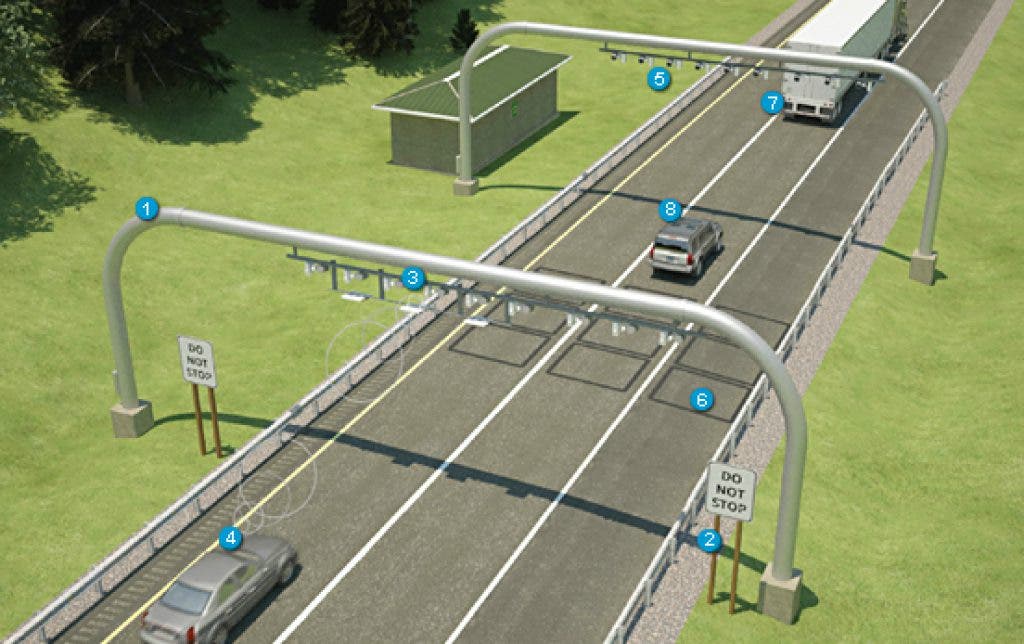
The survey comes in the middle of a yearlong study meant to examine the feasibility of converting the 545-mile roadway to an all-electronic tolling, or AET, system.
Find out what's happening in Perkiomen Valleyfor free with the latest updates from Patch.
According to the Turnpike Commission, AET is a "growing trend for transportation agencies around the globe." An AET system would offer "reduced congestion, improved safety and lower operating and maintenance costs," according to a frequently-asked questions page on the agency's web site.
Under AET, all Turnpike drivers would either have a E-Z Pass style transponder in their vehicles or receive an invoice in the mail. Under the latter arrangement, video camera would be used to record license plates so that the toll invoices could be sent to the correct addresses.
Find out what's happening in Perkiomen Valleyfor free with the latest updates from Patch.
Non E-ZPass customers could also opt to set up a prepaid, video-toll account tied to their license plate instead of a transponder, though the agency says E-ZPass customers would enjoy the lowest toll rates.
A conversion to AET would take several years.
Regardless of the feasibility study's outcome, the agency is eager to "bust myths" regarding E-ZPass usage, such as the notion that E-Z Pass users' trip times are tracked, potentially resulting in speeding citations.
"By state law, E-ZPass accounts are strictly protected, and the commission is only allowed to use this information to enforce toll collection laws and related regulations," the agency says on a "Most Common E-Z Pass Myths" page.