Schools
School Board to Consider Participation Fee for School Athletics
"Pay for Play" and other alternatives are being considered as the district continues to make budget cuts in light of state funding loss.
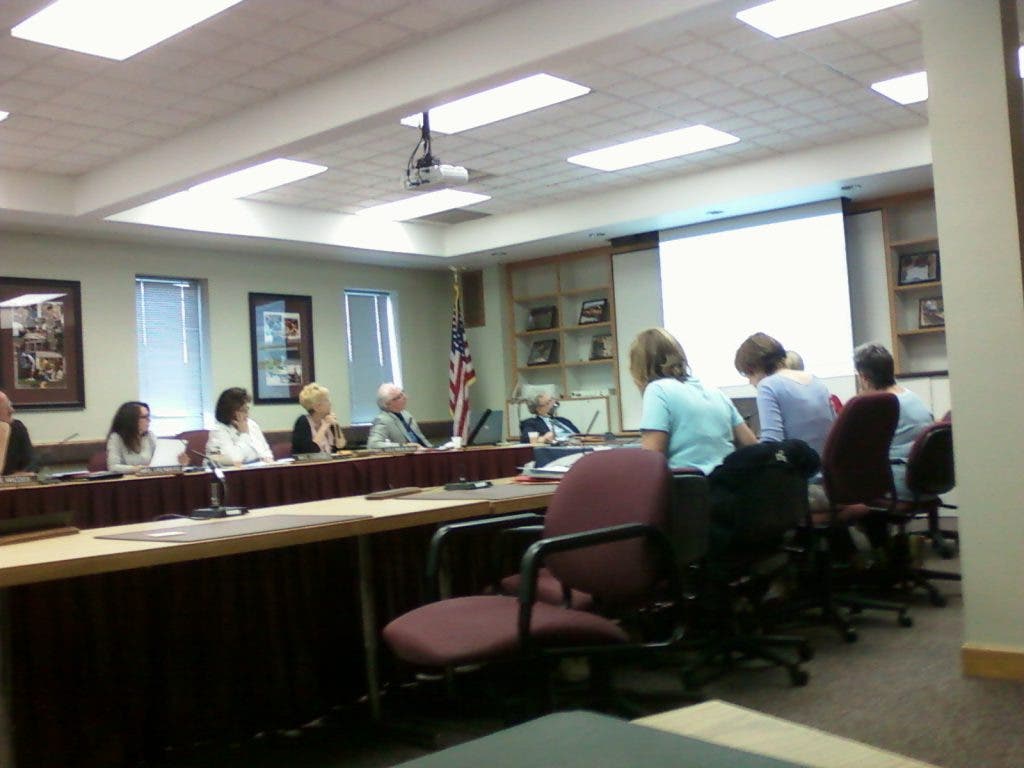
The Peters Township Board of Education will consider a participation fee for students taking part in school athletic programs next year, as part of a plan to balance a budget for 2011-12 in light of $900,000 in cuts to the district under the state budget proposed by Gov. Corbett, which is now moving through the state legislature.
The budget and finance committee discussed the plan at a budget meeting on Monday night, as they try and trim expenses so that they may balance the new budget by using about $1 million from the general fund.
Many southwestern Pennsylvania districts have imposed a “pay for play” on student athletes. Peters Township’s participation fee could be as high as $90 per student athlete. They are considering a break for families who have multiple students playing sports.
Find out what's happening in Petersfor free with the latest updates from Patch.
The participation fee could save the district a projected $75,000.
Superintendent Nina Zetty told the committee that the administration has already discussed the possible participation fee with individual booster clubs who support the school sports programs.
Find out what's happening in Petersfor free with the latest updates from Patch.
The board will get a draft of a proposal to impose and set a participation fee, which will be acted upon at the June 27 meeting—the date they are also mandated to adopt a budget for the coming year.
The sports participation fee was one of a number of alternatives presented to the committee by business manager Dan Solomon, who also outlined a series of cuts made since the board posted a preliminary $49.8 million budget in May.
Cuts in the revised budget include the delaying of new textbook purchases for math, algebra and science for at least another year in the curriculum budget, and cuts in the technology and music budgets.
Solomon cautioned board members that they may have to begin work on the 2012-13 budget sometime after the start of the school year—if it has to seek an exception from the tax guidelines established by the state Department of Education.
“We asked teachers to look at the budget and what was absolutely necessary for next year,” said Zetty. “We wanted to know what was necessary for next year and what could be put on hold.”
There are no staffing increases proposed in the new budget to replace staff who have retired. The district plans to monitor registrations during the summer.
“I don’t happen to know what the situation will be with attrition,” Solomon said. “If you read the papers you will see that districts all over are furloughing teachers. We’ve been fortunate enough that we haven’t had to do that.”
Committee members also discussed the possibility of redistricting elementary students if class size becomes too large. No final decisions were made.
Board member Julie Ann Sullivan stated that it would not be wise to hire an elementary teacher to reduce class size one year, and then have to furlough the teacher next year.
The administration will continue to fine tune the budget before the final adoption. Other possible suggestions for increasing revenue as proposed by Solomon include charging transportation fees for students attending field trips.
Also proposed is reducing the number of days a week for detention, reducing the number of employee conferences and workshops and coordinating transportation with neighboring school districts for activities. All proposals are still under consideration.
Zetty noted that with the district communications office, a Peters Township School District Foundation is being formed to allow alumni and businesses to help support school district programs and assist with expenditures. Zetty said preliminary meetings with possible supporters have been positive.
A number of parents attended the budget meeting and spoke to the committee to urge the board to reconsider not hiring an additional third grade teacher at , stressing that the six third grades may be reduced to five, and that students need smaller classrooms to succeed.
Several other residents spoke following the meeting to object to the at Pleasant Valley.