Health & Fitness
Conjoined Twins Separated By CHOP Doctors
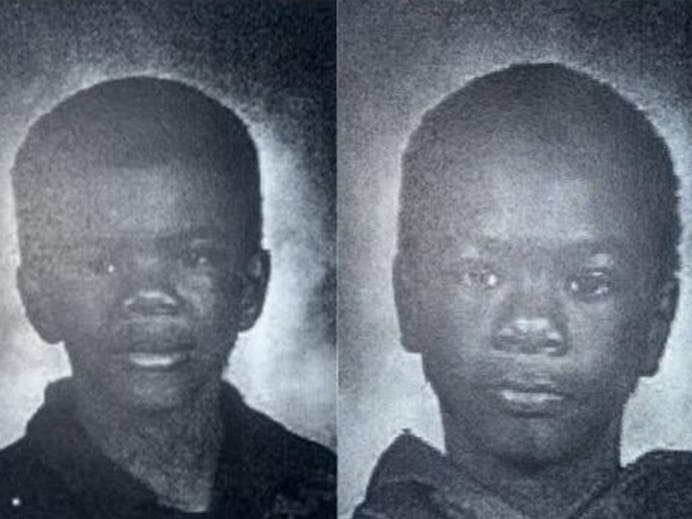
Amari and Javar Ruffin were successfully separated by CHOP surgeons in August. They shared a sternum, diaphragm, abdominal wall, and liver.


PHILADELPHIA, PA — A set of conjoined twins were separated by surgeons at Children’s Hospital of Philadelphia in August, and the boys are doing well.
Conjoined twins Amari and Javar Ruffin were successfully separated by CHOP surgeons on Aug. 21. The brothers, who live with their family in Philadelphia, shared the lowest part of their sternum, diaphragm, abdominal wall, and liver.
After a long medical journey, they have joined their siblings, Kaylum and Anora, along with their parents, Tim and Shaneka, at home.
Find out what's happening in Philadelphiafor free with the latest updates from Patch.
Amari and Javar were diagnosed prenatally in CHOP’s Richard D. Wood Jr. Center for Fetal Diagnosis and Treatment and spent 10 months in the hospital preparing for separation.
After months of planning, a surgical team involving more than two dozen specialists, including surgeons, anesthesiologists, radiologists, nurses and many others, operated for eight hours to separate the boys. Once separated, the babies’ abdomens were closed and rebuilt, using layers of mesh and plastic surgery techniques to stabilize each one.
Find out what's happening in Philadelphiafor free with the latest updates from Patch.
"Separating conjoined twins always presents challenges because each set of twins is different," Holly L. Hedrick, MD, a pediatric general and fetal surgeon CHOP, said. "We spend hours rehearsing the flow of surgery prior to the big day – even practicing how to transfer each baby to their own bed. We work collaboratively as a team, ready to combine our unique skills to achieve a safe separation and a chance for these babies to lead healthy and fulfilling lives."
This week, following a year in the hospital, the family officially went home. They will continue routine weekly follow-up care at CHOP.
"Seeing them each in their own beds was an indescribable feeling," Shaneka Ruffin said. "It feels like we are beginning a new journey as a family of six. We are so grateful to CHOP for helping make this day possible and letting us start this next chapter."
Conjoined twins are rare, occurring roughly once in every 35,000 to 80,000 births, and CHOP is one of only a few hospitals in the nation with expertise in separating them.
Since 1957, CHOP has performed 32 conjoined twin separations, the most of any hospital in North America.
The Ruffins were born omphalopagus twins, meaning the babies face one another and are joined at the anterior abdominal wall from the xiphoid to the umbilicus.
When a routine ultrasound first revealed the boys were conjoined, Shankea and Tim, whose older children are patients at CHOP’s Karabots Pediatric Care Center in West Philadelphia, knew where to turn. Within days, the couple met with a team that included Hedrick and Nahla Khalek, MD, a maternal-fetal medicine specialist in CHOP’s CFDT.
After a full day of prenatal evaluations including an ultrasound, MRI and fetal echocardiogram, tests revealed that separation was possible. This set in motion the plan for preparing the boys’ first milestone: a safe birth.
The boys were born in CHOP’s Garbose Family Special Delivery Unit on Sept. 29, weighing about six pounds collectively. The SDU is the world’s first birth facility in a pediatric hospital specifically designed for mothers carrying babies with birth defects.
"The SDU was the ideal setting for the boys’ delivery," Khalek said. "It’s a lifesaving facility, offering unprecedented care and essential support to our most vulnerable infants and their families."
After birth, Amari and Javar spent time in CHOP’s Harriet and Ronald Lassin Newborn/Infant Intensive Care Unit, Infant Transitional Care Unit and Pediatric Intensive Care Unit where they remained until their separation. During the time prior to separation, they learned to feed, grow and adjust to life outside the womb. Their anatomy was closely studied and Cassandra A. Ligh, MD, a pediatric plastic surgeon, placed tissue expanders to maximize the amount of skin and soft tissue available for their surgery.
Before the surgery, detailed imaging was completed, including fluoroscopy, MRI and contrast-enhanced ultrasound to map out the blood flow and where the boys’ vasculature crossed. On the day of surgery, a team of specialists made careful incisions down each boy’s abdomen, sternum and diaphragm to access and separate the liver. During the liver separation, Edward Oliver, MD, a radiologist at CHOP, performed intraoperative ultrasound to define the vascular equator between the two fused liver masses and delineate vascular connections.
With this part of the surgery complete, Amari and Javar were officially separated.
Ligh and the plastic surgery team then put a layer of absorbable mesh over their stomachs to hold their intestines and internal organs inside. They added a permanent mesh on top of that and closed it all with the natural lining of the boys’ bodies to heal. They even created a belly button for each twin.
An important component of Amari and Javar’s care before and after separation included working with physical therapists, occupational therapists, speech language pathologists, and rehab medicine physicians in CHOP’s Division of Physical Medicine and Rehabilitation to ensure they continued to achieve developmental milestones.
Following surgery, the boys continued working with this group and began to practice flipping over and crawling.
Get more local news delivered straight to your inbox. Sign up for free Patch newsletters and alerts.