Arts & Entertainment
Anatomy of a Dream
Pottstown native Marc Sherfield talks to Patch about singing, American Idol and what lies ahead.
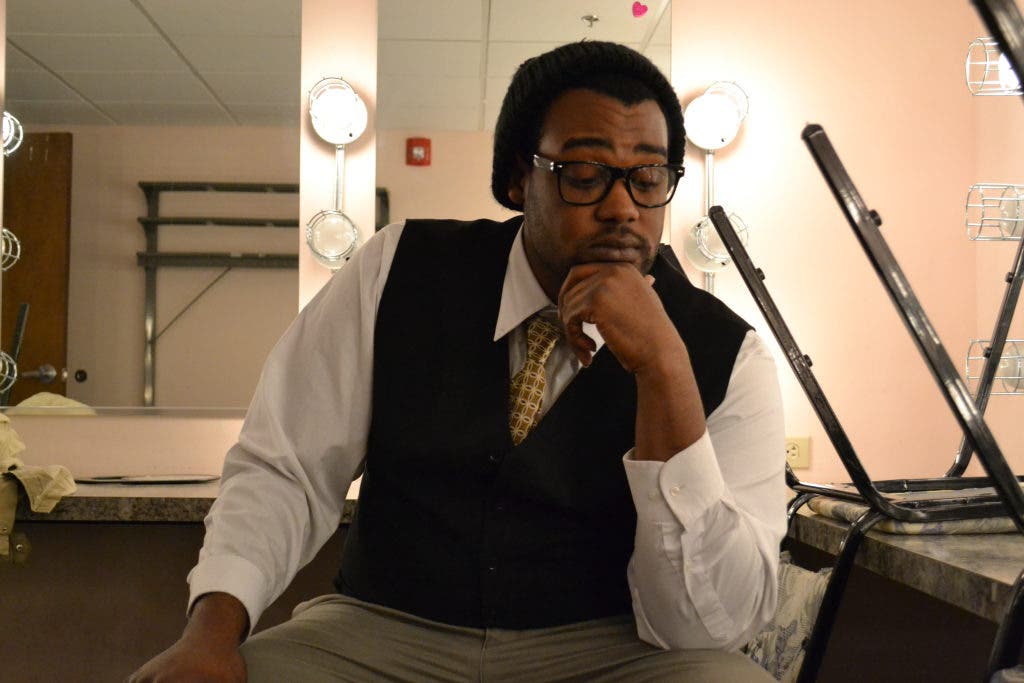


The flight from Atlanta to Hollywood was not the prelude to a vacation, or a winging out on a whim to abandon the dreary winter weather clinging to the banks of the Schuylkill River back home. Marc Sherfield found himself in the California sunshine with the chance to chase down a dream that had begun when he was in the fifth grade. He was not alone. Thousands had tried to make it to the Golden State. Some bloomed in the spotlight, earning a ticket west just as Sherfield had. Others withered and died, crashing catastrophically or just missing the edge, rejected in various spots from coast to coast. California was not even a guarantee that the dream would be achieved; hundreds more would never make it beyond the week that lay before them.
Sherfield and his fellow dreamers made their way to the Sheraton in Pasadena, where they were broken up into groups and awaited the judgement that would either crush or elate them. Sherfield is in the first group of lambs, and they are lead to the site where their fates would be decided.
Find out what's happening in Pottstownfor free with the latest updates from Patch.
"They took us down the steps," Sherfield says in a softly lit room in the basement of the on High Street in Pottstown. "We came around, and they opened the doors and there was like the audition room with the American Idol sign above it. It was the American Idol, Hollywood week stage. The stage that I had been watching for so many years on TV. And it's time to get on that stage."
Sherfield recalls, "I first realized I wanted to sing and perform, I probably was like (nine or 10 years old) ... I remember it was in fifth grade. Before that, I had always sung. I remember singing from like three years old. But fifth grade was when I realized I wanted to do it. We had done a Disney play at Pottsgrove elementary school, and at the end of the play I had a solo singing 'Seize the Day' from Newsies. When I was finished singing, I got a standing ovation, and everybody wanted to talk to me and my mom after the show. That was when I really knew that my talent was something that people would enjoy if I chose to share it. That was the beginning of me performing."
Find out what's happening in Pottstownfor free with the latest updates from Patch.
Sherfield's eyes light up as he recalls that moment; the narcotic lure of adulation -- the desire to share a gift that brings joy to an audience -- is clear to read across his face. It is a look easily imagined on a 10-year-old, despite Sherfield's indomitable presence. A benevolent giant, the combination of his physically intimidating stature and genuine politeness seems a juxtaposition, like the world's friendliest Kodiak bear. He is soft spoken and sincere, seemingly lacking in the egotistical spark that plagues most musicians and performers. Hair covered by a floppy black toque and eyes contained in a pair of miniature televisions formed by large black framed glasses, he looks like an art school student or a particularly fashion conscious young professional. The tie loosely knotted around his neck hangs with a joviality that belays the man himself, an essence distilled into an accessory.
Despite the spark beginning on stage, Sherfield has an on-and-off romance with the theater, abandoning the boards until he was in high school. His middle school years were spent perfecting his voice. "I didn't do plays," Sherfield says, laughing. "I was in chorus, I was in show choir, I was in Grovesmen. Anything involved in singing I was involved in it."
He returned to plays at . "We did Tales of Scheherazade. That was the very first play I did with Mr.Kelly."
Sherfield had been enthralled with American Idol since its inception. "The first season of American Idol started when I was 16, and I was right at the age that you were allowed to audition," he says. "But I figured I would wait until I graduated to go … by then I would be working, I would have money to be able to travel around with. The year I had graduated I had planned on going to audition that summer. I sang in our graduation ceremony and it was actually printed … that I had planned to audition, so everybody was looking forward to it. But I ended up not auditioning until a year later in 2005 in New York--well, New Jersey--at the Giants' stadium."
His first audition was a nerve-wracking process. "I had been singing for a long time," Sherfield says. "But I had never done anything as big as American Idol. I knew some other people who were auditioning that year that I went to school with, and they had friends that were going so we all met there." Despite the friendly faces, the enormity of the challenge ahead still loomed. "That first audition is really intimidating. You see all these other thousands of people, and you know that they are only going to pick a few."
The audition process consists of multiple layers and levels, two of which must be passed before the contestants ever see the show's famous on-air judges. Sherfield and the legion of other hopefuls were directed on to the field in East Rutherford, where tables had been set up. "They'll have like ten tables on each side of the stadium," Sherfield explains. "They'll line us up and we'll walk up to --they have like the producers and the executive producers -- and we'll walk up to them and audition for them. And they'll tell us yes or no, and they do that until the whole stadium is empty."
The gatekeepers thin the herds, eliminating droves of aspirants before they ever reach the second round of auditions. Once again the producers serve as judges, this time joined by talent scouts and other professional opinion makers. It was in this round that Sherfield bowed out on his first attempt. He left New Jersey having never seen the Holy Trio at the top. But he had not left the dream.
Sherfield would make the "celebrity round" his second attempt, during Idol's 2007 journey to Philadelphia. Having made his way past the suits and scouts, Sherfield found himself before the original trio of judges, bassist and record producer Randy Jackson, musician and actress Paula Abdul and notorious English A&R executive Simon Cowell. The dream closer than ever before, he awaited their judgement.
"When I got to Simon, Paula and Randy, Randy said 'yes' and Simon and Paula said 'no'," Shefield says. One judgement short of the minimum for Hollywood, Sherfield would have to return again to earn that flight.
"I think it progressed each time," Sherfield says of his journey. "I think each time what happened was supposed to happen. The first time, I knew I wasn't ready. I was only 19, I was nervous. I made it past the first round, but I wasn't really ready to perform. Second time I went, I just went and I sung my heart out, and it got me to the celebrity round. This time (his third), I was ready."
~
Once again, the process began in New Jersey. Powering through the first two rounds in the last minute, ad hoc addition to the schedule, Sherfield made it to the celebrity round before coming to a screeching halt. More travel would be required to see the judges. "Basically, they weren't going to do the celebrity round in New Jersey," he says. "So they split us up into four different cities." Among those cities was Pittsburgh, where Sherfield made a late September sojourn to await his destiny.
Facing a new panel of judges, the only remainder his sole advocate, Sherfield had confidence in a secret weapon: his recent return to the stage at TriPAC. "I think the acting really helped with my performance," he says. "I think that was one of the biggest changes; not just singing but performing, because of the acting background." Jackson's familiarity helped as well: "I did mention to Randy that he had told me yes the last time, and I think he remembered. I do."
Having been turned down before for a supposed lack of passion, Sherfield believes that his new found presence was what sent him to Hollywood in the Steel City. "I really think that's what the judges paid attention to," he says. "Randy had mentioned that he knew that I had played the Tin Man at TriPAC, and he wanted me to sing something from The Wiz, and I sung the Tin Man's song 'What Would I Do If I Could Feel.' And that's what helped put me through to Hollywood."
With Jackson and Jennifer Lopez -- "a sweetheart; she wanted to put everybody through"--already saying yes, Steven Tyler proved the most difficult heart to win. "Steven Tyler's really cool," Sherfield says. "He likes uniqueness. He looks for uniqueness in people." Tyler eventually gave a soft approval, and Sherfield found himself propelled from Western Pennsylvania to the West Coast.
~
The stage and sign in the Sheraton beckoned. "All these years it took me to get here and it's paying off," Shefield says of his emotions as he first laid eyes upon the set he had so often seen in his own home. "It was just a really good feeling to be able to stand on the stage." The contestants filmed footage for the show with host Ryan Seacrest on the stage, a brief acclimatization, before being led to the most important audition yet.
"Walking out in front of those judges was like the most nerve-wracking thing, even though we had already met them," Sherfield says. "Now, we're filming the show; we've got to sing, and they've got to judge us."
The reality of the situation did not hit until he hit his last note in Hollywood. "The other contestants were cheering when I was done. That was the moment when I was like, 'I'm on American Idol,'" he says, his voice softening into an awed mist. "That was my 'wow' moment."
He recalls little of the song itself. "I don't remember," he says, when asked what was going through his mind at the time. "I remember singing, and looking around. There was so much nerves, I had to numb myself so I wouldn't mess up."
After his group of ten had gone before the panel, they waited backstage while the judges deliberated. "We came back out, and they called my name and told me to step forward," he says, his voice dipping low to the gravity of the recollection. "And they called two of the other contestants names, and they stared at us for what felt like ten minutes. And then they said 'back row, you're staying. Front row, you're going home,'" he says, breaking into peals of laughter. "I told myself, don't get emotional. There's always next year, and there's other opportunities waiting at home. American Idol is not the only opportunity that you'll ever have."
~
A plane lands in Philadelphia, with a man -- and his dream -- still on board. It is over in the blink of an eye, with little explanation and no protest. "They told us that if we had anything to say, right where you exit, there's a camera there," Sherfield says. "You can ask the judges 'what should I fix? Why was I eliminated?' And that will be your interaction. They film it for the show just in case it's interesting what they said. I didn't really say anything because I didn't have anything to say."
Sherfield is not bitter about what happened; he does not wallow or bemoan some great slighting of his talents. On the contrary, he takes pride in how far he rose in what is perhaps the most vicious competition in America outside of the presidency.
"I was happy because I knew that I did my best," he says. "And I knew that I didn't get eliminated because I wasn't talented. Once you get past the point of Hollywood, you have your verification as far as you are talented; you can sing. When you get to Hollywood, it's about how you stack up against the other contestants. I may not have been what they were looking for for this season."
This buoyant approach to what would seem to be inevitable heartbreak is refreshing. "They pick 300 singers. They audition hundreds of thousands of people every season … I don't know how other people might feel about it, but to be considered one of the top 300 singers in the country is not too bad for me," he says, a slight smile giving way once again to that melodious laughter.
Sherfield is back in the theater now, conducting this interview in the basement of TriPAC while he waits to begin rehearsal for Ain't Misbehavin' . Life, like the show, must go on. "I jumped back in to everything," Sherfield says. "I started looking for a job, I came right back to TriPAC, we started working on Ain't Misbehavin'. I jumped right back on the bandwagon as far as my music is concerned."
Looking to capitalize on whatever momentum his TV appearance will bring, he immediately began seeking out collaborators for his future career. "I started looking for producers to work with and started writing new music," he says. "It didn't stop for me, because I knew that either way it went, I was going to be on the show, so that I needed to have stuff done. When people Google or look me up, there will be something for them."
Already on the street he hears the whispers as he walks past; people will look twice before asking if he is That Guy. "They drive past and beep their horns," Sherfield says. "There was a guy that stopped me outside of the other day and was like 'You're Marc Sherfield from American Idol!' … as far as Pottstown is concerned, it's been a big deal. A really, really big deal."
Ain't Misbehavin' opens February 10 and runs through the 19, a chance for Pottstown to officially welcome its musical son home. He is hoping to release his mixtape Heartbreak Avenue, which he describes as "R&B and soul", in the spring. The challenge now is peering backwards--living "in retrospect," as he calls it--while the rest of the world learns of his fate. (Of course, due to legal confidentiality agreements, all will know by the time this article is published.)
The future is far from decided; Idol will not be Marc Sherfield's meal ticket to instant fame. That will only come through blood, sweat and tears.
"I think I'm good enough," the man with the dream says. "And I love doing it. It's not even work to me."