Schools
Students Bridge Gap To Recovery in Roxborough
Recovery school for high students gets off the ground.

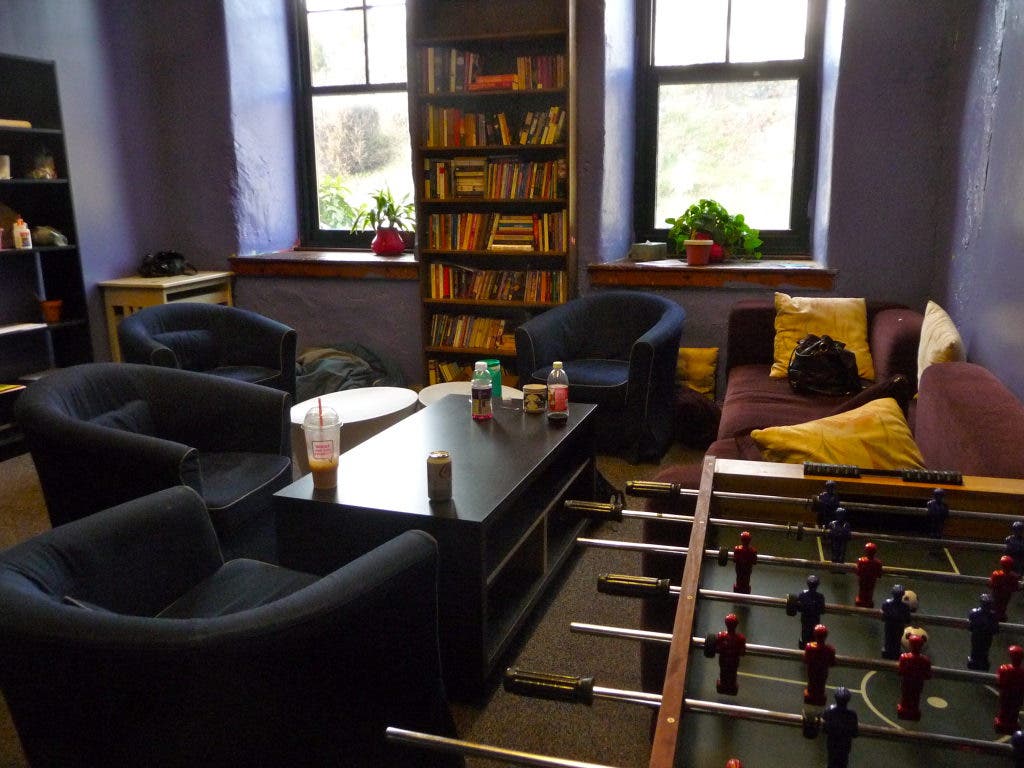


While the Friday sun sparkled through basement windows, Sam and Tyler hunched over a wooden cubby, gazing at their almost complete service-learning project, hammering loose ends.
With their four other classmates, Sam and Tyler entered their second semester at the new Bridge Way School, a recovery school in Roxborough geared toward high school students ready to kick substance abuse problems.
"It's a smaller community, so there's less distractions. There's not as many problems as with other schools," Sam said, pausing from his project for a new cubby in the synagogue's teen room.
Find out what's happening in Roxborough-Manayunkfor free with the latest updates from Patch.
Tyler agreed.
"It's different to try and get used to a smaller group. As an addict, you're not used to get closed to people," he said. "I'm not going to say I don't miss public school, but I think I'm better friends with the people here than at home."
Find out what's happening in Roxborough-Manayunkfor free with the latest updates from Patch.
Both Sam and Tyler started at the recovery school in November, within two weeks of each other. The school, run by the Greater Philadelphia Association for Recovery Education, opened in September and serves students from around the Philadelphia area who have completed rehabilitation from substance abuse.
Head of School Rebecca Bonner serves as the school's co-director with clinical director Peter McGovern. Following , the school received city and state certification and opened last fall.
"Working with kids in recovery is a big learning curve, but all of teachers are experienced in teaching, and we're there for both the academic and recovery support," she said.
The students, from different ages, districts and backgrounds, attend the school instead of their home ones. A small classroom setting, a Bridge Way day begins with a morning mediation and check in, before embarking on a traditional academic day. Four days a week, the students attend group therapy and another day they perform a service-learning project. Concluding, they checkout and verbally describe their plans for the night. The school requires 90 support meetings in 90 days, so the students stay on track.
Not affiliated with the synagogue, the school rents space. Additionally, students attend class and go home—it's not a boarding school. A small, supportive atmosphere, the school's mission is to remove the students from temptation before they are willing to handle them.
"The students tell us they can't be a their schools. There are triggers there," Bonner said. "It's a sober environment, and they don't have to hide that they are struggling."
The first Philadelphia-area recovery school of its kind, Bridge Way joined a handful of schools nationwide, which Bonner and McGovern consulted prior to opening. Currently, the school is zoned for 20 students, and—at most—Bonner intends on 12 for the first full year.
Bridge Way's first student provided an early learning curve—he was in active use.
"It was a clarifying moment for us. We immediately learned who we can serve and who we can't," she said. "We told him, 'We will be here when you're ready to focus, but we have to cut you loose.'"
The school is ready to take on more students—with five potential ones talking to her currently. Some districts, she said, are even paying for their education, which isn'r required by law.
Both Sam and Tyler said it's not easy—they miss home and their friends—but are benefitting from the intimate open setting. The classmates laughed and joked with Jason Howard, the service learning coordinator, as they finished their project. In the hallway upstairs, a colorful sign celebrates positive steps to recovery: "Congrats Chrissy 'n' Molly—90 Days!"
To learn more, visit The Bridge Way School at www.thebridgewayschool.org
Get more local news delivered straight to your inbox. Sign up for free Patch newsletters and alerts.