Crime & Safety
Meet Jay Heicklen, Cetronia Fire Chief
He doesn't pull any punches when recruiting new firefighters for the all-volunteer department.
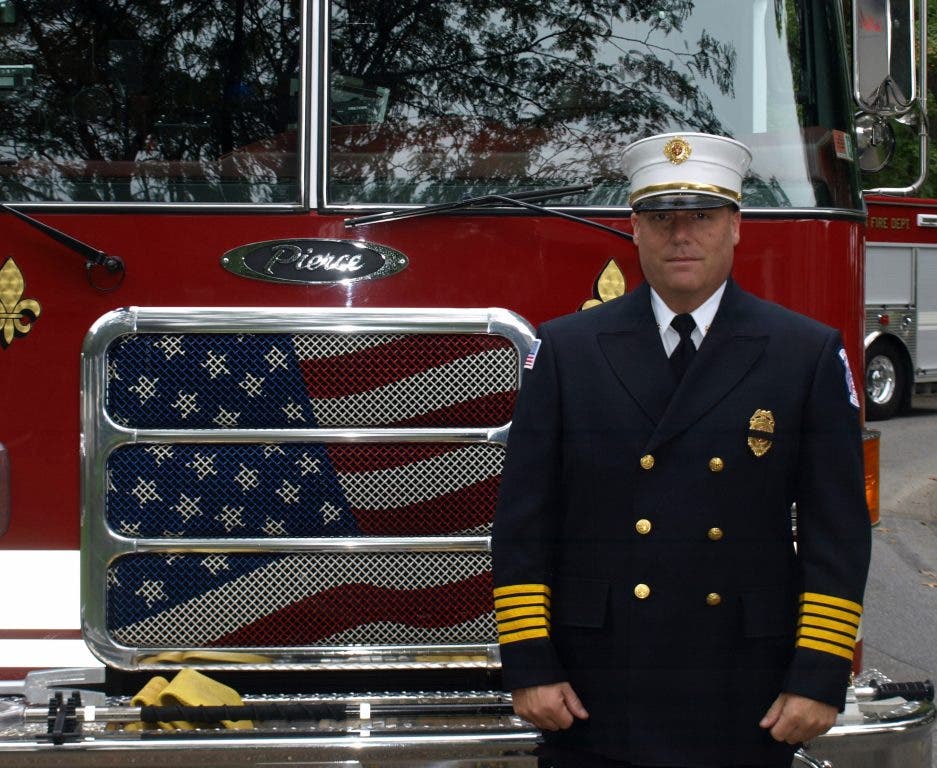

Name: Jay Heicklen
Age: 50
Lives: South Whitehall Township
Find out what's happening in South Whitehallfor free with the latest updates from Patch.
Job: Vending manager with National Entertainment Network Inc.
Family: Daughter, Sarah, 12; sons, Kyle, 15, and Tyler, 16
Find out what's happening in South Whitehallfor free with the latest updates from Patch.
Fire Company: Fire Chief; came up through the ranks from firefighter, line officer, lieutenant, captain, deputy chief and assistant chief. Named chief in 2009.
Training so far: I’ve had numerous courses and certifications throughout my 11 years with the company, including firefighter, vehicle rescue, hazardous materials (HazMat), management and personnel training. Ninety-three percent of my time is spent dealing with organizational and personnel issues.
What’s it like being a firefighter? There’s a lot of self-satisfaction and camaraderie. We’re a very tight knit unit, and we lean on each other. I tell all our firefighters what we do is a way of life, a calling. It’s not a club. It’s in you to do this. A lot of people ask how I can do this, wake up at 3 a.m. and 10 minutes later be fighting a house fire? It’s not in most people.
How do your loved ones feel about you putting your life in danger? They trust that I know what I’m doing...They realize the risk, but they know how well equipped we are, especially in South Whitehall. They know I never intentionally put myself, or my firefighters, in a situation we can’t handle.
Tell us a story you’ll never forget about your firefighting experience: I remember a house fire at 38th and Broadway. The fire was venting (windows had blown out) from the first floor.... There were five of us, plus a driver and a pump operator. There was a lot of snow on the line. I tracked the first line, and there was a roof overhang. By then there was venting at another window, and the fire had spread to the overhang. We tried to get the steel door open, and I had to knock down the fire above us so we could get in.
There were very few words spoken. Everyone knew what they had to do. Words weren’t necessary. We were well trained and the operation was cohesive. We got the fire knocked down, and everybody was safe. We still talk about it today, about our ability to work together. We tell young firefighters about it to make them realize that this isn’t something to be taken lightly; they have to get along during training so that when the time comes, they’ll be prepared.
What would you tell people interested in joining your fire company? The first thing I ask them is, “Why are you joining?” Most of them say they want to help people. I tell them about the dangers of the job, and say if they actively want to pursue joining, they need to know the danger involved. I’m definitely involved in recruiting, but I want to make sure they have the right attitude. Again, it’s not a club. It’s not about status or how you look wearing the uniform, and that when they’re wearing a T-shirt from the company, they’re representing the fire service as a whole. I ‘m realistic and don’t make it into something it’s not. I don’t sugar-coat it; I tell them what’s expected of them.