Politics & Government
Sound Barrier Needed at Cedar Creek Farms?
Some homeowners in Cedar Creek Farms say the roar of truck and car traffic on Route 309 as it passes through South Whitehall has gotten louder in recent years, warranting the need for a sound barrier.



Before Daniel De Pinho bought his home in Cedar Creek Farms in South Whitehall, he sat on its back deck to better assess the level of noise emanating from the whir of traffic on nearby Route 309.
Not that bad, he said. Living there would be do-able.
In the five years since then, De Pinho says, the truck and car traffic on Route 309 has increased, and with it, the level of noise.
Find out what's happening in South Whitehallfor free with the latest updates from Patch.
He helped collect more than 200 signatures a few years ago to petition government officials for a sound barrier, not unlike the ones he sees going up along Route 476 south toward Philadelphia, and elsewhere. While that petition drive didn't get him the results he wanted, he's hoping officials will take another look.
"I know what I bought, I know what I was getting into," De Pinho said, standing in his backyard on recent weekday, the sound of Route 309 traffic audible. But as South Whitehall has grown, he said, so too has the traffic.
Find out what's happening in South Whitehallfor free with the latest updates from Patch.
Some people tell him, "well, the road was there first." But De Pinho considers it a "cop-out" answer. A farm was there before that, he tells them.
Cedar Creek Farms Community Manager Frank Costanzo said he had started the petition drive for a sound barrier several years ago. In discussions with former state Rep. Doug Reichley, he said, the board focused on safety concerns, especially after a car veered off the highway, and not on the noise issue. He said the state wound up putting up a guiderail.
The community of homes, built between 2001 and 2005, consists of 60 condos, 99 townhomes and 140 single homes. The township's , to 19,180 residents, from 2000 to 2010, according to the Census.
Not everyone who lives in Cedar Creek Farms complains about the noise, Costanzo said. And judging from comments on a Yahoo group, he said, not everyone agrees a sound barrier is a solution. He said some people don't think sound barriers work very well and others don't like the way they look.
Costanzo said, however, the board would support a community initiative.
April Treglia, who has one of the closest homes to Route 309 in the Cedar Creek Farm development, is among those who support a sound barrier, for noise and safety reasons.
She had lived in front of a two-lane expressway in Long Island before moving to South Whitehall seven years ago. "It wasn't as loud as this," she said.
Since she was used to traffic noise, she didn't think it was going to be a big deal at her new home. But the increase in Route 309 truck and car traffic has intensified things, she said. "You can't sit outside and have a meal," she said. "The noise is so loud you can't hear anyone talk."
And in winter with bare trees, she said, the buffer is less.
Treglia said she has to powerwash her house twice a year too to clean off soot.
Despite neighbors' concerns, Cedar Creek Farm residents hoping for a sound barrier face tough odds.
The Pennsylvania Department of Transportation does not "actively participate" in noise abatement projects on existing highways -- what would be considered a "retrofit" -- because of resource constraints, said PennDOT spokesman Ron Young.
Eligible projects usually involve new highways, the expansion of through-traffic lanes on a highway, or changes that will significantly alter a highway's alignments, according to information in a PennDOT brochure.
However, there have been times when the state legislature has earmarked state money for a "retrofit," which allowed PennDOT to analyze noise levels and construct barriers, according to the information in the brochure. In those cases, money was limited and directed to specific areas by public officials.
Noise barriers are costly, $2 million to $3 million a mile. The majority of residents that would be affected must agree to their construction.
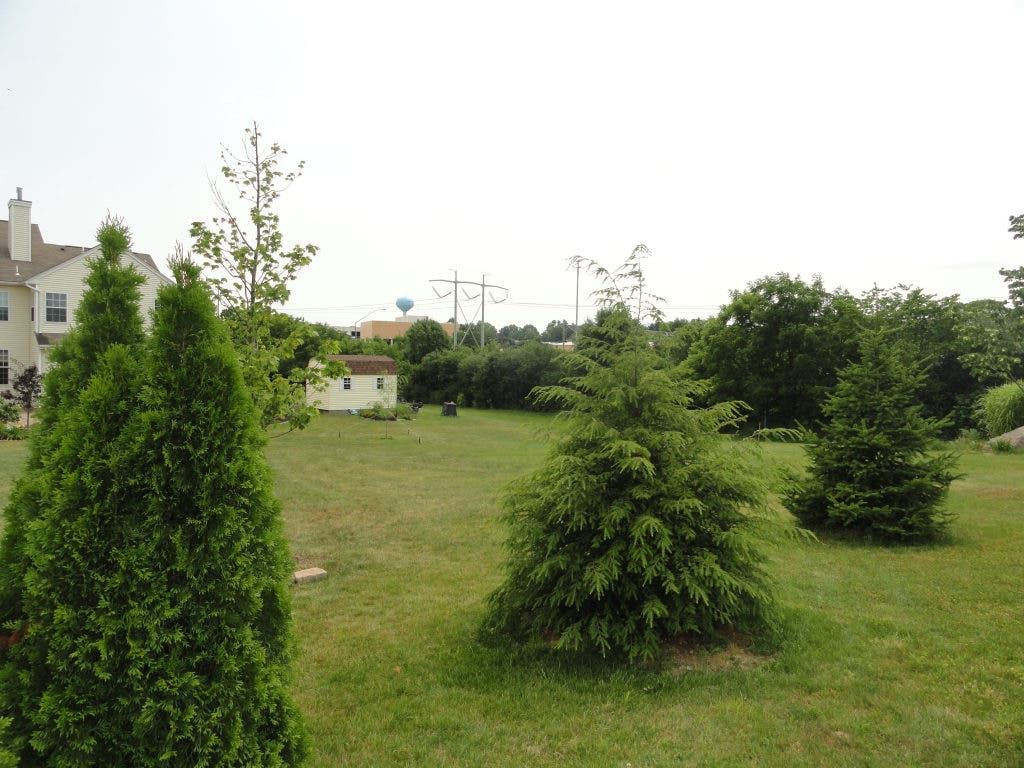
Another option, some neighbors say, could be to plant rows of pine trees to cushion the noise from Route 309, but there could be right-of-way and cost issues too.
What do you think might be a good option? Tell us in the comments.
Get more local news delivered straight to your inbox. Sign up for free Patch newsletters and alerts.