Politics & Government
Township Seeks To Regulate Digital Billboards and Signs
Officials aim to reduce distractions for drivers.

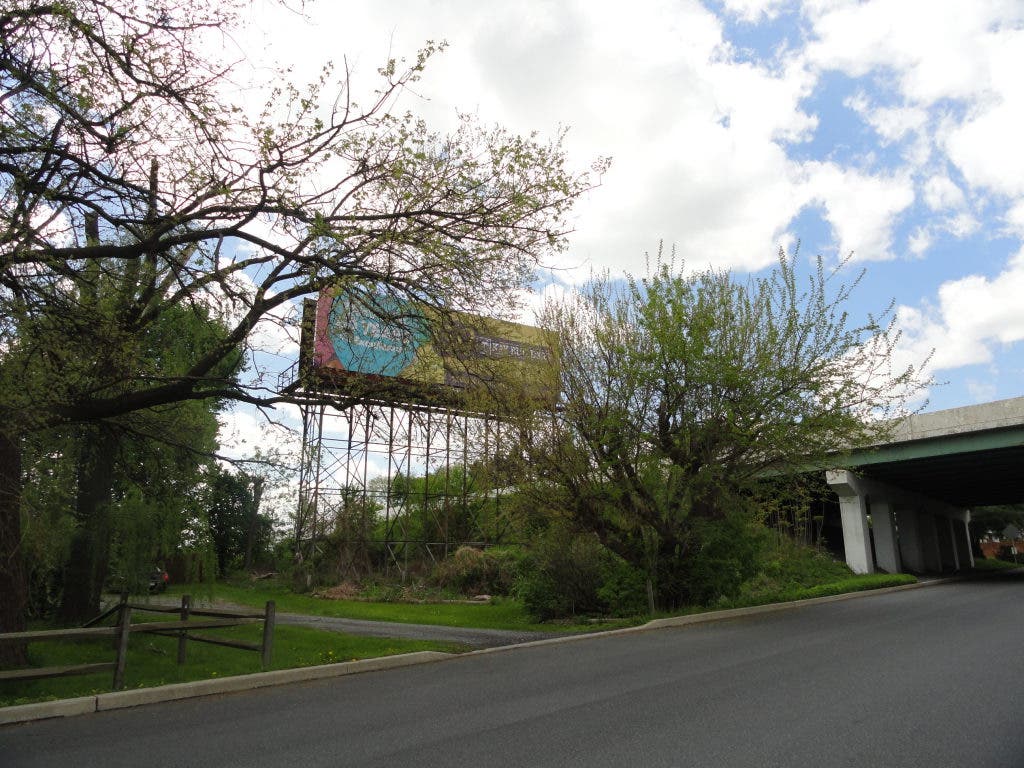
In an effort to reduce driver distractions, South Whitehall officials are proposing an ordinance that would regulate not only where roadside digital billboards and signs can be placed in the township but also how bright their message.
South Whitehall commissioners, at their meeting Wednesday night, gave Assistant Community Development Director Gerald J. Harbison the go-ahead to schedule a public hearing on the ordinance, which also would regulate how frequently digital images can be changed. The township planning commission has recommended the ordinance be adopted.
"We're trying to minimize distractions," Harbison told the board.
Find out what's happening in South Whitehallfor free with the latest updates from Patch.
While a few businesses have digital signs, there are no digital billboards currently in the township. However, there are conventional billboards -- and plenty of them -- clustered along major roadways such as Route 22. A concern is the potential for those billboards to be converted to digital ones.
Harbison said that scenario would have the potential to be "really distracting" for motorists.
Find out what's happening in South Whitehallfor free with the latest updates from Patch.
Such safety concerns have long swirled around digital billboards, with some municipalities across the country banning them altogether.
The Federal Highway Administration is close to finalizing a study of digital billboards to determine whether they pose distractions. The study is expected to be released soon, according to the FHA.
Though South Whitehall would not ban digital billboards and signs, the ordinance would restrict placement. For example, no digital sign would be allowed within a 250-foot radius of major public intersections controlled by a traffic signal.
Safety advocates say digital billboards, like cell phone use while driving, draw drivers' attention away from the road, increasing the potential for accidents. However, the billboard industry has argued that studies have not demonstrated that digital billboards cause crashes.
A unique feature of South Whitehall's proposed ordinance is a trade-off clause that would ultimately reduce the number of billboards in the township. The ordinance proposes: For every square foot of proposed digital billboard, six square feet of existing, conventional billboard surface area in residential zoning districts along Route 22 be removed.
Also under South Whitehall's proposed ordinance,
-- Digital signs would not be allowed in residentially zoned areas.
-- The digital sign display area would not be able to exceed 33 percent of a sign.
-- Digital billboards would only be permitted in the highway commercial district, which is west of Route 309, along the Tilghman Street and Cetronia Road corridors.
-- Images would have to be static. For digital business signs, at least one minute would have to elapse between image changes. For digital billboards, the proposed elapse time is 10 seconds.
-- Brightness would have to be adjusted from dusk into dawn. The ordinance would set illumination levels.
-- Transitions would have to be instant, with no fading from one image to the next.
-- No digital sign would be allowed within a 250-foot radius of major public intersections controlled by a traffic signal. No signs would be allowed within a 100-foot radius of an intersection at a public street and non-residential driveway that is controlled by a traffic signal.
-- No electronic sign would be allowed within 150 feet of another electronic sign on the same side of the street.
-- Digital signs for stand-alone business buildings would be permitted in highway commercial, general commercial, commercial recreation, industrial and industrial commercial areas.
-- Digital signs for coordinated commercial developments would be permitted in highway commercial, general commercial, commercial recreation, industrial and industrial commercial areas, as long as the development is at least 10 acres.
"It's obvious a lot of work went into this," board President Brad Osborne told Harbison in commending his work.
Commissioners Howard Ellsworth and Tori Morgan lauded the tradeoff clause. Ellsworth said it was "a super idea." Morgan said that while "we can't fight progress," the effort would diminish sign pollution.
The ordinance would require certification upfront that the digital sign and billboard would be in compliance with the ordinance.
However, commssioners expressed concern about how the ordinance would be enforced if the sign owner fell out of compliance. Harbison said he would review that aspect with the engineering consultants.
Get more local news delivered straight to your inbox. Sign up for free Patch newsletters and alerts.