Schools
Cardinal, gray, and... green? How the new high school was designed with the Earth in mind.
Geothermal climate control, lights that shut off automatically, and constantly cycled air are all components of a building design that is truly 21st century.
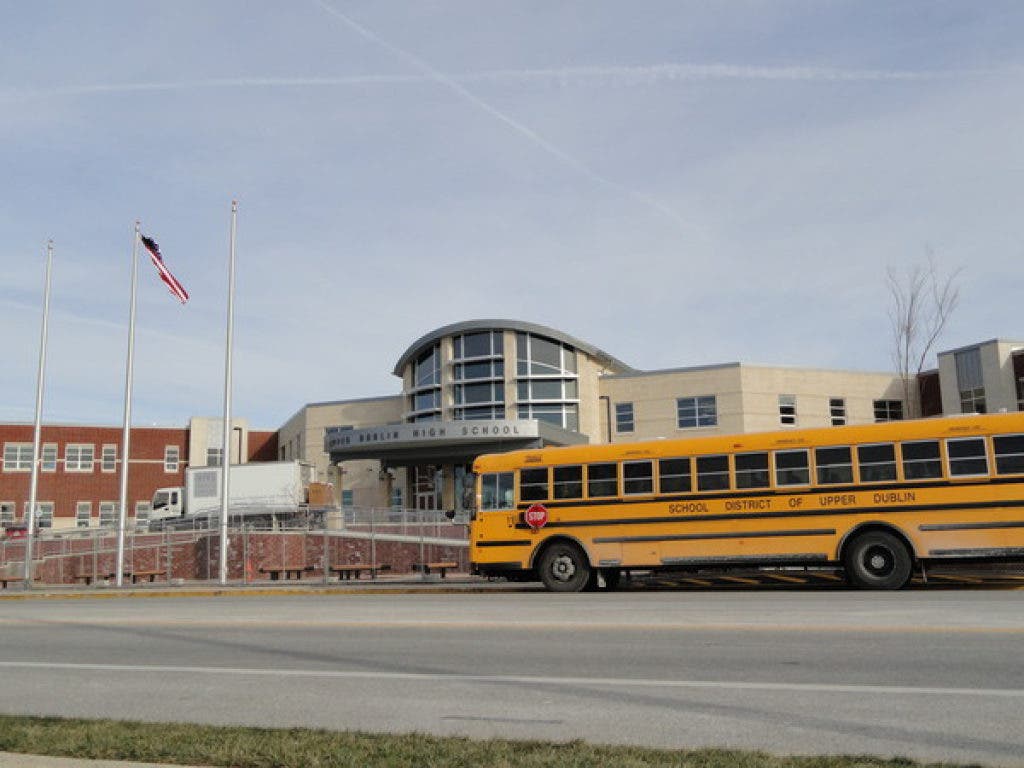
The newly built Upper Dublin High School is no ordinary construction project. With its focus on green and sustainable building, the school has become what superintendent of schools Dr. Michael Pladus calls a true “learning laboratory."
There is an intricate system of eco-friendly components to the new design. The school’s heating and cooling is supported by a geothermal pump system; located in a field close to interstate 309 is a system of 305 wells, dug 400 feet down.
These wells are connected to pipes that pump fluid through them for supply and return. The pipes flow into the school heat pumps, which can be found in every room. In this way, the system uses the natural temperature of the earth to heat, and in summer cool, the building.
Find out what's happening in Upper Dublinfor free with the latest updates from Patch.
The roof of the building is white for better reflectivity. It is also equipped with heat exchangers, where air is recycled. Healthy fresh air is always available in the school.
As project coordinator Warren Gericke said, “The building does not have that new car smell, or new building smell, because under LEED (Leadership in Energy and Environmental Design) certification, the air must meet a certain purification standard, which does not allow for certain gases or chemicals.”
Find out what's happening in Upper Dublinfor free with the latest updates from Patch.
The new school is LEED-certified silver, and once the system runs and is found to work, a gold standard of excellence certification is within reach.
The building insulation itself is formed with a sheet of foam sprayed onto the walls. This creates a tight building envelope that fights against gaps, air incursion and drafts, and means the building does not need a huge compressor to heat and cool the space.
Other environmental considerations include the lighting in the building. Every room uses indirect lighting, which saves on energy and makes for a more pleasant atmosphere.
There is also a very liberal use of natural light. The media center, library and cafeteria are naturally lit by huge, arched windows.
One of the more impressive energy saving components of the building is a lighting override system. This means that when students and faculty have left for the night, if there are any lights left on, the override shuts them down — no more accidental lights burning through the night.
Because of the unique specifications under LEED certification, all of the contractors worked together to make sure they met the standards. HVAC had to interact with lighting contractors and the engineers themselves.
There was also a concerted effort to keep the building process from being a major disturbance to students. Rather, many students were involved.
Gericke explained that he had 25 hard hats to go around, and that he used these hard hats to conduct hands-on lectures with students. He called them “hard hat sessions,” and geared lessons toward students from chemistry, math and photography classes.
Gericke said he truly feels like he is a part of the school community, which shows just how closely the engineers and builders have worked with staff and students.
After talking with some students practicing indoor track, Gericke remarked “I couldn’t do this anywhere else.”
Joe Chmielewski, vice president and de facto construction liaison of the school board, said that there are unique benefits with a green-focused educational environment.
“If a building is going to be built sustainable, then it should be a school, because the lessons learned here are really about protecting the environment for the future,” Chmielewski said.