Schools
MCCC Observatory Invites Public, Students to Look into Space
While it may not be the Hubble, the observatory's scopes allow the public to peer into the great beyond.
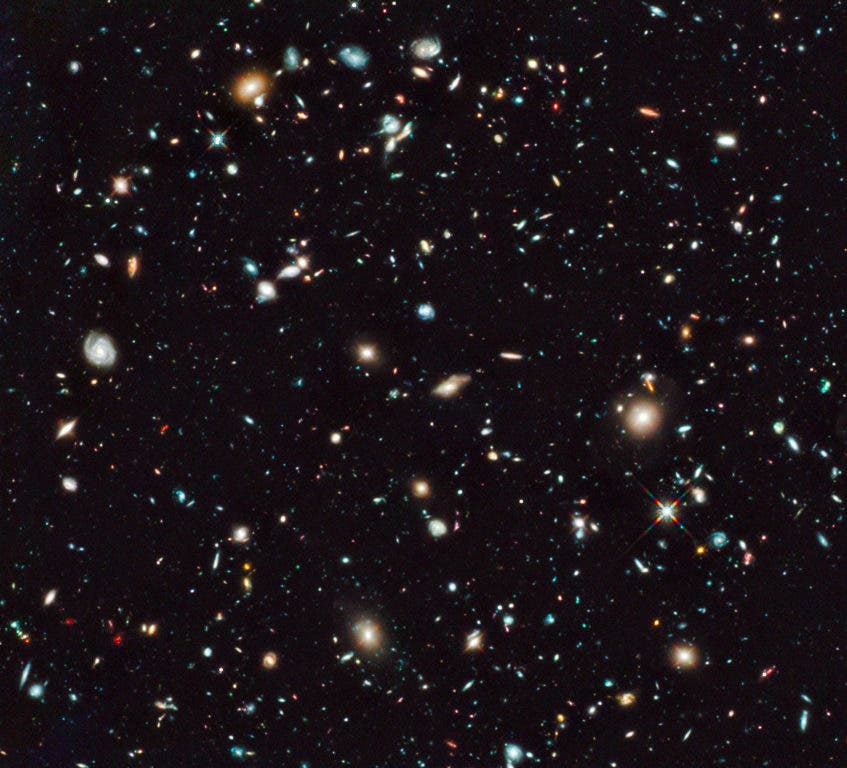
Kelli Corrado Spangler can’t tell you your future. She’s an astronomer, not an astrologer. But she can take you deep into the past to show you galaxies and other denizens of deep space as they appeared thousands or even millions of years ago—the amount of time their light takes to reach her telescope.
In the fall, the observatory will hold community nights, inviting the public to explore the observatory, and the universe.
Past events have attracted families with children, astronomy buffs and the simply curious.
Find out what's happening in Upper Dublinfor free with the latest updates from Patch.
“The events are open to all ages and levels of proficiency,” Corrado Spangler said in an email. “We have astronomy groups that observe with us who spend a large majority of their free time observing the night sky. We have families with several children, all fascinated by what a telescope can reveal. We also get a lot of MCCC students who are either currently enrolled in, have previously taken, or who are curious about taking my course.”
What the telescope will reveal to viewers depends on the season and the nightly conditions.
Find out what's happening in Upper Dublinfor free with the latest updates from Patch.
“The sky changes throughout the year, altering the constellations we see during each season,” she said. “I try to find the most impressive object out of the possibilities of the night and point our largest telescope, a 16-inch Meade, at it.”
Other scopes on the observation deck may be trained at the Orion Nebula, the Andromeda Galaxy or whatever planets may be visible that night.
Despite the density of population and light near the Blue Bell campus, light pollution is not a factor, she said.
“Having the observatory on the roof of the advanced technology center allows us to literally rise above the campus lighting,” she said, "although there is some significant light pollution in certain directions.”
Having seen the spectacular images produced by the Keck Observatory in Hawaii or the orbiting Hubble telescope, some viewers come away disappointed by what they see through the 16-inch Meade.
“When they step up to our smaller scope, they often expect to see the same images they're accustomed to. ‘Oh, that's it?’ tends to be the most common comment," she said.
Others, she said, are awestruck.
“The moon usually surprises everyone. The amount of detail that can be seen with the 16-inch is quite remarkable," said Corrado Spangler.
The observatory exists to support laboratory exercises of the introduction to astronomy course Corrado Spangler teaches.
“The students use the telescope as often as the weather allows to observe a variety of objects throughout the semester,” she said. “The students enrolled in my course are provided the opportunity to be in charge of one of the portable telescopes. This allows them to gain valuable hands-on experience in using, manipulating and repositioning a telescope, in addition to connecting with the material in a new, more personal way.”
The next open observatory dates are Oct. 10 from 7 to 9 p.m., and Nov. 7 from 5:30 to 7:30 p.m., weather permitting. The observatory is located on the third floor of the college’s Advanced Technology Center, Central Campus, 340 DeKalb Pike, Blue Bell. For more information, call 215-641-6460. Admission to community nights is free of charge.
All ages and levels of interest are welcome, Corrado Spangler said. The sessions are about two hours long. Cancellations will be posted as a voicemail on the observatory hotline (215-641-6460).
If you’re interested in attending, Corrado Spangler recommends that you call before coming to the facility, in case clouds have made cancellation necessary, and to dress appropriately for being outdoors at night.
The observatory also hosts “Troop Mondays,” when Boy and Girl Scout troop members are given the opportunity to work on their astronomy badges.
“I wanted to be an astronaut,” Corrado Spangler said, as an explanation of why she became an astronomer. “I simply fell in love with the idea of space and all that it encompassed. My love of space carried me forward into astrophysics. The more I learned, the more I loved it. I found the challenge of explaining nature to be engaging and fun. I continue to be amazed by what nature teaches us with each passing year as we make advances in the natural sciences.”