Schools
Students Help Revitalize Banks of Sandy Run Creek
Hundreds of students, teachers, faculty and local officials replanted native species, in an effort to help restore the ecosystem and control flood waters.

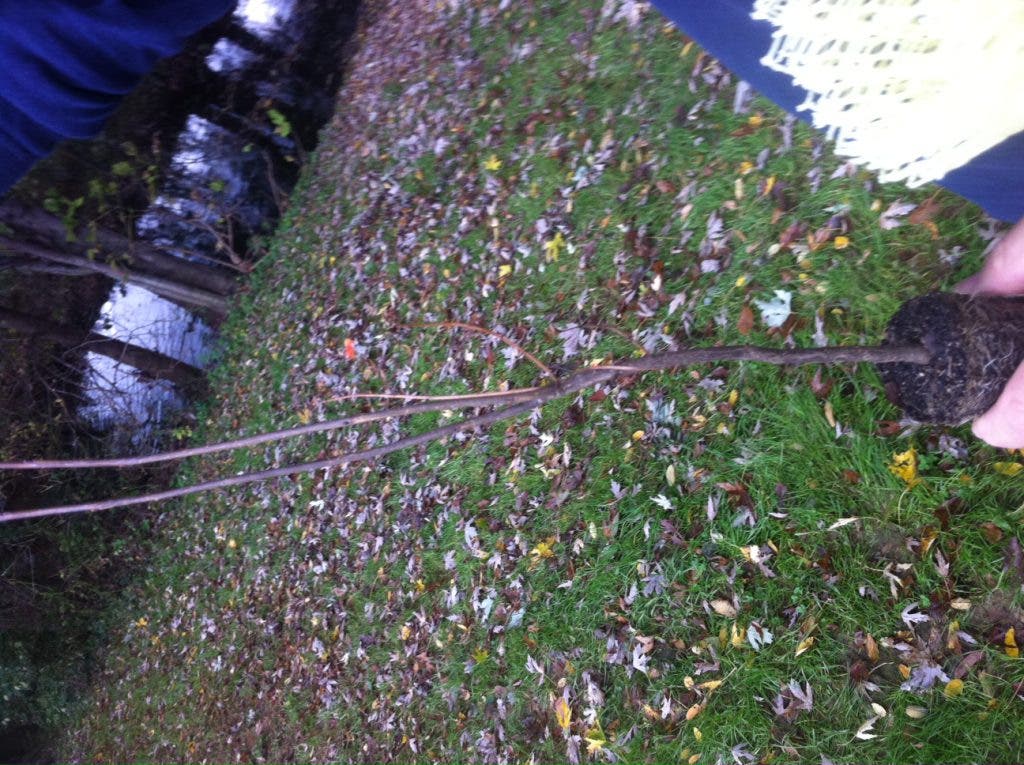


Driving by Sandy Run Middle School on Twining Road Thursday, one could see dozens, even hundreds of youngsters, parents, teachers, and local officials working along the banks of the Sandy Run Creek as they took part in a hands-on experience to help the local ecosystem.
The project was an orchestrated effort between school faculty and the Wissahickon Valley Watershed Association, to remove invasive plant species from the creek's banks and replace them with native varieties, and was funded by a state "TreeVitalize" grant.
"We're trying to eliminate a Japanese knotweed invasion," said Bob Adams, Director of Stewardship for the WVWA. "We've been working on removing those plants all summer, and now we need to replant with native stuff or it will grow back."
Find out what's happening in Upper Dublinfor free with the latest updates from Patch.
That's where the middle school kids came in, as they were handed tools and saplings of species such as viburnum, holly and witch hazel to plant along the creek.
"Often in science, the kids do labs that have real principles behind them, but the lab isn't in the real world," said Sandy Run science teacher Jennifer Zega, who was the lead faculty member on the project. "This is real world and more authentic. It helps get the kids outside and gives them a real sense of ownership in the environment."
Find out what's happening in Upper Dublinfor free with the latest updates from Patch.
Zega estimated that over 500 individuals participated in the planting over the course of the day, and listed the benefits that come from such a project.
"The plants that have taken over here aren't food for anything that lives here. So replacing them will bringing back insects, which are food for the birds and other reptiles and amphibians to eat," Zega said. "The other thing is that the species we're planting are very good at helping with flooding and filtering pollutants out of the water before they move down the creek."
The ability of the plants to help absorb water, especially in the face of recent floods, brought out a number of local officials and commissioner hopefuls.
John Minehart, the democratic candidate for Ward 1, was on site and said that he views these kinds of projects as critical.
"This project is similar to how the township has encouraged residents to help with the building of the trails-- trying to get people interested in volunteerism," Minehart said. "This saves the township some financial responsibility. Volunteerism is going to make a better Upper Dublin."
However, Minehart also said that the township needs to place a priority on flood control.
"[Flooding] has been going on for quite a while, and there's been deferred responsibility," said Minehart. "We're losing our homes to flooding, losing our business. The current board is trying to secure funds and resources to build retention dams, and it's hard to navigate finding the resources in this economy to do something that's critically important… and hopefully the economy will change a bit, but we need to prepare for that, I want Upper Dublin to be ready to prosper."
Ward 7 commissioner Stan Ropski, up for re-election in November, was also fond of the idea of volunteerism.
"It's just a great thing to see all these kids out here," said Ropski "This is what you gotta do, because odds are if the kids are volunteering when they're young, the kids will volunteer when they're adults."
Get more local news delivered straight to your inbox. Sign up for free Patch newsletters and alerts.