Schools
UDSD Presents Ideas to Balance Budget at Board Meeting
The district's budget and finance task force proposed ideas such as selling district properties and renting facilities, and also introduced a cultural shift of employees.

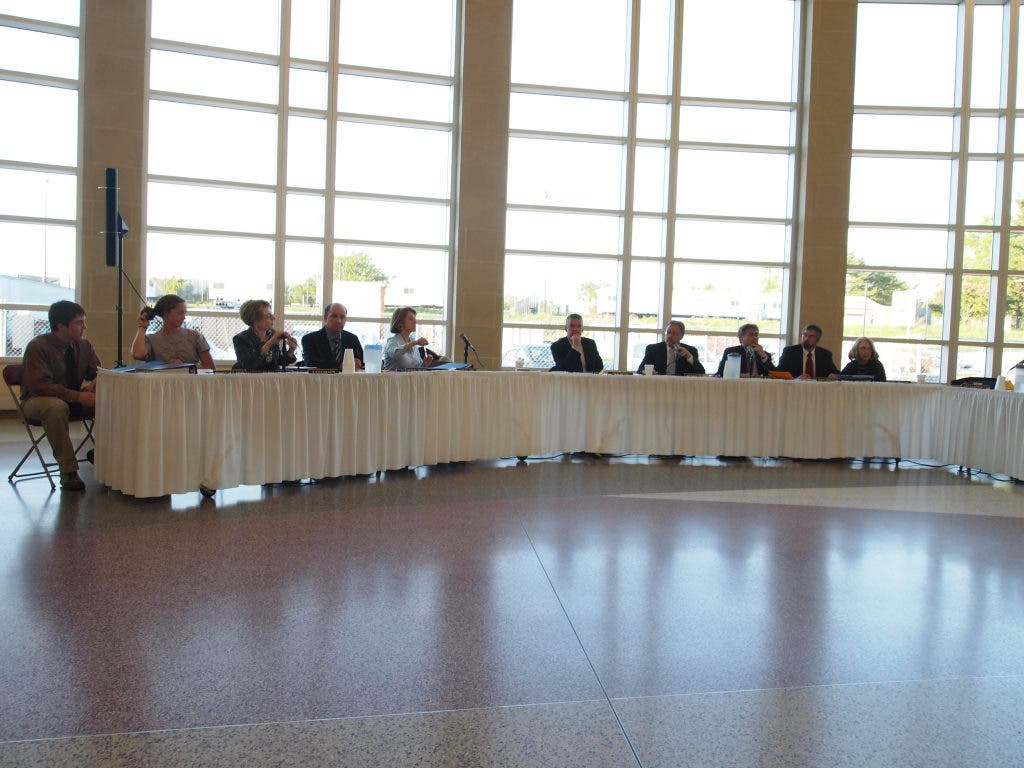
At Monday evening's Upper Dublin School Board meeting, district superintendent Michael Pladus delivered a presentation to the board on the findings of the administration's Budget and Finance Task Force. The presentation suggested ways the district might cut costs, including continuing to pursue the attrition of district positions and membership in a transportation consortium, as well as ways to increase revenue, such as selling district buildings and the renting of facilities.
What is the Budget and Finance Task Force?
Pladus explained that the task force is a body of 25 members, comprised of district employees and community members, with the goal of helping the district cut costs and increase revenue. The task force was first formed in September, 2010.
Find out what's happening in Upper Dublinfor free with the latest updates from Patch.
"The intent of the committee was to bring together some very high powered individuals to help advise the district in the wake of very, very difficult budgetary waters," said Pladus. "The members represent a combination of district staff, and several members of the Board of School Directors, but the majority are community members… people from various walks of life who have had experiences running their own businesses, working at Fortune 500 companies."
What did the task force propose?
Find out what's happening in Upper Dublinfor free with the latest updates from Patch.
Pladus first presented the task force's five recommendations with "the largest potential impact for the short term." This included rebidding purchased agreements, determining ways to reduce benefit costs, creating new revenue streams in the use of educational and physical assets, finding efficiencies in transportation and building a new culture.
Cutting personnel costs
Pladus explained that in exchange for the from teachers last spring to help balance the budget, the district agreed to no furloughs or termination of faculty through the 2012-13 school year. However, he said the district is practicing attrition, or the closing of positions upon retirement.
"We have a commitment this year and next year to no furloughs… but attrition has been something that we've embarked on, and it has resulted in significant savings," said Pladus. "What it means is job sharing, it means non-replacement of teachers, and in many cases the hidden cost of [an employee] with benefits… it can be over $100,000 a position."
Transportation
Pladus said that this year's involvement in a bussing consortium with nearby schools, which the district quickly left when widespread problems emerged, was a "valuable lesson.” However, Pladus said all options remain on the table for future consideration.
"We did [the consortium], but we didn't do it well. And it was a valuable lesson for us," said Pladus. "I'll still stand by the fact that I think it's an important concept, it's a concept that has potential, and it's a concept that we still need to consider."
Selling of properties
Another option proposed by the task force was the selling of the district's physical assets. The district's administrative buildings were mentioned in particular, but Pladus said that all options are open.
"Right now you won't see us necessarily with for sale signs in front of all of our properties, but we have made it known that we are open to offers," said Pladus. "The district does own some property, and we are trying to entertain any and all offers that might come."
New Revenues
Administrators mentioned the naming and use of facilities as two potential revenue generators. Pladus said this included the naming of the natatorium and gymnasium by an educationally appropriate sponsor, and the continued expansion of facility rental options such as the gymnasiums and auditoriums.
Cultural shift
Pladus said that one of the task force members, Hal Tragash, who had worked as a cost-cutter for corporations such as Xerox, spearheaded an effort to develop a message of culture change for employees of the district. Pladus said that the message was for each individual to keep in mind the district's financial situation and how they might be able to do more with less.
"We embarked on a mission of really spreading the message of culture change and a new normal," said Pladus.
The superintendent said the message was brought to employees at a welcome back ceremony for faculty and staff.
"Right here in the cafeteria, as we welcomed back 350-plus faculty and staff for the new year, the message was culture change and the new normal," said Pladus. "That welcome back convocation has been held for the past number of years at an area restaurant as a catered event. It changed. It had to change because of trying to change behaviors, trying to change the culture, and it's become a dominant theme for us."
Administrators also said that they will be reviewing all overtime hours to see if the work can be done at another time to avoid high costs.
Expanded areas of savings
In the second portion of the presentation, Pladus expanded in five key areas of improvement for the district, including education programs, procurement and facilities, personnel and organization, information technology and alternative revenue.
Educational Programs
- Evaluating opportunities to decrease operating expenditures for the summer school.
- Maintaining the Diversity Program, but evaluating the current structure.
- Evaluating class size opportunities to accommodate a reduction in staff through attrition.
Procurement and facilities
- Closer review of current contracted services to promote greater immediate cost efficiencies and to better prepare for other outsourcing options upon conclusion of the current contracts.
- Maintaining and increasing due diligence in confirming residency requirements.
- Moving forward with efforts to reduce costs through a more regional approach to transportation services.
- Begin analysis of in-house versus contracted services to all non-instructional areas.
- Further evaluate possible cost reductions in medical benefit costs through a county-wide consortium.
Personnel and Organization
- Reducing administrative costs through further reduction and consolidation of positions.
- Ongoing review of compensation strategy for all employees and all employee groups.
- Conducting a comprehensive review of all overtime expenditures.
- Continue to move forward with cost sharing plans that include further in-sourcing of out of district placements, supplemented by shared costs to other districts.
- Further review and implementation of new procedures to create greater cost efficiencies for all miscellaneous purchases.
Alternative Revenue
- Explore the economics to be realized by selling and/or leasing administrative buildings and/or any other district owned assets.
- Increased efforts to actively pursue the sale of naming rights to the stadium, natatorium, and other areas with sensitivity to the appropriateness of sponsors.
- Increased efforts to promote rental facility when not in use, including the auditorium, sport facilities, Robbins Park and Tech Labs.
- Increasing efforts to secure donations from community and alumni.
- Working with the township to further promote development of the Fort Washington Office Park.
Information Technology
- Further involvement of PTA's and PTO's in technology funding.
What do you think about the Finance and Budget Task Force's findings? Which do you think are good ideas and bad ideas? How else can the district help its bottom-line? Tell us in the comments.
Get more local news delivered straight to your inbox. Sign up for free Patch newsletters and alerts.