Health & Fitness
Young Athletes May Be At Risk For Knee Injury
Willow Grove Physical Therapy has an ACL injury prevention program offered FREE to sports teams! We specialize in getting athletes back to competition and treating their sports specific injuries!
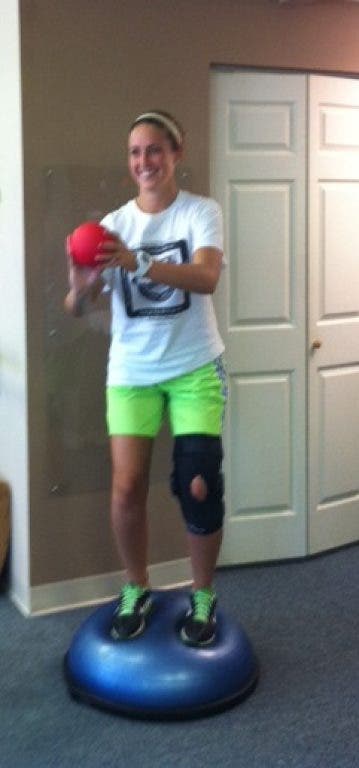


now has an ACL injury prevention program offered free to sports teams. We also specialize in treatment for ACL injury and post surgery. We provide sports specific rehabilitation to return athletes to competition.
Anterior Cruciate Ligament (ACL)
- The ACL is one of the main stabilizing ligaments of the knee. It prevents forward motion of the tibia (shin bone) on the femur (thigh bone).
- In the United States, >2200 ACL ruptures occur in female collegiate athletes each year.
- Compared to males, female athletes are 4 to 6 times more likely to sustain an ACL injury.
- Athletes who sustain ACL injuries are at a greater risk of having long term disability, lowered academic and sports performance, and the development of osteoarthritis.
- The incidence of ACL injuries can be reduced by correcting muscular imbalances and improving muscular control. In fact, participation in an ACL injury prevention program may reduce the risk of injury by up to 80%.
---
Find out what's happening in Upper Moreland-Willow Grovefor free with the latest updates from Patch.
Willow Grove Physical Therapy is located at 1001 Easton Rd, Willow Grove, PA 19090 (Suite 101). For more information, click on here for their .
---
Find out what's happening in Upper Moreland-Willow Grovefor free with the latest updates from Patch.
Information referenced from:
- Hewett T, Ford K, Hoogenboom B, Myer G. Understanding and preventing ACL injuries: current biomechanical and epidemiological considerations – update 2010. North American Journal of Sports Physical Therapy. December 2010 (5): 234 – 251.
- Mandelbaum B, Silvers H, Watanabe D, Knarr J, et al. Effectiveness of a neuromuscular and proprioceptive training program in preventing anterior cruciate ligament injuries in female athletes: 2 year follow up. The American Journal of Sports Medicine. 2005 (33): 1003 – 1010.