Politics & Government
Lower Milford Historical Society Hears Presenation on Hardships and Triumph at Bethlehem Steel Company
"I can't believe it's gone forever" say audience members


Members of the Lower Milford Historical Society enjoyed a video presentation given by Ed Matulevickius about the Bethlehem Steel Company at the March meeting. Portions of the video included sights and sounds of an actual work day. “It’s so loud,” said Lower Milford resident Linda Fetzer; “I can't believe anyone could work there and not go deaf.”
According to Matulevickius, Bethlehem Steel began its operation in 1860 and soon became the second largest steel company in America. The steel produced at the plant was used in the making of ships; bridges, including the San Francisco Golden Gate Bridge; tall buildings and skyscrapers; shopping centers and more.
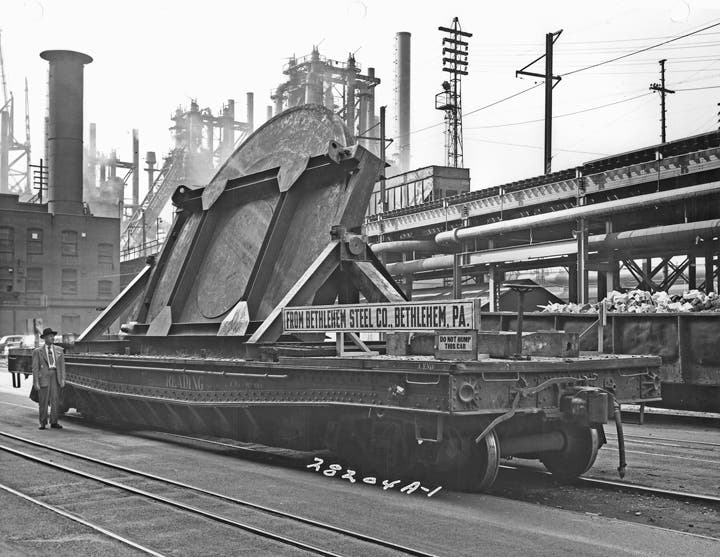
According to the presentation, the railway system was used to distribute most of the steel made in Bethlehem throughout the United States, revolutionizing building in America.
Find out what's happening in Upper Sauconfor free with the latest updates from Patch.
The video also highlighted how extremely dangerous Bethlehem Steel was for workers. The 3000 degree heat, gases and fumes, smoke, and explosions killed many workers. “How could anyone work in that heat?” said resident Kelly Butterbaugh. Butterbaugh is also an author and a historian, recently completing a book on Coopersburg.
The presentation highlighted the deplorable plant conditions. Matulevickius explained in March of 1941, Bethlehem Steel went on strike. Because the country was heading into a war, the management wanted to settle the dispute quickly. The workers formed a union known as the United Steel Workers of America. Their first demands were to give the men ten minute breaks throughout the day and a washroom/shower area for them to clean up. A surprised Donna Wright, who is also chair of Lower Milford Board of Supervisors, said “They didn’t even have a place to clean up at the end of the day?"
Find out what's happening in Upper Sauconfor free with the latest updates from Patch.
The audience seemed to have either worked at Bethlehem Steel or knew someone who did. Sons followed their fathers and grandfathers into the plant. Graduates from Lehigh University found their way into management or executive positions. Immigrants also came to Bethlehem to work at the plant.
The presentation highlighted the plant's contribution to both World War I and World War II, which included ammunition for weapons. The steel plant was also a major supplier of parts for planes and ships, and employed women while men fought overseas.
As teh presentation closed, the talk turned to the rise and fall of the plant. Workers received good pay and benefits. The Saucon Valley Country Club was built for executives to socialize and play golf. By 1957, over 165,000 people across the country were employed at the company. Workers thought they were set for life. They bought homes and sent their children to college. No one could ever imagine that Bethlehem Steel would ever falter.
In 1959, the workers went on a 117-day strike. “I think that was the beginning of the end,” said Lowell Linde, whose brother once worked at the plant. Workers demanded more and more benefits, causing the price of the steel to increase.
Finally, in 1998, Bethlehem Steel closed its doors, putting thousands out of work. Most of the plant has now been demolished. Several audience members commented on what a shame it was that the plant has been demolished. "I can't believe it's gone forever," said an audience member as they walked out hte door.