Politics & Government
Meet the Candidates: Corinne A. Gunkle
Helping you to make an informed decision this Election Day
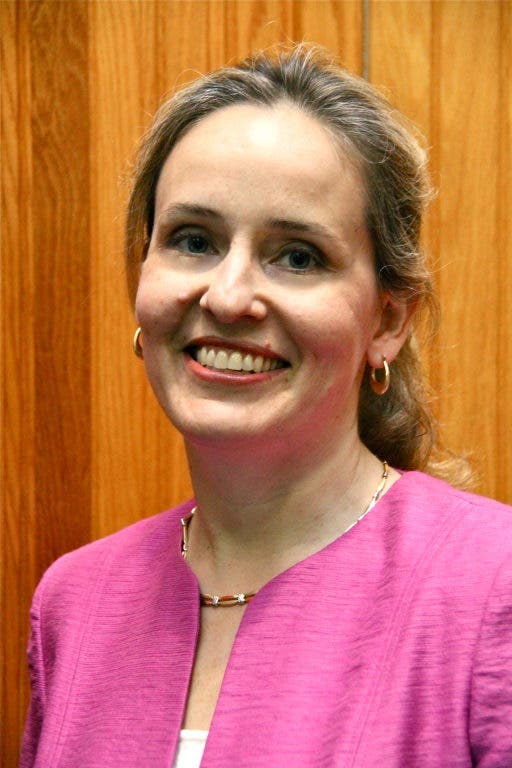
Corinne A. Gunkle
Running for: Southern Lehigh School District
Political Affiliation: Democrat
Find out what's happening in Upper Sauconfor free with the latest updates from Patch.
Residence: Upper Saucon
Education: B.S. Electrical Engineering - Cornell University, 1988; M.S. Electrical Engineering - Carnegie Mellon University, 1990
Find out what's happening in Upper Sauconfor free with the latest updates from Patch.
Profession/Work Experience: Electrical engineer, 10 years; Engineering manager, 8 years; School Director, 3.5 years
Elected Positions: Southern Lehigh School Board, 2 years
2011 Absences: 1
Committees: Budget & Finance, Policy, Facilities, Education
Why are you Running? Addressing the economic challenges facing our school district is the major issue of this campaign. The strength of our district lies in the strong support of our community, the dedicated work of our administrative and teaching staff, and the commitment of our students and parents.
If elected, what would you like to accomplish? In addressing the economic challenges, we need to bring all parties to the table and all will need to contribute to its resolution. Together we can solve this challenge.
FORUM QUESTIONS
Do you support pay freezes for school employees for all positions?
I think it’s wonderful that our top administrators have already accepted pay freezes this coming year. I’m hopeful that our other administrators will follow suit. However, I will say that when push comes to shove, as Mr. Finn had mentioned, at the end of the day we are under a collective bargaining agreement with the union. Are we going to push it all the way to a zero pay raise with a collective bargaining unit with the potential go on strike and maybe not be able to win arbitration? I don’t know if we’re going to go to that extent. I think that we have to see where we get to. One thing that I think is very important in asking, as I have said, I very much think that our teachers are going to come to the table and the administrators are going to come to the table on this, the one thing that is very important is that they need to feel supported. I think that they need to feel valued. It’s not because they’re not doing a good job; it’s that we need everybody to come to the table and put something on it.
Do you think the number of administrators and their salaries has outgrown the district?
We do have some retirements coming up in some key administrative positions and basically as the time comes we’re actively looking, and have been looking, for the last several years at whether we can do that job differently, whether we can job share with somebody else, etc. So I think, certainly, we should continue to do those types of things as we move forward.
Do you see a need for a teachers union?
First of all, I don’t think it’s my choice whether we have a teachers union or not. That’s something the teachers choose. I will say I grew up in a coal and steel town in Ohio and I’m very, very much aware of the history of where unions came from and why we have them. I mean there’s plenty of stories, way back, in those West Virginia coal mines to be able to know why that was put in place. So, knowing what the history of them is I certainly understand what they brought. I understand they brought up workers. I understand they brought up safety in the workplace, many, many other things. So I think there is definitely value in the unions. So, do they need to change? I think that they need to change. I don’t think I have the power to change them, I mean, I don’t have the power to eliminate them, and I don’t know that I really want to eliminate them, but I do think that they need to change.
Do you support charter schools and school vouchers?
I support primarily the idea of certain schools. However, I think the way that it is handled from a funding perspective needs to be seriously looked at. Our district currently spends $1 million a year on charter schools. We have zero control over how that money is spent. We are looking at reducing teachers. We are looking at reducing administrators. We are freezing budgets for athletics. We are freezing budgets for school supplies. We have zero control over charter school money. We have no say in it. One of the things we are doing is trying to bring our cyber students back in-house. Basically we think that by bringing those students back in we can save $4,000 per student. So, there’s significant issues with that. The other thing is that we are constantly held to PSSA standards. We recently saw a report of the nine schools that our students attend. One passed our PSSA. One. That’s your tax dollars.
If you were faced between making cuts that would negatively affect education or increase property taxes what would you do?
First, I’d like to inform you we are listed as 250th out of 500 districts in the state in terms of our tax rates per $100,000. The second thing is in Lehigh County on that same website we rank seven out of nine. Yet, I understand the PSSA scores are not everything, however, that is what the government is holding us to and we continually rate in the top three. I mean to me it’s all about balance, we have to balance, and that’s the decisions we make every day. This is what it costs, this is what the cuts are going to be. I think it is very important. I don’t think anybody wants their taxes to go up, but it’s very important for people think about what the cuts are going to be and make sure if you’re asking somebody "don’t raise my taxes" that you’re willing to live with what cuts they may give you.
What would you do to improve cooperation with township supervisors?
I sit on the facility committee and I have since I started on the board, so perhaps I have seen firsthand many of these particular conflicts. I think the reality of conflict is that there are definitely issues on both sides. That’s the reality of the conflict. But certainly there have been plenty of instances from a facilities perspective. I mean just in this very last facilities meeting of this week, of this last month, there were three issues that we had been waiting months for response from the Upper Saucon Township, so there have definitely been issues there and I think it needs to be worked on. I think that we are going to work on it and hopefully we will be able to improve that relationship.
Studies have shown nutrition affects school performance. Do you believe the food service program should be changed?
Well, certainly I think nutrition is very important for our students. I guess I have to say I am somewhat surprised by the question. When I’ve been to the elementary schools the lunches that have been provided seem to me to have fruits and vegetables and frankly would be a better lunch than I would have packed, which is why my kids eat lunch here. Now I would say probably more in the middle school and high school there is a lot more choices so maybe students aren’t making good choices, but I think there are plenty of choices out there that are healthy and I do know this is a focus for the food service director.
You have mentioned salaries but what are some other cuts that need to be made?
I think one of the biggest challenges we face, as a district, and actually our entire state faces, is the teacher pensions being underfunded. This is a huge debt that we know is out there and it is one of the things we get in trouble with in budget finance. It’s kind of like sending your kid to college. You know it’s going to cost a lot of money. You can’t pay for the whole thing right now, but you don’t want sit there and cover your eyes and do nothing, so you try to put some money toward it. In our budgets we have been trying to prepare for the fact that the current amount we are contributing is insufficient for teacher retirement. And it’s a commitment. Pensions are a commitment. Currently we pay 5 percent a year and a study from the pension people says that we’re going to need to pay 20 to 25 percent, so currently we’re paying $1 million and we are going to need to be paying $5 million. I think one of the things we need to do is start putting pressure on Harrisburg to start to address this problem because it’s a huge issue and there’s a lot of uncertainty at how to handle it.
How important is it to attend school board meetings and serve on committees?
I agree that attendance is critical, and also I will say that participation in committee -- that is where the predominant amount of work is done. As a board, I will say that perhaps we have not been as strict amongst ourselves on this particular policy as we ought to be. I mean, there are legal reasons that people weren’t attending meetings that you can have them removed from the board and I think that the community deserves to have nine active boards members who are participating by attending meetings and who are participating in committees.
How would you bring cyber school/charter school students back?
I sit on the education committee and I pointed out I am very involved in the cyber school. If there was a suggestion that we were forcing people who wanted to go to cyber school to come and physically sit in this building, that is incorrect. We collectively, with other districts in Lehigh County, are creating a cyber school, the students are still working on the computer, just the same as other cyber schools would. The difference is, the curriculum is being directed by Lehigh County school districts. We are the ones that are providing what is being taught and are being taught by our certified teachers who are taking responsibility for what results are going to be. Like I said before, every single student -- that goes from whatever cyber school they’re in now to the Lehigh --saves $4,000. Previously, Mr. Dimmig said that he wanted to save $60,000 on laser printers. That's one purchase, one year. You can bring in 15 cyber students in; that $60,000 this year, next year, the year after that. It’s repeating.
What is the state percentage of surplus dollars allowed per district?
We talked about our budget surplus; again, I have to come right back to the pension. Because this year we predicted, or rather we were putting away percent. That’s what we actually think would be a reasonable thing for them to be asking us to spend. They only wanted 5 percent. That’s what the state mandates, that’s what we give them, 5 percent, so right there we end up getting our $800K surplus. On the other hand we just got “swamped” with having to pay for Social Security. That’s one of the things that came from government which wasn’t even enough. We totally didn’t expect that. So the fact that we had $800,000 that we didn’t need to spend ended up coming in handy for the $1 million that we did need to spend. So again, I think when the answer for pensions is somewhere between 5 percent and 25 percent, what do you need to budget? This year we budgeted 8 percent. We were wrong by almost $1 million so that ended up being offset by the other thing. I think that’s what the difficulty is -- we have a better sight than that. I think we can do a better job of not having a huge surplus.