Health & Fitness
Barrington Town Council Struggles with Affordable Property Tax Question
Are low income residents subsidizing the wealthy?
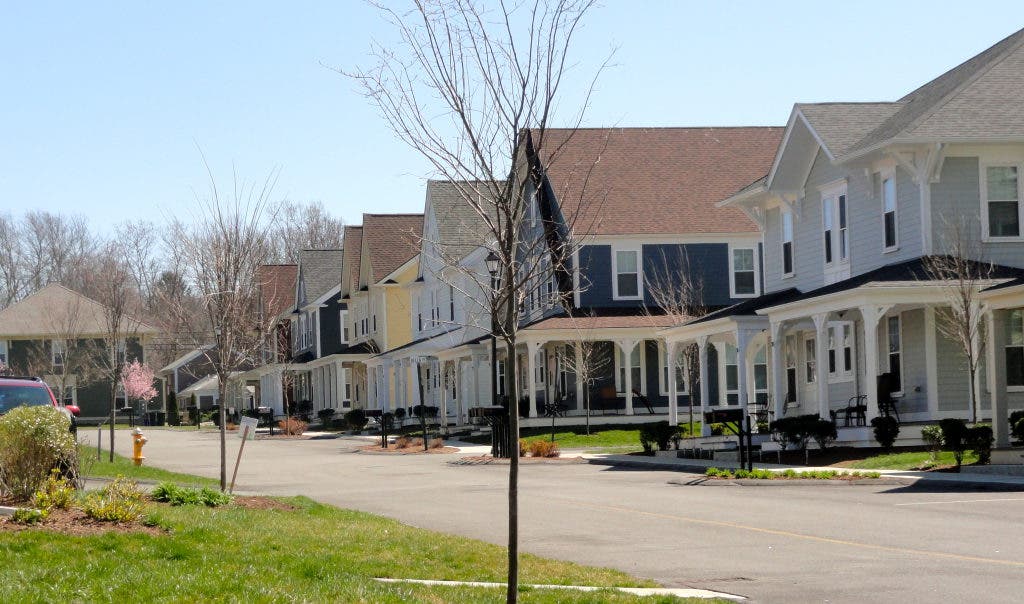

On Monday, July 1, 2013, the Barrington Town Council will again take up the question of special property tax breaks for affordable rental housing. Of interest is why Barrington's solicitor, Ursillo, Teitz, & Ritch, Ltd., may be providing different legal opinions to the towns the Ursillo firm represents. Shouldn’t there be one interpretation of the law for all towns?
There remains a high degree of skepticism that current and prior Barrington Town Councils are getting accurate legal opinions when it comes to affordable housing.
Is Barrington actually breaking the law due to improper legal advice on property tax breaks for East Bay Community Development Corporation’s Sweetbriar development? After all, no tax breaks are provided to affordable homeowners at Walker Farms, nor are property tax breaks provided to low income residents who are below age 65.
Find out what's happening in Barringtonfor free with the latest updates from Patch.
During the July 30, 2012 Town Council meeting, Barrington's Assistant Solicitor Nancy Letendre advised the Town Council that because affordable rental housing is “in perpetuity”…"there is no incentive for a property owner to purchase [Sweetbriar] thinking that they are going to resell it, or sell it to a trust...".
Ms. Letendre stated that property tax abatements for affordable rental housing was "a rational means to a legitimate end" and that affordable rental property subsidies were not only lawful, but “mandatory” on town residents.
Find out what's happening in Barringtonfor free with the latest updates from Patch.
What Ms. Letendre failed to tell the Council in 2012 was that on November 3, 2008, the Council was advised that the Ursillo law firm was telling other towns just the opposite. EBCDC’s own attorney told the 2008 Town Council: “It came up in court hearings that your solicitor's firm for other communities has advised that the 8% for new construction is not [mandatory].”
Exactly what does “a rational means to a legitimate end" mean when applied to affordable rental housing? Does a “legitimate end” include subsidizing "high net worth" investors?
Consider the recent history of the Kent Farm affordable rental housing complex in East Providence.
In March, 2012, the Kent Farm low income rental development was sold to the private real estate investment company, Primerock Capital Investment, LLC for $19,850,000 (approximately $80,000 per unit for the mostly one and two bedroom rentals). Primerock advertises itself as serving “high net worth” clients, and is certainly not an affordable housing non-profit.
Kent Farm is a HUD financed and subsidized low income housing development consisting of 6 parcels with 248 low to moderate income units. 157 of the 248 units are required to serve “very low” income applicants. The project began in 1969 with "affordable" deed restrictions based on an ongoing Regulatory Agreement with HUD that will expire on March 1, 2022.
It is questionable why Ms. Letendre did not bring up this affordable sale during the July 2012 Town Council debate when she argued "there is no incentive" for this kind of affordable property transaction.
What would a private investment company serving “high net worth” clients want with a 248 unit affordable development that exclusively serves low and moderate income residents?
The answer is simple: Kent Farm only has to abide by the income restrictions for another 9 years. After 2022, the Regulatory Agreement expires and rents can be based on the full market rate.
The "high net worth" investors have the financial means to wait for the improved cash flow from market based rents. In the meantime, the residents of East Providence are paying most of the property tax bill on behalf of these high net worth investors.
This brings us to the questions the Town Council needs to address on Monday:
1 - Is it in the interests of local residents to be subsidizing property taxes that only enhance state and federal initiatives (and high net worth investors) and do not primarily serve the interests of the local community?
2 - Does the Town Council have the legal authority to appropriate property taxes for the benefit of non-residents, or residents who may have greater financial means than those doing the subsidizing? The bulk of residents at Sweetbriar came from other towns, states, countries. And wouldn't every current resident like to pay lesser property taxes when their incomes shrink to moderate levels?
3 – If affordable rental developments are supposed to be “in perpetuity” (e.g. 99 year deed restrictions), why is the Barrington Town Council subsidizing a project that can be terminated in 30 years (Sweetbriar, and also the proposed Palmer Pointe)?
4 - Finally, by what authority does the Town Council have to vote on property assessment policy for the Barrington Tax Assessor? If the Town Council has no statutory authority to make assessment policy in Barrington, how was this done in the December 2, 2008 vote for the Sweetbriar development?
Will residents finally get legal opinions and answers that protect their interests? The Town Council meeting is Monday night, July 1, 2013.