Business & Tech
Business Leaders Critical of Chafee's Tax Plan
East Bay Chamber hears Keith Stokes, executive director of RI Economic Development Corporation, explain governor's plan of attack on state deficit.
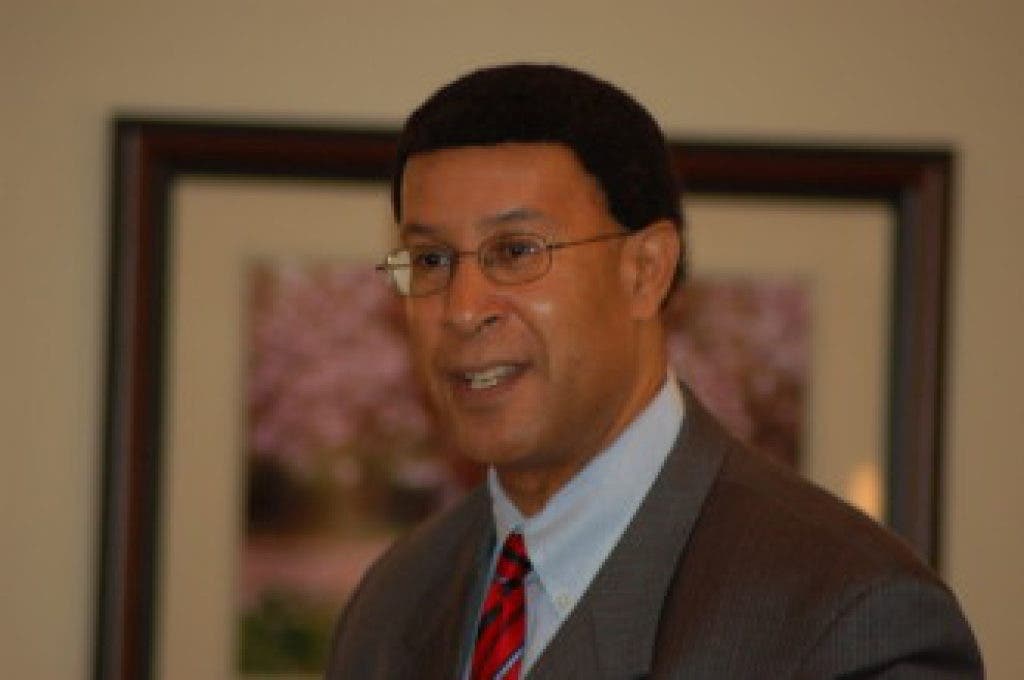
At the invitation of the East Bay Chamber of Commerce, Keith Stokes, executive director of the Rhode Island Economic Development Corporation, addressed local business and civic leaders at a breakfast at the on Wednesday morning, April 6.
The session began with an overview of the Chafee Administration’s plan of attack for Rhode Island’s considerable budget woes.
“For the first time, we are taking a more strategic approach to economic development,” Stokes said. “At one time, we used large-scale revenue fixes to balance the budget, but those quick fixes are gone and we have to balance the budget with our resources.”
Find out what's happening in Barringtonfor free with the latest updates from Patch.
Stokes noted that continued budget deficits wreak havoc on economic development efforts, because they hamper the predictable delivery of services such as safety, health and infrastructure that are critical to growth. Stokes outlined the four primary components impacting economic development: land, labor, capital, and cost, and discussed Rhode Island’s relative strength in each area.
It goes without saying, he said, that Rhode Island's supply of land is a weakness, and the relatively small labor force – about 575,000 of our 1 million residents in the best of economic times — is hampered by the fact that more than half of them lack any post-secondary education or training. It’s a real handicap in a state where the growth industries include life sciences and defense and marine technology, he said.
Find out what's happening in Barringtonfor free with the latest updates from Patch.
As for capital, Rhode Island lacks it, but according to Stokes, the Chafee administration is pursuing new avenues of revenue generation, including innovative partnerships to induce private investment. Finally, the cost of doing business in Rhode Island needs to be favorably competitive with the costs in Massachusetts and Connecticut – a place Rhode Island is working to reach, with recent changes to our highest marginal rate of personal income tax and proposed adjustments to our corporate income tax rate.
Stokes discussed measures to encourage the growth of certain critical Rhode Island industries, tourism and hospitality among them. Lacking appropriate facilities hurt the state in our effort to woo the America’s Cup, most recently, and Stokes hopes that the next budget cycle will see a tourism asset fund in place to upgrade facilities and services.
But ultimately, infrastructure and other upgrades will need to be funded, regardless of real or perceived future benefits. It was that side of the equation that dominated the Q&A part of the program.
Mike Byrnes, of Bristol's Economic Development Commission, echoed the sentiments of many Rhode Island business people, noting that Chafee’s policies thus far suggest that the governor is not serious about supporting Rhode Island’s businesses.
Likewise, Keith Maloney asked Stokes to detail specifically the recommendations he will bring to the table and highlight, moving forward. Stokes indicated that workforce training, capital generation and capping industrial costs are among his highest priorities.
The audience seemed united behind colleagues who were sharply critical of Chafee’s plan to increase taxes on certain services statewide.
Stokes expressed understanding and appreciation of their concerns, but he stressed that the issue was larger than the impact on one industry to another. Echoing the argument Education Commissioner Deborah Gist made when explaining the impact of the new funding formula on Bristol and Warren, Stokes noted: "People in Rhode Island don’t want good government, they want good government for themselves and they want to pass the cost on to the next guy. It can’t be the East Bay vs. Aquidneck Island vs. South County – we have to agree.”
Ultimately, Stokes suggested that the path to sound economic development and solvency lies in playing to our strengths – Rhode Island’s small size.
“In theory,” Stokes said, “Rhode Island should be the most efficient deliverer of government services based on our size.”
However, with 36 school districts, and almost as many water and fire departments, that seems unlikely to change soon.
“To collapse and change government services will require constitutional and legislative changes,” Stokes said. “That’s going to take time and effort."
Ultimately, Rhode Island will be facing what Stokes characterized as “devastating, historic” cuts in delivery of services.
“We’re going to be dealing with what we should have been dealing with years ago,” he said.
Further, Stokes called for more help from the business community. Business owners, he said, are not good leaders when it comes to political advocacy.
“You’re too polite, you’re too busy," Stokes said. "You need to lobby, you’ve got to get behind your words."